How to Ride a Motorcycle in Rain: The Complete Wet Weather Guide (2026)
By 6FOOT4HONDA · 15 min read · Mar 3, 2026 · Updated Mar 4, 2026
This post may contain affiliate links. We only recommend gear we'd use ourselves. If you click a link and make a purchase, we may earn a small commission at no extra cost to you.
In This Article
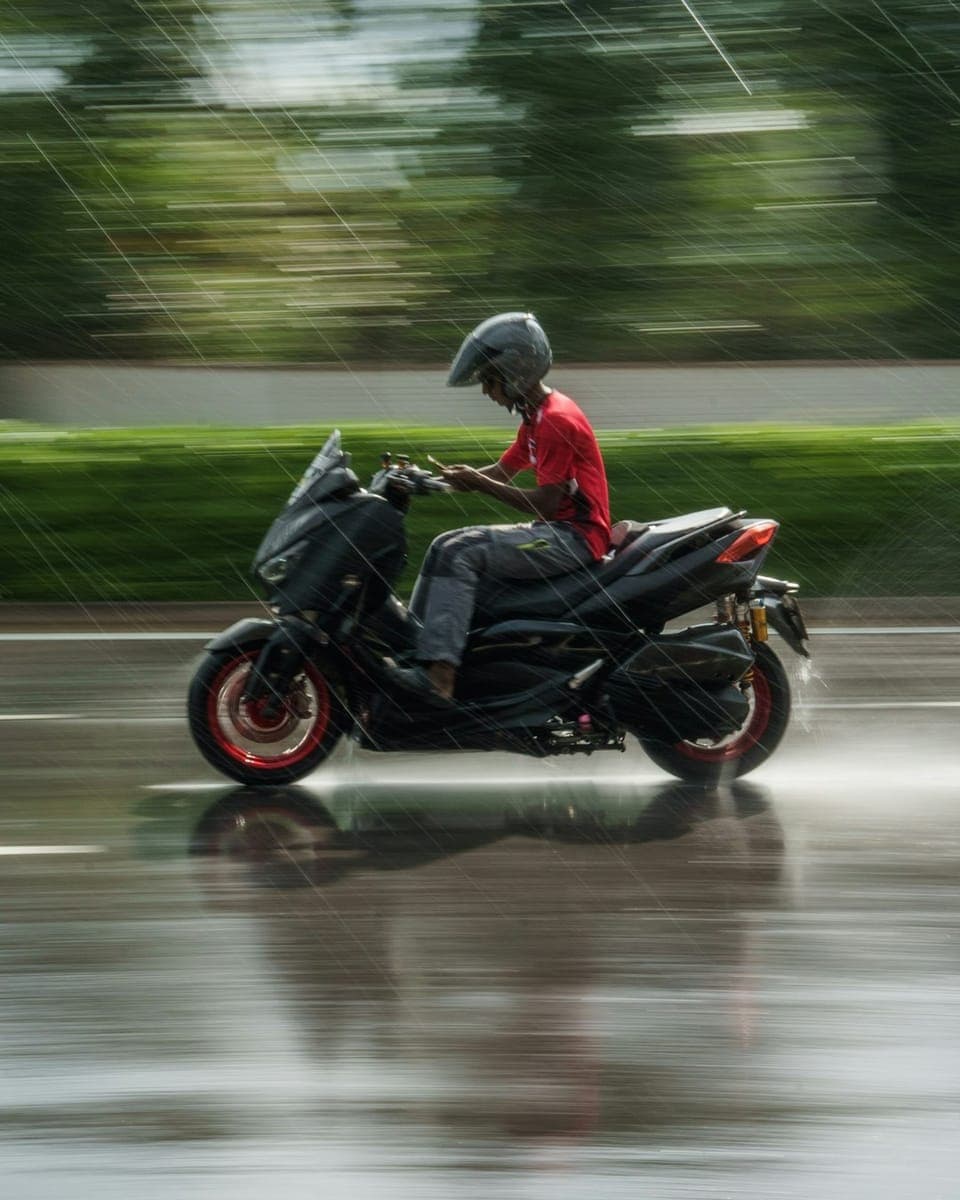
To ride a motorcycle in rain safely, smooth all inputs (throttle, brakes, steering), reduce speed by 30-40%, brake earlier and lighter, lean less in corners, and avoid slippery surfaces like metal manhole covers, painted lines, and oil patches. The first 15 minutes of rain are the most dangerous due to oil film on the road surface.
It's going to rain on you. Not "if" — when. Unless you exclusively ride on sunny Saturdays, eventually you'll get caught in a downpour 40 miles from home with no exit ramp in sight.
Most new riders are terrified of rain. And honestly? The fear is justified — but not for the reasons you think. NHTSA motorcycle safety data shows that environmental factors contribute to a significant portion of crashes. Rain itself isn't dangerous. What's dangerous is riding in rain the same way you ride in dry conditions. The techniques that keep you safe at 60 mph on dry pavement will put you on the ground in wet conditions.
This guide covers the adjustments — to your riding, your gear, and your route planning — that make rain riding manageable and, eventually, something you don't even think twice about. If wind is more your concern, check out our guide on how to ride a motorcycle in wind for that side of weather riding.
The First 15 Minutes Are the Most Dangerous
This is the single most important thing in this entire article: the most dangerous time to ride in rain is the first 15 minutes after it starts.
Here's why. Roads accumulate oil, coolant, tire rubber, and other fluids between rainstorms. The Federal Highway Administration reports that 75% of weather-related vehicle crashes occur on wet pavement. These substances sit on top of the asphalt in a thin, invisible film. When rain first starts, it mixes with this film and creates an incredibly slippery surface — slicker than the road will be at any other point during the storm.
After 15-20 minutes of steady rain, the water washes most of this film away and the road surface is actually more predictable. Still wet, still reduced traction — but not the skating rink of those first few minutes.
If rain starts while you're riding, the safest move is to pull over for 15-20 minutes and let the initial oil wash away. Find a gas station, grab a coffee, wait it out. If you can't stop, reduce speed by 30-40% and avoid any aggressive inputs during that first window.
Technique Adjustments for Wet Riding
1. Smooth Everything
This is the core principle. Every input — throttle, brakes, steering — needs to be smoother, slower, and more gradual than on dry pavement.
- Throttle: Roll on gently. Aggressive throttle on a wet road can spin the rear tire, especially on powerful bikes. In lower gears, be extra cautious — the shorter gear ratio amplifies throttle input.
- Braking: Squeeze, don't grab. Apply brakes progressively and earlier than you normally would. If either tire starts to lock, release pressure immediately and reapply more gently.
- Steering: No sudden inputs. Countersteer as you normally would, but with less force. The bike will still turn — it just needs gentler convincing. If you need a refresher on cornering and countersteering technique, nail that down before you try it in the wet.
The mantra: If it's wet, be smooth. If you're being smooth and still feel sketchy, be smoother.
2. Brake Earlier and Lighter
Your stopping distance on wet pavement increases by 50-100% compared to dry conditions. That means:
- The gap you keep behind cars should double (from 2 seconds to 4+ seconds)
- Start braking much earlier for stops and turns
- Use both brakes, but favor the rear more than usual (60/40 rear/front split instead of the typical 70/30 front/rear in dry)
- Avoid braking mid-corner entirely if possible — brake before the turn and roll through on steady throttle
3. Lean Less
Your tires have less grip in the rain. The contact patch is partially covered by water. This means your maximum lean angle is reduced — significantly.
A good rule: Keep your lean angle at about 60-70% of what you'd use on dry pavement. If a corner normally takes moderate lean, take it more upright in the rain. This means slower corner speeds. Accept it. Trying to match dry-weather pace in rain is how crashes happen.
4. Be Visible
Rain reduces visibility for everyone — you, car drivers, and truckers. Car drivers can barely see motorcycles on a sunny day. In rain with spray and fog, you're practically invisible.
- Keep your headlight on (most modern bikes do this automatically)
- Wear bright or reflective gear — hi-viz rain jackets are ugly and save lives
- Avoid blind spots — especially next to trucks and SUVs that kick up massive spray
- Position yourself where drivers can see you — center of the lane or the left third, where you appear in their mirrors
5. Stay Out of Tire Tracks
This is counterintuitive. On dry roads, car tire tracks are the grippiest part of the lane because they're the cleanest. In rain, car tire tracks are the slipperiest part because that's where oil and fluids accumulate most.
Ride in the section of lane between the tire tracks (the center strip) or to the side of them. This part of the road has more texture and less oil contamination.
Exception: In heavy rain with standing water, car tire tracks can actually be better because they've displaced some of the water. This is the opposite of light rain advice. Use judgment based on conditions — if there's standing water, tire tracks may have less depth.
Surfaces That Will Wreck You in the Rain
Some surfaces lose almost all grip when wet. Know them. Avoid them. Plan your line to stay clear. For a deeper look at dangerous surfaces and obstacles you'll encounter, see our full motorcycle road hazards guide.
Metal
Manhole covers, railroad tracks, metal plates, and bridge grates. These become ice in the rain. Your tires have nearly zero grip on wet metal.
- Cross railroad tracks and metal plates at as close to perpendicular (90 degrees) as possible. Crossing at an angle increases the chance your tire slides along the metal surface.
- Avoid manhole covers entirely. Adjust your lane position to ride around them. If you can't avoid one, don't brake or lean while you're on it — just roll straight over it.
Painted Lines
Lane markings, crosswalks, stop lines, and arrows. Paint is significantly more slippery than asphalt when wet.
- Don't brake on painted lines. Especially the thick stop lines at intersections. Brake before or after them.
- Don't lean on painted lines. In turns, adjust your line to cross painted markings while the bike is as upright as possible.
Leaves and Debris
Wet leaves on the road have roughly the same grip as wet ice. In fall and early spring, this is a major hazard on tree-lined roads.
Oil Patches
At intersections, especially near gas stations and parking lot entrances, oil deposits are heaviest. In rain, these become rainbow-sheened slicks that are genuinely dangerous. Approach intersections in the cleanest section of your lane.
Construction Plates
Steel plates covering road work are death traps in the rain. If you see them ahead, straighten the bike completely and roll over them slowly without braking, accelerating, or leaning.
Scan the road surface constantly. In dry weather, you mostly watch traffic. In rain, you watch traffic AND the road surface simultaneously. Your eyes should be picking up metal, paint, leaves, and standing water well in advance so you can plan your line.
Rain Gear That Actually Works
You can ride in rain with regular gear and a trash bag. You'll survive. But proper motorcycle rain gear is the difference between "I can ride through anything" and "I'm pulling over because I can't feel my hands."
Rain Jacket and Pants
Nelson-Rigg Stormrider Rain Suit
Full rain suit (jacket + pants) that packs into a tiny bag and fits over your riding gear. Sealed seams, reflective piping for visibility, and a price that makes it a no-brainer to throw in your tail bag on every ride. Under $70 for the complete suit.
Why this matters: A dedicated rain suit worn OVER your riding gear is better than a "waterproof" riding jacket for one simple reason — your riding jacket's waterproofing degrades over time. A rain suit is your reliable backup that never fails because it's only used when it rains.
Waterproof Gloves
Held Rain Overgloves
Waterproof overgloves that slip over your regular riding gloves. Keep your hands dry without sacrificing the feel and protection of your primary gloves. Stash them in your jacket pocket — they weigh almost nothing.
Wet hands lose grip strength and go numb from cold. Either carry rain overgloves or invest in a pair of dedicated waterproof riding gloves for commuting season.
Pinlock Visor Insert
Pinlock Anti-Fog Insert
A double-pane insert that fits inside your helmet visor and eliminates fogging. In rain, your visor WILL fog from the inside. A Pinlock is the only reliable solution. Most modern helmets come Pinlock-ready — you just need to buy the insert for your specific helmet model.
This is non-negotiable for rain riding. A fogged visor means you can't see. You can crack the visor open, but then rain hits your face and eyes. A Pinlock insert eliminates the problem entirely for $25-40.
Boot Covers
Nelson-Rigg Waterproof Boot Covers
Pull them over your riding boots in 30 seconds. Sealed seams, reinforced sole, and a strap to keep them from flapping at speed. Dry feet for the entire ride. Under $30.
Tire Considerations
Your tires are the single biggest factor in wet grip. All tires are not equal in rain — our motorcycle tires guide goes deeper into choosing the right rubber for your riding style.
Tread Pattern Matters
Tires with more grooves and siping (small cuts in the tread blocks) channel water away from the contact patch more effectively. Sport touring tires and all-season tires typically have better wet performance than pure sport tires, which often prioritize dry grip with minimal tread pattern.
Tire Pressure
Check your tire pressure before riding in rain. Underinflated tires have a larger contact patch (good for grip) but are more prone to hydroplaning because they can't channel water as efficiently. Overinflated tires have a smaller contact patch with less grip overall. Run your manufacturer's recommended pressure — it's calibrated for mixed conditions.
Tire Age
Old tires lose wet grip faster than dry grip. The rubber compound hardens over time, reducing its ability to conform to the road surface and channel water. If your tires are more than 4-5 years old, they may feel fine in dry conditions but become unpredictable in rain. Check the date code on the sidewall.
If you commute on your motorcycle year-round, consider sport touring tires over pure sport tires. Michelin Road 6, Bridgestone T32, and Pirelli Angel GT II are all excellent in wet conditions while still being fun in dry. The wet grip difference is dramatic.
When NOT to Ride in Rain
There's a difference between "riding in rain" and "riding in a storm." Know when to call it.
Don't ride in:
- Thunderstorms with lightning. You're the tallest metal object on the road. Don't tempt physics.
- Flash flood warnings. Standing water deeper than your wheel hub can hydroplane your bike instantly. Water across the road that you can't see the bottom of? Don't cross it.
- Hail. Getting hit by hailstones at 60 mph hurts. A lot. Pull over immediately.
- Heavy fog with rain. If visibility drops below 100 feet and the road is wet, the risk-to-reward ratio is terrible. Pull over and wait.
- Your first month of riding. Seriously. Build your basic skills in dry conditions first. Rain amplifies every mistake, and new riders make a lot of mistakes. There's no shame in trailering the bike or bumming a ride when it rains during your first few weeks.
Riding in Rain at Night
Rain at night is the hardest condition you'll face on a motorcycle. Visibility drops to almost nothing — headlights reflect off the wet road and oncoming lights create glare that washes out your depth perception.
Tips for night rain:
- Reduce speed further — you can't see hazards as far ahead
- Use high beam only when no oncoming traffic — low beam in rain is barely adequate
- Keep your visor spotless — water droplets on a dirty visor scatter light and create halos around every light source
- Apply Rain-X to the outside of your visor — it causes water to bead and roll off instead of sheeting
- Follow car tail lights at a safe distance — they illuminate the road ahead for you and their brake lights give you early warning
After the Ride
Wet rides are hard on your bike. A few minutes of post-ride care prevents long-term problems.
- Dry the chain. A wet chain rusts fast. Wipe it down with a rag and apply chain lube. This takes 3 minutes and saves your chain from premature death.
- Dry the brake rotors. A few light brake applications while coasting into your driveway will heat the rotors enough to evaporate surface water.
- Open your helmet. Remove the liner or at minimum open the visor and all vents. Let it air dry. A musty helmet is a miserable helmet.
- Hang your gear. Don't ball up wet gloves or stuff them in a drawer. Hang everything to air dry.
The Mental Game
Here's the truth: once you've done it a few times, rain riding goes from terrifying to routine. It's like driving a car in rain — the first time feels sketchy, and by the twentieth time you don't even think about it.
The key is building experience gradually. Ride in light rain around your neighborhood. Then try a short commute in moderate rain. Then extend to highway riding in rain. Each step builds confidence and muscle memory for the smooth inputs that wet riding demands.
Thousands of riders commute through rain daily, all year, without incident. The technique adjustments are simple. The gear exists. Rain is just weather — it's not a reason to stop riding. It's a reason to ride smarter.
Frequently Asked Questions
Is it safe to ride a motorcycle in the rain?
Yes, riding in rain is safe when you adjust your technique. Reduce speed by 30-40%, brake earlier and lighter, lean less in corners, and avoid slippery surfaces like metal manhole covers, painted lines, and oil patches at intersections.
How much does rain reduce motorcycle tire grip?
Rain reduces tire grip significantly, increasing your stopping distance by 50-100% compared to dry conditions. Your maximum safe lean angle drops to about 60-70% of what you would use on dry pavement.
Why is the first 15 minutes of rain the most dangerous for motorcycles?
Roads accumulate oil, coolant, and rubber between rainstorms. When rain first starts, it mixes with this film and creates an extremely slippery surface. After 15-20 minutes of steady rain, the water washes most of this away.
What gear do I need to ride a motorcycle in rain?
You need a waterproof rain suit worn over your riding gear, waterproof gloves or rain overgloves, a Pinlock anti-fog visor insert to prevent fogging, and waterproof boot covers. A hi-viz rain jacket also helps with visibility.
Should I use front or rear brake more in the rain on a motorcycle?
In rain, favor the rear brake more than usual with roughly a 60/40 rear-to-front split instead of the typical 70/30 front-to-rear in dry conditions. Apply both brakes progressively and avoid braking mid-corner entirely.
Written by
6FOOT4HONDAMotorcycle creator with 1.2M+ subscribers on YouTube and 2M+ across all platforms. Riding and filming since 2016, with 1,000+ videos covering beginner riding tips, gear reviews, stunts, and road trips. Every product recommended on this site has been personally tested on real rides — from highway touring to track days to stunt sessions. Based in the US, riding year-round.
Related Articles
Motorcycle Riding Skills: The Complete Guide to Riding Safely (2026)
Every riding skill you need to master - from traffic survival to cornering, rain, wind, night riding, passengers, and more. Your complete skills hub.
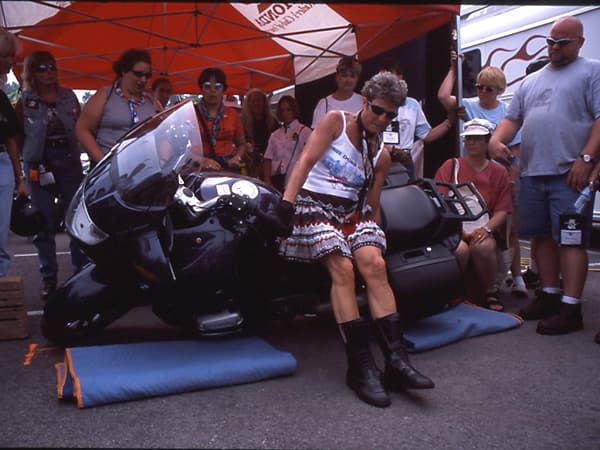
How to Pick Up a Dropped Motorcycle (Without Hurting Yourself)
Every rider drops their bike. It's not if, it's when. The proper technique to lift a 400+ lb motorcycle safely, plus what to inspect before riding it again.
How to Ride a Motorcycle in Wind: Crosswind, Gusts, and Highway Survival (2026)
Wind is the invisible hazard nobody teaches you about. Crosswinds, gusts from trucks, and highway buffeting — here's how to handle it all without white-knuckling.