Motorcycle Riding Skills: The Complete Guide to Riding Safely (2026)
By 6FOOT4HONDA · 15 min read · Mar 3, 2026 · Updated Mar 4, 2026

This post may contain affiliate links. We only recommend gear we'd use ourselves. If you click a link and make a purchase, we may earn a small commission at no extra cost to you.
In This Article
Here is an uncomfortable truth: your motorcycle does not care how much you paid for it. A $15,000 bike will crash just as hard as a $3,000 bike if the rider does not have the skills to handle it. The bike is only as capable as the person on it.
The MSF course (Motorcycle Safety Foundation) teaches you the absolute basics - enough to pass a test and ride around a parking lot. But the real learning starts the moment you pull into traffic for the first time. Suddenly you are dealing with distracted drivers, gravel in blind corners, rain on your visor, crosswinds on the highway, and a thousand other situations the course could not prepare you for.
This page is your complete skills reference. We have written in-depth guides on every critical riding scenario you will face, and this hub ties them all together in the order you will probably need them. Bookmark this page and work through each guide as you gain experience.
Why Skills Matter More Than the Bike
New riders obsess over which bike to buy. Fair enough - it is an exciting purchase. But here is what the data says: the overwhelming majority of motorcycle accidents are caused by rider error, not mechanical failure. The NHTSA consistently finds that rider skill (or lack of it) is the primary factor in fatal motorcycle crashes.
That means the single most impactful upgrade you can make is not a new exhaust, not new tires, not a bigger engine. It is putting in the time to build real riding skills. Everything on this page is free to learn and could save your life.
Riding in Traffic
This is the skill you need first because traffic is where most crashes happen. About 42% of fatal motorcycle accidents occur at intersections, and the most common crash scenario is a car turning left across your path - the infamous SMIDSY ("Sorry Mate, I Didn't See You").
Traffic survival is about positioning, visibility, and prediction. Where you place yourself in the lane, how you make yourself visible to other drivers, and how you read traffic patterns before they become threats - these are learnable skills that dramatically reduce your risk.
Our traffic guide covers lane positioning, the SIPDE scanning method, intersection strategy, following distance, escape routes, and the specific driver behaviors that should put you on high alert.
Read the full guide: How to Ride a Motorcycle in Traffic
Cornering and Countersteering
Cornering is where the physics of motorcycling really click - or really go wrong. Every new rider has that first moment in a curve where the bike feels like it wants to run wide, the instinct screams "brake!", and panic sets in. Understanding how countersteering works changes everything.
Countersteering is not optional. It is not an advanced technique. It is the only way a motorcycle turns at speeds above about 15 mph. Push the right handlebar to go right. Push the left to go left. The bike leans, the tires track through the curve, and you come out the other side wondering why this ever felt scary.
Our cornering guide covers the mechanics of countersteering, trail braking, proper vision techniques (look through the turn, not at the ground in front of you), body positioning, and how to handle decreasing-radius and off-camber corners.
Read the full guide: Motorcycle Cornering and Countersteering Guide
Riding in the Rain
Rain does not mean you have to stay home. It means you have to ride differently. Modern motorcycle tires have excellent wet grip - far better than most new riders expect. The real dangers in rain are not the tires losing traction on pavement. They are painted road markings, manhole covers, metal plates, oil slicks that float to the surface, and reduced visibility.
Rain riding is a skill set that every serious rider needs to develop. You will get caught in rain at some point - it is not a matter of if, it is when. Being prepared instead of panicked makes the difference.
Our rain riding guide covers how traction actually works in wet conditions, what surfaces to avoid, visor anti-fog strategies, braking technique adjustments, and how to read the road when everything is wet.
Read the full guide: How to Ride a Motorcycle in Rain
Riding in Wind
Crosswinds are one of the most unsettling experiences for a new rider. A sudden gust hits you from the side, the bike shifts in the lane, and your entire body tenses up. It feels like you are about to get blown off the road.
The reality is that motorcycles handle wind better than riders think. The key is understanding how wind affects the bike, staying relaxed on the bars, and positioning your body to minimize the impact. Tensing up and death-gripping the handlebars is the worst thing you can do - it prevents the bike from self-correcting.
Our wind guide covers crosswind technique, riding in gusty conditions, highway wind management, positioning behind large vehicles (and when NOT to do it), and how to handle sudden gusts without panicking.
Read the full guide: How to Ride a Motorcycle in Wind
Night Riding
Riding at night removes your biggest safety tool: visibility. You see less, other drivers see YOU less, and the hazards that were easy to spot during the day - potholes, gravel, oil, animals - become invisible until they are right in front of you.
Night riding is not inherently dangerous, but it demands more from you. You need to adjust your speed, increase your following distance, position yourself to maximize what your headlight illuminates, and be hyper-aware of your own visibility to other traffic.
Our night riding guide covers headlight upgrades and positioning, reflective gear and visibility strategies, eye fatigue management, speed adjustment formulas, and how to deal with oncoming headlight glare.
Read the full guide: Motorcycle Night Riding Guide
Riding with a Passenger
Adding a passenger changes everything about how your motorcycle handles. The extra weight shifts the center of gravity, extends braking distances, changes the turning dynamics, and requires throttle and clutch adjustments you are not used to.
Before you ever put a passenger on the back, you need to be solid on all the fundamentals. A passenger amplifies every mistake. If your braking technique is rough solo, it gets worse with a passenger. If you are jerky on the throttle, your passenger will headbutt your helmet on every shift.
Our passenger guide covers weight distribution, braking and cornering adjustments, communication with your passenger, proper passenger gear, and the conversation you need to have before the first ride together.
Read the full guide: How to Ride a Motorcycle with a Passenger
Group Riding and Hand Signals
Riding with other people is one of the best parts of motorcycling - but it introduces risks that solo riding does not have. Riders in groups make different decisions. Ego creeps in. People try to keep up with faster riders. Communication breaks down. And if you do not know the standard motorcycle hand signals, you are riding blind in the pack.
Group riding has its own set of rules, and they exist for a reason. Staggered formation, passing protocols, how to handle stops, and what to do when the group gets separated - all of it matters.
Our group riding guide covers the standard hand signals every rider needs to know, formation riding, ride leader responsibilities, how to handle mixed-skill groups, and the biggest mistakes group riders make.
Read the full guide: Motorcycle Hand Signals and Group Riding Guide
How to Pick Up a Dropped Motorcycle
It is going to happen. Every rider drops their bike at some point - usually at low speed, in a parking lot, with an audience. It is embarrassing but almost never damaging (to you or the bike). The real problem is that motorcycles are heavy, and trying to pick one up the wrong way can hurt your back.
There is a correct technique for picking up a dropped motorcycle that uses your legs instead of your back, and it works even if you are smaller than the bike. Our guide walks you through the exact method, step by step.
Read the full guide: How to Pick Up a Dropped Motorcycle
What to Do After a Motorcycle Crash
Nobody wants to think about this, but knowing what to do in the minutes after a crash can protect your health, your legal rights, and your insurance claim. The adrenaline dump after an accident makes it hard to think clearly, which is why you need to know the steps before it happens.
Our post-crash guide covers the immediate safety checklist, what to document at the scene, how to deal with the other driver, when to go to the hospital (hint: always), and how to handle the insurance claim process.
Read the full guide: What to Do After a Motorcycle Crash
Planning Your First Road Trip
Long-distance riding is the ultimate reward for building your skills. There is nothing like clocking 400 miles of scenic roads in a day, arriving at a destination you rode to under your own power, and knowing you handled everything the road threw at you.
But a motorcycle road trip requires planning that a car trip does not. Packing is severely limited. Fatigue management is critical. Route selection matters more because not all roads are created equal on two wheels. And your body will tell you things on mile 250 that it never mentioned on mile 50.
Our road trip guide covers route planning, packing strategies for limited space, fatigue management, fuel range planning, and the gear and tools you should always carry.
Read the full guide: First Motorcycle Road Trip Guide
Motorcycle Camping
Want to take the road trip even further? Motorcycle camping combines two of the best activities on earth. You ride all day, set up camp wherever you stop, cook a simple meal, sleep under the stars, and do it again tomorrow. It is the purest form of adventure riding.
But packing a tent, sleeping bag, pad, stove, and food on a motorcycle requires a completely different approach than car camping. Every ounce matters. Every cubic inch of space is precious. And your camping gear choices directly affect how the bike handles.
Our camping guide covers what gear to bring (and what to leave behind), how to pack a motorcycle for camping, campsite selection, cooking setups, and the complete motorcycle camping checklist.
Read the full guide: Motorcycle Camping for Beginners Guide
Building Your Skills: The Progression Path
If you are a new rider, here is the order we recommend working through these guides:
- Traffic riding - You need this immediately. Every ride involves traffic.
- Cornering and countersteering - The fundamental physics of how your bike turns.
- Rain riding - You will get caught in rain. Be ready.
- Wind riding - Especially important if you ride highways.
- Night riding - Unavoidable if you commute or ride year-round.
- Picking up a dropped bike - Learn the technique before you need it.
- Passenger riding - Only after you are solid on all the above.
- Group riding - Learn the signals and protocols before your first group ride.
- Post-crash protocol - Memorize the steps. Hope you never need them.
- Road trips and camping - The fun reward for doing the work.
Each of these skills builds on the ones before it. Traffic awareness makes you better at cornering because you are scanning further ahead. Rain riding makes you smoother on the brakes, which makes you better in every condition. Night riding forces you to process less visual information, which sharpens your hazard detection.
The skills compound. The more you learn, the safer and more confident you become. And the more confident you are, the more you enjoy every ride.
Never Stop Learning
Here is the thing about motorcycle riding: you are never done learning. Riders with 20 years of experience still take advanced riding courses. Professional racers still work with coaches. The moment you think you know everything is the moment you become dangerous.
Take an advanced riding course once a year. Practice emergency braking in an empty parking lot. Deliberately ride in conditions that make you uncomfortable (within reason). Push your skills in controlled environments so the road never surprises you.
The best riders are not the fastest. They are the ones who come home every single time.
Frequently Asked Questions
What is the most important motorcycle riding skill for beginners?
Traffic awareness and hazard scanning is the most important skill for beginners. Most motorcycle accidents happen in traffic, especially at intersections. Learning to read traffic patterns and predict driver behavior reduces your crash risk more than any other single skill.
How long does it take to become a confident motorcycle rider?
Most riders start feeling genuinely confident after 3,000 to 5,000 miles of varied riding experience. That typically means six months to a year of regular riding. However, building advanced skills like cornering and wet-weather riding takes continued practice beyond that point.
Should I take a motorcycle safety course even if my state does not require one?
Yes, absolutely. The MSF Basic RiderCourse teaches fundamental skills that self-taught riders often miss. Many insurance companies also offer discounts for course completion. Consider taking an advanced course after your first year of riding to continue building skills.
What is countersteering and do I really need to learn it?
Countersteering is the technique of pushing the handlebar in the opposite direction you want to turn, which causes the motorcycle to lean and turn. It is not optional - it is the only way a motorcycle turns at speeds above about 15 mph. Every rider uses countersteering whether they realize it or not.
Is it safe to ride a motorcycle in the rain?
Yes, riding in rain is safe if you adjust your technique. Modern motorcycle tires have good wet grip on clean pavement. The main hazards are painted road markings, metal surfaces, oil slicks, and reduced visibility. Slow down, increase following distance, and avoid painted lines and manhole covers.
Written by
6FOOT4HONDAMotorcycle creator with 1.2M+ subscribers on YouTube and 2M+ across all platforms. Riding and filming since 2016, with 1,000+ videos covering beginner riding tips, gear reviews, stunts, and road trips. Every product recommended on this site has been personally tested on real rides — from highway touring to track days to stunt sessions. Based in the US, riding year-round.
Related Articles
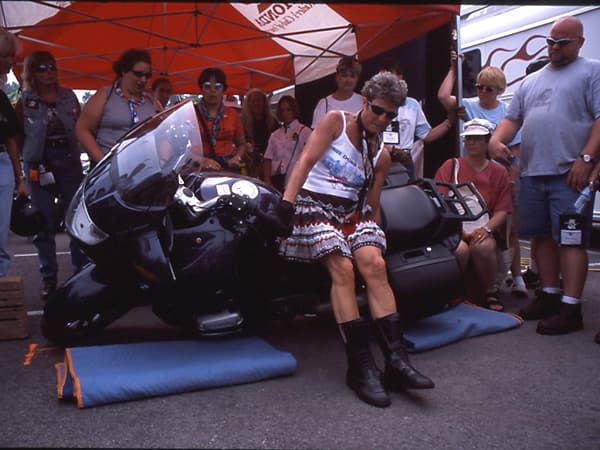
How to Pick Up a Dropped Motorcycle (Without Hurting Yourself)
Every rider drops their bike. It's not if, it's when. The proper technique to lift a 400+ lb motorcycle safely, plus what to inspect before riding it again.
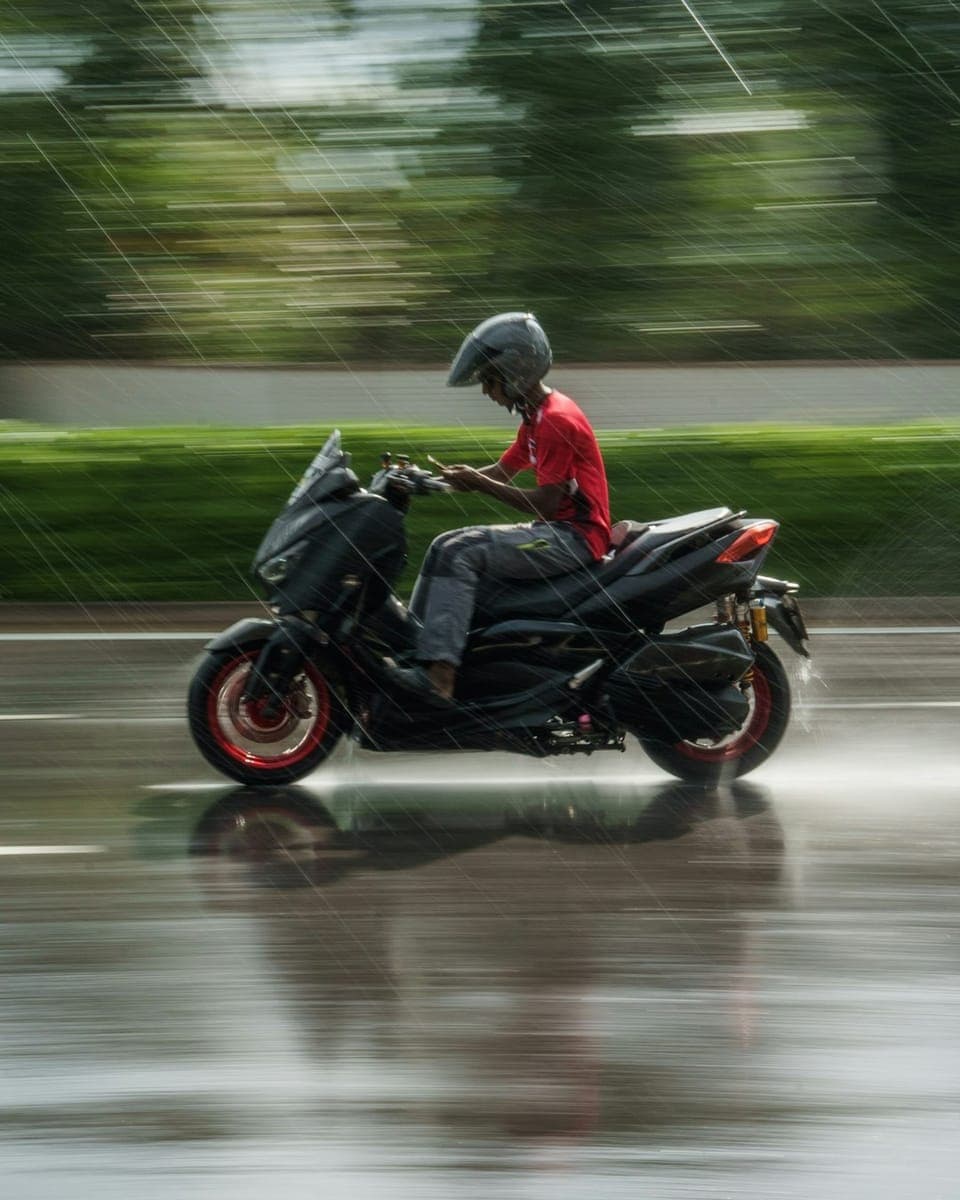
How to Ride a Motorcycle in Rain: The Complete Wet Weather Guide (2026)
Rain doesn't have to end your ride. Technique adjustments, the right gear, and knowing what surfaces to avoid — everything you need to ride confidently in wet conditions.
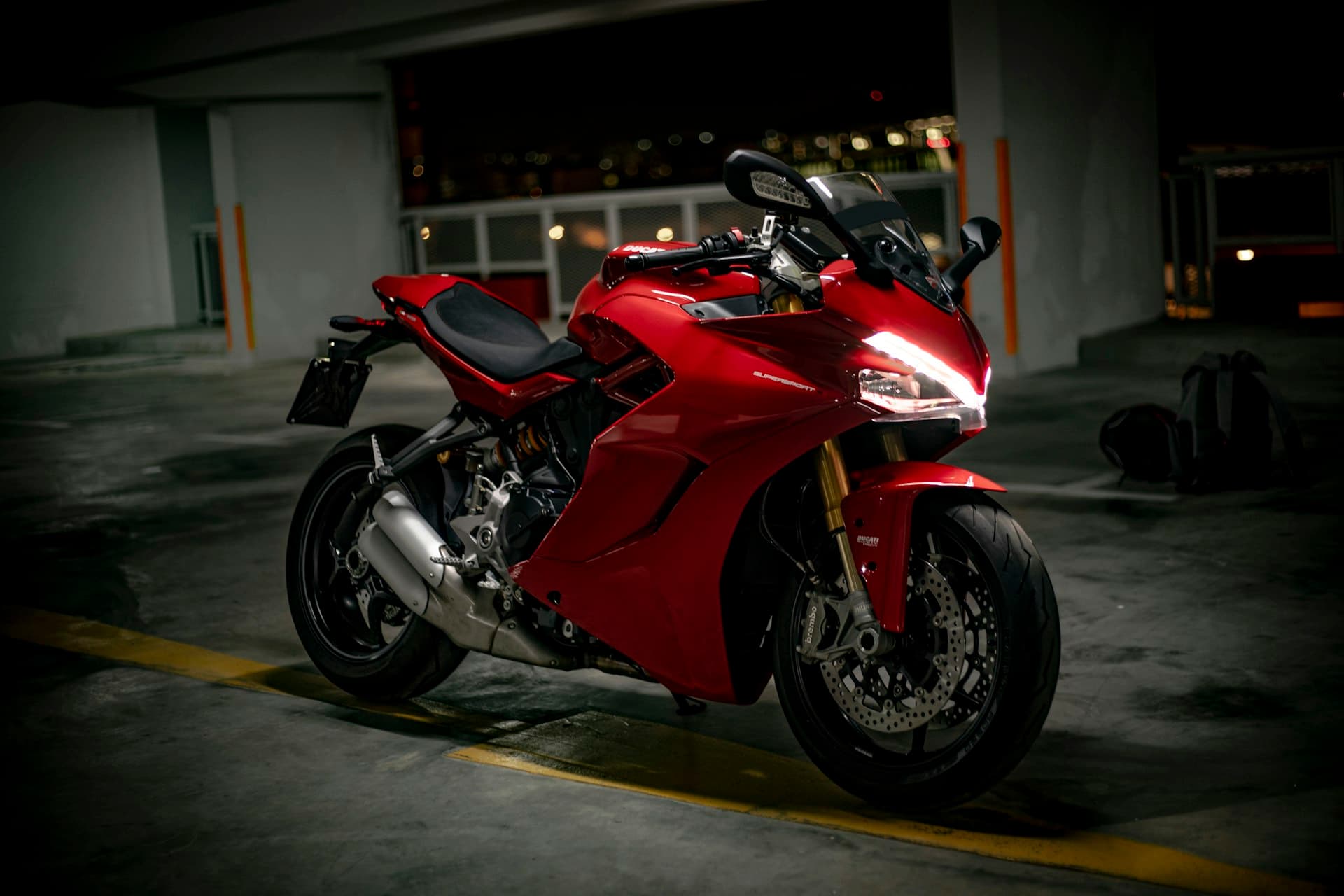
How to Ride a Motorcycle: Complete Step-by-Step Beginner's Guide (2026)
Learn how to ride a motorcycle from scratch — clutch control, shifting, braking, cornering, and highway riding. The complete beginner's guide with step-by-step instructions.