How to Ride a Motorcycle with a Passenger: The Complete Pillion Guide
By 6FOOT4HONDA · 13 min read · Mar 3, 2026 · Updated Mar 4, 2026
This post may contain affiliate links. We only recommend gear we'd use ourselves. If you click a link and make a purchase, we may earn a small commission at no extra cost to you.
In This Article
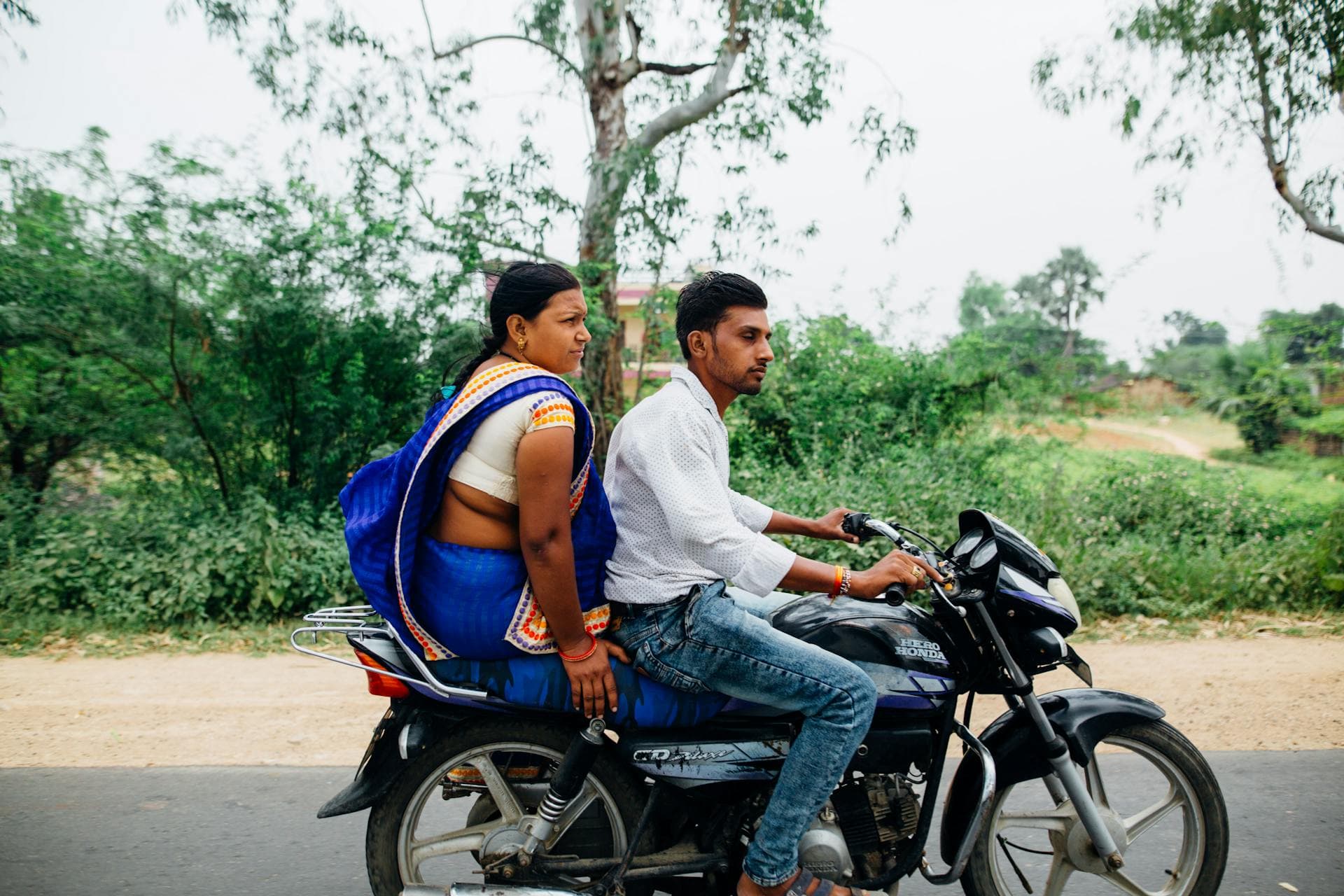
To ride a motorcycle with a passenger safely, increase rear suspension preload to the two-up setting, add 2-4 PSI to the rear tire, brake earlier since stopping distance increases 20-30%, use smoother throttle and cornering inputs, and brief your passenger on holding position, leaning in turns, and tap-signal communication before riding.
The first time you take a passenger on your motorcycle, two things will surprise you: how different the bike feels, and how nervous your passenger is — even if they won't admit it.
An extra 100-180 lbs on the back of your bike changes the braking distance, acceleration response, turning radius, and center of gravity. Everything you've calibrated in your muscle memory for solo riding is suddenly wrong.
This guide covers the adjustments — to your bike, your riding, and your communication with your passenger — that make two-up riding safe and actually enjoyable for both of you. The Motorcycle Safety Foundation recommends completing at least 1,000 solo miles before carrying a passenger.
Before You Ride: Is Your Bike Ready?
Not every motorcycle is a good passenger bike, and every motorcycle needs adjustments before carrying two.
Rear Suspension Preload
With a passenger's weight on the back, your rear suspension compresses further, which changes the bike's geometry — the front end gets lighter, the rear squats, and the steering feels vague.
Fix: Increase the rear preload. Most bikes have a preload adjuster on the rear shock — a knob, a cam, or a threaded collar. Your owner's manual has the two-up setting. Adjust it before the ride, and remember to set it back when you ride solo.
Tire Pressure
Add 2-4 PSI to the rear tire above your normal solo pressure (check your owner's manual for the exact two-up recommendation). The extra weight loads the rear tire harder, and slightly higher pressure compensates for the additional load.
Mirror Adjustment
Your passenger's body may block your view in the mirrors. Adjust them before you pull out of the driveway. You should be able to see behind you without your passenger's torso filling the mirror.
Check your bike's maximum weight capacity. Every motorcycle has a maximum load rating (GVWR minus the bike's wet weight). Your weight + passenger's weight + gear must stay under this number. A 400-lb combined weight on a Ninja 250 is at or above its rated capacity. A 400-lb combined on an MT-07 is well within limits.
The Passenger Briefing
Before your passenger gets on the bike, have a 3-minute conversation. This isn't optional — it's the difference between a passenger who works with you and one who panics and grabs the wrong thing mid-corner.
What to Tell Your Passenger
Getting on and off: "I'll get on first, start the bike, and hold it steady. Then you step on the left peg, swing your right leg over, and sit down. Getting off is the reverse — wait until I tell you, then step off the left side. Always mount and dismount from the left."
Where to hold: "Hold onto my waist, my hips, or the grab rails. Don't hold my shoulders — it affects my steering. If we brake hard, brace against the tank with your arms or grab the grab rails, not me."
In corners: "Look over my inside shoulder in turns. If we turn right, look over my right shoulder. This naturally shifts your weight with the bike instead of against it. Don't try to lean yourself — just match what I do."
Communication: "If you need to stop, tap my left shoulder twice. If something is wrong, tap rapidly. I won't be able to hear you over wind noise, so use taps."
The most important thing: "Don't make sudden movements. No turning around to look at something, no shifting your weight suddenly, no grabbing my arms. Keep your feet on the pegs at all times — especially at stops."
Your passenger MUST have their own gear. Full-face helmet (properly fitted to THEIR head, not yours), jacket, gloves, boots, and pants. The pavement doesn't care if you're the rider or the passenger — the injuries are identical. No gear, no ride.
Gear for Your Passenger
At minimum, your passenger needs:
- DOT-certified helmet — Must fit properly. Don't give them your old helmet if it's the wrong size.
- Jacket — Armored riding jacket is ideal. A heavy leather or textile jacket is acceptable for short rides.
- Closed-toe shoes — Boots preferred. No sandals, no flip-flops, no open-toed anything. The exhaust pipe is inches from their ankle.
- Gloves — Riding gloves or at minimum leather work gloves. Hands hit the pavement first in most low-speed falls.
- Long pants — Riding pants or at minimum heavy jeans. No shorts.
If your passenger doesn't have a helmet, check out our beginner helmet guide for options.
Riding Technique Adjustments
Braking
Your stopping distance increases by 20-30% with a passenger. The extra weight means more momentum. More momentum means longer stops.
- Brake earlier than you would solo — start slowing well before your normal braking point
- Apply brakes progressively, not suddenly. A hard brake grab will send your passenger's weight slamming into your back, which pushes you into the tank
- Use more rear brake than usual — the extra weight on the rear gives the rear tire more traction for braking
Acceleration
Smooth, gradual throttle only. A twist of throttle that feels normal solo will pitch your passenger backward. Their instinct will be to grab you tighter or jerk forward, which destabilizes the bike.
- Roll on the throttle slowly from stops
- Warn your passenger before spirited acceleration ("I'm going to accelerate now")
- Short-shift to keep the RPMs moderate — no need for peak power with a passenger
Cornering
Lean less aggressively and enter corners at lower speed. The extra weight raises your center of gravity and changes how the bike transitions from upright to leaned.
- Reduce your corner entry speed by 10-15%
- Lean angle should be more conservative — the bike takes longer to change direction with a passenger
- Smooth, steady throttle through the turn — no trailing throttle or mid-corner adjustments
Low-Speed Maneuvering
This is the hardest part. Parking lots, U-turns, and tight spaces are significantly more difficult with a passenger.
- Keep your feet ready at low speed. Below 10 mph, be ready to put a foot down
- Use the friction zone (clutch partially engaged) for precise speed control
- Avoid tight U-turns until you're comfortable. If you need to turn around, find a parking lot and make a wide loop
- Ask your passenger to keep their feet on the pegs at stops. Some passengers instinctively try to put their feet down — this shifts weight unpredictably
Practice with weight before carrying a real person. Strap a heavy duffel bag or backpack (40-50 lbs) to the pillion seat and ride around your neighborhood. You'll feel the difference in braking and handling without the pressure of keeping another human safe while you learn.
Communication During the Ride
Wind noise makes verbal communication impossible above 30 mph without a communicator system. Establish a tap-signal system before you ride:
| Signal | Meaning |
|---|---|
| One tap on left shoulder | I'm okay / acknowledged |
| Two taps on left shoulder | I need to stop soon |
| Rapid tapping | Stop NOW — something is wrong |
| Squeeze of the waist | Slow down |
| Thumbs up (if holding grab rail) | I'm good, keep going |
Bluetooth Communicators
A Bluetooth communicator system like the Cardo Packtalk eliminates the communication problem entirely. Rider and passenger can talk in real-time, share music, and coordinate without tap signals. If you ride two-up regularly, a pair of communicators is the single best quality-of-life upgrade.
Common Passenger Mistakes (And How to Handle Them)
"They keep leaning the wrong way in corners"
The fix: Tell them to look over your inside shoulder. Looking over the inside shoulder naturally tilts their body in the correct direction. If they look the wrong way, their weight counteracts the lean — it won't crash you, but it makes cornering harder.
"They tense up and grab me hard"
The fix: This is fear. Slow down. Ride smoother. Build up gradually — start with neighborhood streets, then moderate roads, then highway. Confidence builds with positive experience, not speed.
"They put their feet down at stops"
The fix: Explicitly tell them before the ride: "Your feet stay on the pegs at all times, including stops. I'll hold the bike up." If they put a foot down, it shifts weight unexpectedly and can unbalance you.
"They move around on the seat"
The fix: Some fidgeting is normal — the pillion seat isn't always comfortable. If they're shifting constantly, stop and let them stretch. A short break every 30-45 minutes is reasonable for a new passenger.
When NOT to Carry a Passenger
- Your first 1,000 miles on a bike. You don't have enough experience with the bike's dynamics solo to safely add a passenger variable. Many states also have specific passenger laws regarding minimum rider age and experience requirements for carrying passengers.
- On a bike not designed for passengers. If there's no pillion seat, no rear pegs, or the owner's manual says "single rider only" — it's not a passenger bike.
- In bad weather. Rain and wind are harder solo. Adding a passenger makes an already challenging situation significantly more demanding.
- When tired or impaired. Your reaction time and judgment must be at 100% when you're responsible for someone else's safety.
- If the passenger refuses to wear gear. Non-negotiable. Full gear or they ride in a car.
Making It Enjoyable
Two-up riding doesn't have to be a white-knuckle experience for the passenger. The riders who take passengers regularly know these tricks:
- Start with short rides. 20-30 minutes for the first ride. Build up to longer distances.
- Pick smooth, scenic routes. Avoid stop-and-go traffic and construction zones. A winding backroad at moderate speed is far more enjoyable than highway commuting.
- Check in frequently. At every stop, ask: "How are you doing? Comfortable? Too fast? Too cold?" Their feedback makes you a better two-up rider.
- Let them record it. If they have an Insta360 camera, the invisible selfie stick captures incredible passenger-perspective footage.
- Stop for snacks. Every great motorcycle ride includes a coffee stop or ice cream break. With a passenger, it's even more important — the breaks are what they remember, not the miles.
The best two-up rides happen when the rider is smooth, communicative, and conservative. Your passenger trusts you with their life. Ride like it.
Frequently Asked Questions
How much experience should I have before riding with a passenger on a motorcycle?
You should have at least 1,000 miles of solo riding experience before carrying a passenger. You need solid muscle memory for braking, cornering, and low-speed maneuvering because a passenger changes all of these dynamics significantly.
Does riding with a passenger change motorcycle braking distance?
Yes, your stopping distance increases by 20-30% with a passenger due to the extra weight and momentum. Brake earlier and more progressively than you would solo, and use more rear brake since the extra weight gives the rear tire more traction.
What should a motorcycle passenger wear?
A passenger needs a properly fitted DOT-certified helmet, an armored riding jacket, riding gloves, boots that cover the ankle, and long pants - ideally riding pants or heavy jeans. The passenger faces the same crash risks as the rider.
How should a passenger lean on a motorcycle in turns?
The passenger should look over the riders inside shoulder during turns. Looking over the right shoulder in right turns and left shoulder in left turns naturally shifts the passengers weight in the correct direction with the bike. They should not try to lean independently.
Do I need to adjust my motorcycle before carrying a passenger?
Yes, increase the rear suspension preload to the two-up setting in your owners manual, add 2-4 PSI to the rear tire, and adjust your mirrors since the passenger may block your view. Check that your combined weight does not exceed the bikes maximum load rating.
Written by
6FOOT4HONDAMotorcycle creator with 1.2M+ subscribers on YouTube and 2M+ across all platforms. Riding and filming since 2016, with 1,000+ videos covering beginner riding tips, gear reviews, stunts, and road trips. Every product recommended on this site has been personally tested on real rides — from highway touring to track days to stunt sessions. Based in the US, riding year-round.
Related Articles
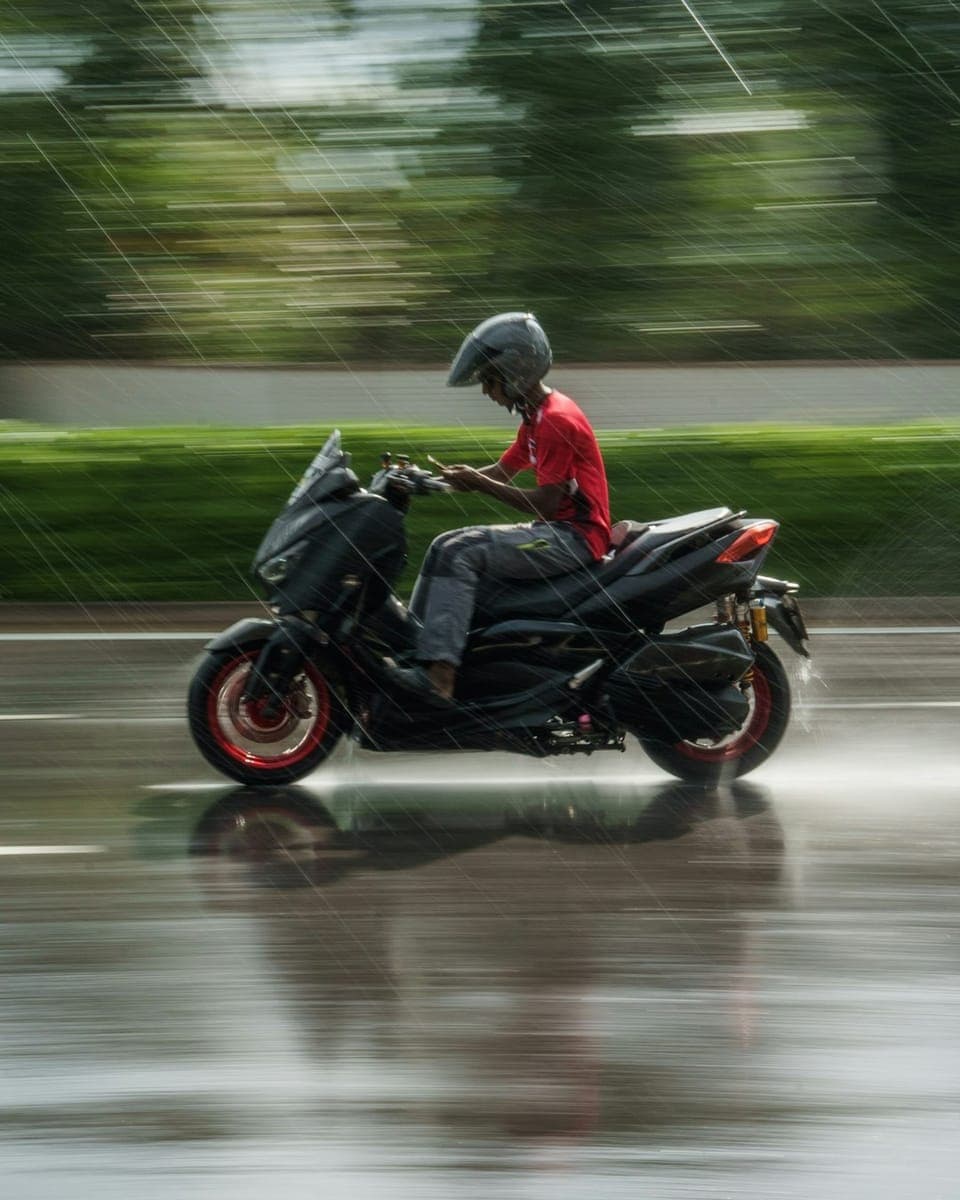
How to Ride a Motorcycle in Rain: The Complete Wet Weather Guide (2026)
Rain doesn't have to end your ride. Technique adjustments, the right gear, and knowing what surfaces to avoid — everything you need to ride confidently in wet conditions.
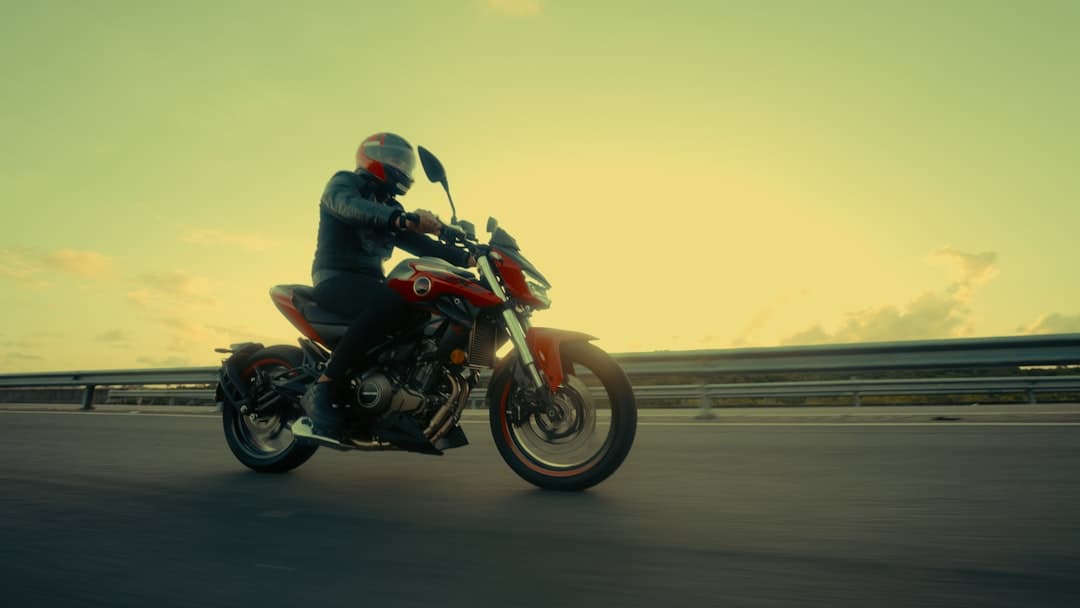
How to Ride a Motorcycle in Wind: Crosswind, Gusts, and Highway Survival (2026)
Wind is the invisible hazard nobody teaches you about. Crosswinds, gusts from trucks, and highway buffeting — here's how to handle it all without white-knuckling.
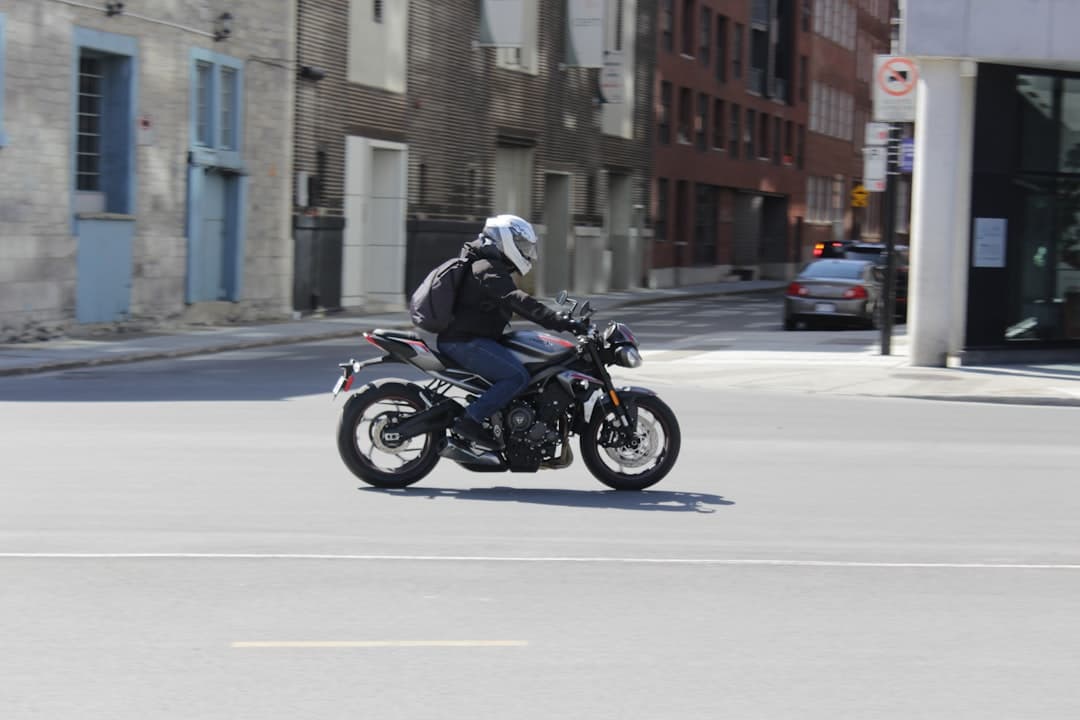
Motorcycle Cornering for Beginners: Countersteering, Body Position, and Line Selection
Countersteering is how motorcycles actually turn. Once you understand it — really understand it — every corner feels different. Here's the complete beginner guide.