How to Ride a Motorcycle in Traffic: The Urban Survival Guide
By 6FOOT4HONDA · 14 min read · Mar 3, 2026 · Updated Mar 4, 2026
This post may contain affiliate links. We only recommend gear we'd use ourselves. If you click a link and make a purchase, we may earn a small commission at no extra cost to you.
In This Article
Riding a motorcycle in traffic safely requires the SIPDE method (Scan, Identify, Predict, Decide, Execute), proper lane positioning, and defensive riding at every intersection. Over 60% of motorcycle accidents happen in urban traffic, so mastering these skills is essential for commuting and city riding.
Open road riding is what sells motorcycles. Traffic riding is what kills motorcyclists.
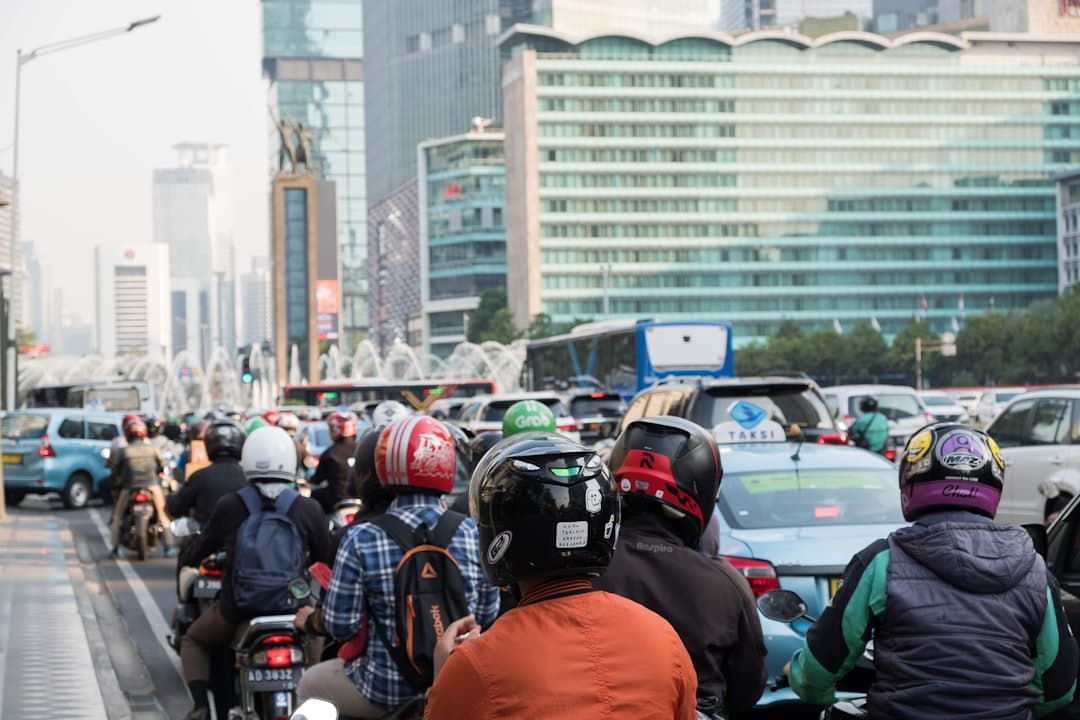
According to NHTSA, over 60% of motorcycle accidents happen in urban areas, at intersections, in traffic — not on mountain passes or highway sweepers. The car that turns left across your path. The driver who changes lanes without looking. The truck that runs a stale yellow while you're entering the intersection on green.
These scenarios aren't random. They're predictable. Once you learn to read traffic the way experienced urban riders do, you see the dangerous moves before they happen and position yourself to avoid them.
This guide covers the mental model, lane positioning, and defensive strategies that urban riders use to commute thousands of miles through city traffic without incident.
The SIPDE Method (How to Think in Traffic)
Experienced riders use a continuous mental process called SIPDE — it runs in a loop every few seconds while riding in traffic:
S — Scan. Constantly move your eyes across the environment. Mirrors, intersection entries, driveways, parked cars, pedestrians. Don't fixate on one thing — sweep your vision.
I — Identify. Spot potential hazards. The car in the right lane drifting toward the line. The driver at the cross street looking at their phone. The gap in traffic that someone might try to fill.
P — Predict. Assume the worst. The car at the cross street WILL pull out. The driver next to you WILL change lanes without signaling. The light WILL turn yellow when you're in the intersection. Predict the dangerous action before it happens.
D — Decide. Choose your response. Slow down. Change lanes. Cover the brake. Adjust your position. Have a plan before the hazard materializes.
E — Execute. Act on your decision smoothly and decisively. Don't hesitate once you've identified the threat and chosen your response.
This isn't paranoia — it's pattern recognition. After a few thousand miles of urban riding, SIPDE becomes automatic. You'll see the left-turning car 5 seconds before it moves.
The most important habit: always have an escape route. At every moment in traffic, know where you would go if something went wrong RIGHT NOW. Left shoulder? Right shoulder? Could you brake in time? Could you swerve? If you don't have an escape route, change your position until you do.
Lane Positioning
Where you position yourself within your lane is the single most powerful safety tool in traffic.
The Three Lane Positions
Every lane can be divided into three vertical positions:
- Position 1 (Left third): Your tire tracks are in the left third of the lane. You're visible in the mirror of the car ahead. You're closer to oncoming traffic but further from right-turning cars.
- Position 2 (Center): Dead center of the lane. Where oil, coolant, and debris accumulate. Generally the worst position.
- Position 3 (Right third): Your tire tracks are in the right third. You're visible to traffic entering from the right but hidden from left-turning vehicles.
Which Position and When
Highway/multi-lane road: Position 1 (left third) is generally the best default. It gives you maximum visibility to drivers ahead and behind, keeps you out of the center where fluids accumulate, and positions you to see around the vehicle ahead.
Approaching an intersection: Move to the position that maximizes your visibility to the highest-threat direction. If cross traffic is coming from the left, position 3 puts you in their line of sight. If it's coming from the right, position 1.
Passing parked cars: Position 1 (left third). This gives you the most buffer from suddenly opened car doors, pedestrians stepping out, and cars pulling out of parallel parking spots.
Following a large vehicle: Position 1 or 3 — stagger so the driver can see you in their mirror. Position 2 (directly behind) puts you in their blind spot and gives you zero visibility ahead.
Avoid the center of the lane (Position 2) at intersections. This is where oil and coolant drip from cars stopped at red lights. The center is the slipperiest part of any intersection — especially in rain. Position 1 or 3 keeps you on the cleaner part of the pavement.
Intersections: Where It All Goes Wrong
42% of all motorcycle fatalities occur at intersections according to IIHS research. The most common scenario: a car turns left across your path because the driver didn't see you. This is called a SMIDSY — "Sorry Mate, I Didn't See You."
How to Survive Intersections
1. Assume every car at an intersection will turn in front of you. Until you make eye contact with the driver and they clearly yield, treat every car at a cross street, driveway, or left-turn lane as a threat.
2. Cover the brake. When approaching any intersection — even with a green light — move your fingers to the brake lever and your foot over the rear brake pedal. This cuts reaction time by 0.5-1 second, which at 40 mph is 30-60 feet of stopping distance.
3. Set up a swerve path. Identify which direction you would swerve if a car pulled out. Usually, this means aiming behind the turning car (they're moving forward, so the safest space is where they were, not where they're going).
4. Look for front wheel movement. A car's front tires tell you if the car is about to move before the body of the car does. If you see the wheels start to rotate or turn, that car is coming into your path.
5. Flash your high beam. When approaching an intersection where a car is waiting to turn left, a quick flash of your high beam makes your headlight oscillate, which draws attention. Some riders weave slightly within their lane for the same reason — movement is more noticeable than a steady light.
The Left-Turn Scenario (The Killer)
A car is in the oncoming left-turn lane, waiting to turn across your path. You have the green light. They have the green light. They decide to turn.
Your survival depends on speed and attention:
- If you're going 30 mph, you can probably stop in time
- If you're going 50 mph, you probably can't
- If you're looking at your mirror and not at the intersection, you're not going to react in time regardless
The defense: As you approach, watch the driver's eyes and the car's front wheels. Cover the brake. Reduce speed. Be ready. If the car starts to move, you need to decide instantly: brake hard or swerve behind them.
In a left-turn emergency, aim BEHIND the turning car. The car is moving forward and out of your way. If you aim at the car, you'll hit where it is. If you aim behind it, you'll pass through where it was. This is counterintuitive but saves lives.
Lane Changes and Blind Spots
Being in Someone's Blind Spot
The blind spot on a car is the area not covered by their mirrors — roughly at the rear quarter panel. On trucks and SUVs, blind spots are enormous.
Rule: If you can't see the driver's face in their mirror, they can't see you. Move forward or drop back until you can see them.
Never linger beside a car. Pass or fall back. The longer you ride next to a vehicle, the higher the chance they'll move into your lane without seeing you.
Making Your Own Lane Changes
- Check mirrors first.
- Head check (look over your shoulder). Mirrors have blind spots too. A quick head check covers what mirrors miss.
- Signal BEFORE changing lanes. Give drivers behind you at least 2-3 seconds of signal before moving.
- Move decisively. A gradual drift into the next lane keeps you in the danger zone longer. Check, signal, and move with purpose.
Specific Traffic Scenarios
Stop-and-Go Traffic
The rear-end danger. When you stop in traffic, you're most vulnerable to being rear-ended by a distracted driver. Watch your mirror. Leave the bike in first gear. Keep your foot near the rear brake. If you see a car approaching fast from behind without slowing, pull forward or filter between cars if legal.
Lane position at stops: Stop in Position 1 or 3, not directly behind the car ahead. This gives you a visible escape route to either side if a car behind you isn't stopping.
Merging (Entering a Highway)
Use the acceleration lane to match highway speed BEFORE merging. Entering a highway at 40 mph when traffic is flowing at 65 mph is dangerous — you're forcing every car behind you to brake or swerve.
Roundabouts
Treat them like any curve: look through the roundabout to your exit, maintain steady throttle, and watch for cars entering from other points. Stay in your lane — don't cut across lanes inside the roundabout.
Construction Zones
Reduced lanes, gravel, steel plates, uneven pavement, and workers near the road. The Federal Highway Administration reports that work zone crashes injure tens of thousands annually. Slow down significantly and watch the road surface. See our rain riding guide for dealing with steel plates (they're just as slippery dry as they are wet).
Technology That Helps
Communicators
A Cardo Packtalk with voice-activated phone commands means you never look at your phone in traffic. Navigation directions in your ear, music for alertness, and communication with riding partners — all without taking your eyes off the road.
Dashcams
A motorcycle dashcam records everything, giving you evidence if someone pulls a SMIDSY or rear-ends you at a light.
Apps
Waze provides real-time hazard reports from other users — police, road debris, accidents, and construction. Knowing what's ahead lets you plan around problem areas before you reach them.
The Urban Rider Mindset
Every experienced urban rider operates on one assumption: everyone on the road is trying to kill you, and they're not even doing it on purpose. They're texting, adjusting their GPS, eating a burger, yelling at their kids in the backseat — they're doing everything except watching for motorcycles.
This isn't cynicism. It's situational awareness. When you assume every car is a threat, you:
- Position yourself where you're visible
- Cover the brake at every intersection
- Maintain escape routes at all times
- Make eye contact with drivers before trusting their intentions
- Never assume a green light means safe
The riders who commute through city traffic for years without incident don't have better luck. They have better habits. Build these habits from day one, and traffic riding goes from terrifying to routine.
Frequently Asked Questions
What is the most common cause of motorcycle accidents in traffic?
The most common cause is a car turning left across a motorcyclist path at an intersection, known as a SMIDSY - Sorry Mate I Didn't See You. About 42% of all motorcycle fatalities occur at intersections.
What is the safest lane position for a motorcycle in traffic?
Position 1, the left third of the lane, is generally the safest default. It maximizes your visibility to other drivers, keeps you out of the oily center strip, and lets you see around the vehicle ahead of you.
How do you avoid being rear-ended on a motorcycle at a stop?
Watch your mirrors when stopped, keep the bike in first gear, and keep your foot near the rear brake. Stop in the left or right third of the lane so you have an escape route to either side if a car behind you is not slowing down.
Should motorcycles ride in the center of the lane?
No, the center of the lane is generally the worst position. Oil, coolant, and debris accumulate there from cars. Ride in the left third or right third of the lane depending on traffic conditions and hazard direction.
What does SIPDE stand for in motorcycle riding?
SIPDE stands for Scan, Identify, Predict, Decide, and Execute. It is a continuous mental process experienced riders use to spot hazards, predict dangerous driver actions, and plan escape routes before a threat materializes.
Written by
6FOOT4HONDAMotorcycle creator with 1.2M+ subscribers on YouTube and 2M+ across all platforms. Riding and filming since 2016, with 1,000+ videos covering beginner riding tips, gear reviews, stunts, and road trips. Every product recommended on this site has been personally tested on real rides — from highway touring to track days to stunt sessions. Based in the US, riding year-round.
Related Articles
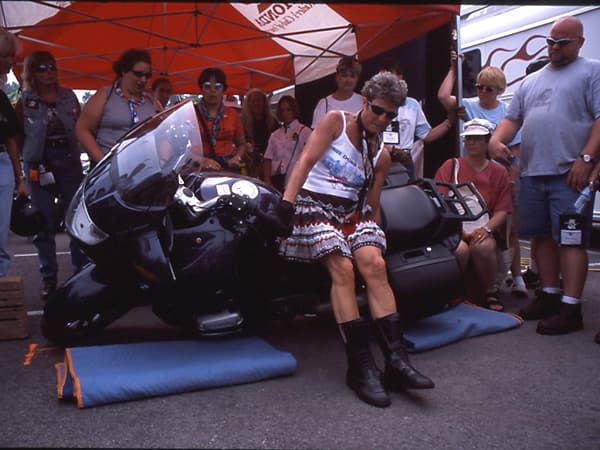
How to Pick Up a Dropped Motorcycle (Without Hurting Yourself)
Every rider drops their bike. It's not if, it's when. The proper technique to lift a 400+ lb motorcycle safely, plus what to inspect before riding it again.
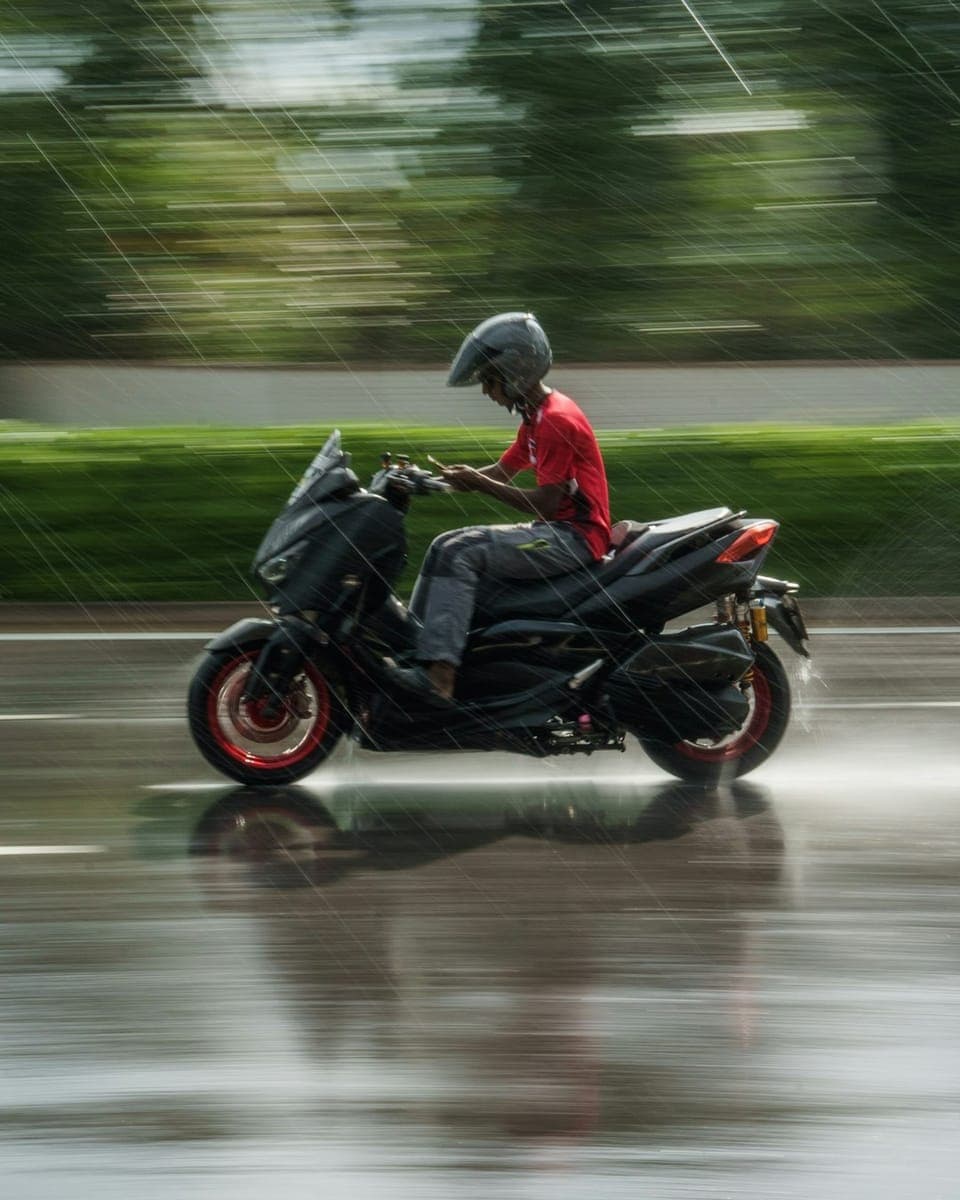
How to Ride a Motorcycle in Rain: The Complete Wet Weather Guide (2026)
Rain doesn't have to end your ride. Technique adjustments, the right gear, and knowing what surfaces to avoid — everything you need to ride confidently in wet conditions.
How to Ride a Motorcycle in Wind: Crosswind, Gusts, and Highway Survival (2026)
Wind is the invisible hazard nobody teaches you about. Crosswinds, gusts from trucks, and highway buffeting — here's how to handle it all without white-knuckling.