Every Motorcycle Hand Signal You Need to Know (+ Group Ride Rules)
By 6FOOT4HONDA · 14 min read · Mar 3, 2026 · Updated Mar 4, 2026
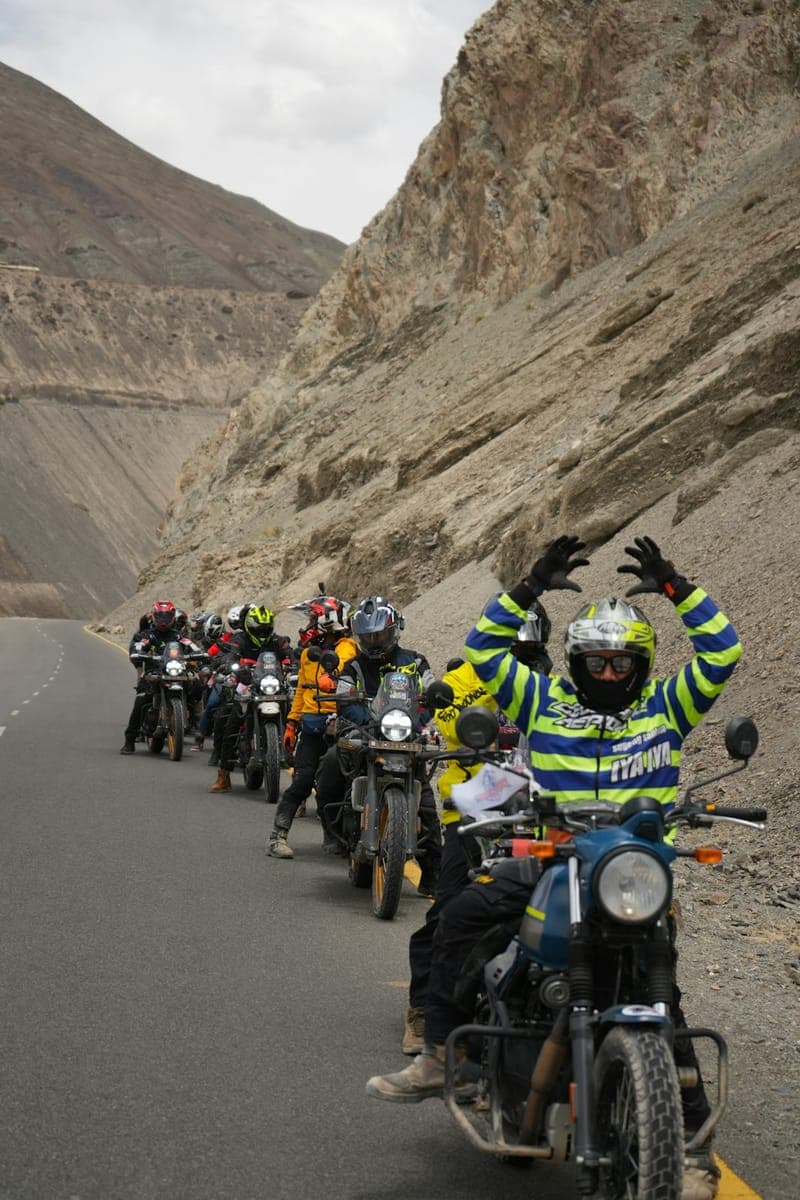
This post may contain affiliate links. We only recommend gear we'd use ourselves. If you click a link and make a purchase, we may earn a small commission at no extra cost to you.
In This Article
You're on your first group ride. The lead rider sticks his left arm out and taps the top of his helmet. Then he points at the ground. Then he holds up a fist.
You have no idea what any of that means. You freeze. The group splits up at a light, and now you're alone on a road you don't know.
This happens to every new rider exactly once. Let's make sure it doesn't happen to you.
The Essential Hand Signals
Every motorcycle hand signal uses the left hand (your throttle hand stays on the grip). These signals are universal across the US and most of the world. Learn these 15, and you'll understand 99% of group ride communication.
Speed and Direction
Left turn — Left arm extended straight out, parallel to the ground. Same as a car turn signal. Arm straight out to the left. Hold it until you begin the turn.
Right turn — Left arm out, bent upward at 90 degrees (forearm pointing up). Since your right hand is on the throttle, you signal right turns with your left arm bent upward at the elbow. Some riders point right with their left hand across their body instead — both work.
Slow down — Left arm extended, palm facing down, moving arm up and down. This is the "calm down" motion. Arm out, palm down, pushing toward the ground repeatedly. It means reduce speed — not stop.
Stop — Left arm extended downward, palm facing back (behind you). Arm angled down at about 45 degrees, palm flat and facing riders behind you. This signals a full stop is coming. More urgent than "slow down."
Speed up — Left arm extended, palm facing up, swinging arm upward. The opposite of slow down. Arm out, palm up, scooping upward. Means pick up the pace, usually because traffic behind the group is stacking up.
Hazards
Road hazard on the left — Left arm extended down, pointing at the hazard. Point directly at whatever you want riders behind you to avoid — pothole, debris, dead animal, gravel patch. Your finger literally targets the hazard.
Road hazard on the right — Right foot pointed out to the right. Since your right hand is on the throttle, you use your right foot to point at hazards on the right side. Kick your foot out toward the hazard.
Hazard ahead / cops — Tap the top of your helmet with your left palm. The universal "heads up" signal. Originally meant "police ahead" in biker culture, but it's now used for any hazard or reason to be alert — cops, accident, construction, animals on the road.
The helmet tap is the most important signal to know. If you only remember one thing from this article, remember this: when someone taps the top of their helmet, something ahead requires your attention. Slow down and look sharp.
Group Management
Follow me — Left arm raised, palm forward, waving forward. The lead rider signals the group to follow. Used at the start of a ride or when re-forming after a split.
You lead / pull off — Left arm swinging forward, pointing ahead, then pulling back. The leader is handing off the front position. The next rider moves up to lead. This happens when the leader needs gas, wants a break, or doesn't know the next section of road.
Single file — Left index finger raised above the head. One finger up = one line. The group transitions from staggered formation to single file. Used on narrow roads, twisties, or when passing through a single lane.
Staggered formation — Left hand raised, two fingers in a V. Two fingers = two lines. The group spreads into staggered formation. This is the default highway formation.
Fuel stop needed — Left arm out, finger pointing to the fuel tank (on the left side of the bike). Tap or point at your tank = "I need gas." The lead rider will look for the next station.
Pull over / stop here — Left arm extended, forearm swinging toward the right shoulder. A sweeping inward motion that says "let's pull off." Used for rest stops, photo ops, or regrouping.
Comfort stop — Left fist with arm extended, short up-and-down shaking motion. This one's a bit less standardized. Essentially a "I need a bathroom break" signal. If you see someone shaking their fist weirdly, they probably need to find a gas station.
Group Ride Formations
Staggered Formation (Default)
The standard formation for highway and straight-road riding. Here's how it works:
    [Lead Rider — Left third of lane]
              [Rider 2 — Right third of lane]
    [Rider 3 — Left third of lane]
              [Rider 4 — Right third of lane]
    [Rider 5 — Left third of lane]
              [Sweep — Right third of lane]
Why staggered? It gives each rider an escape route and clear visibility. If the rider in front of you brakes suddenly, you have the other side of the lane to swerve into. It also makes the group more visible to other traffic.
Spacing: Maintain a 2-second gap to the rider directly in front of you (same side) and a 1-second gap to the rider diagonally in front (opposite side). On the highway at 60 mph, that's roughly 2-3 bike lengths diagonal and 4-5 bike lengths straight ahead.
Single File
Used on twisty roads, narrow lanes, poor road conditions, or when entering/exiting highway on-ramps. Every rider lines up behind the leader on the same line through corners.
When the lead rider holds up one finger, transition to single file immediately. This usually means the road ahead requires full lane use — tight curves, construction, or a road surface that demands you pick your own line.
Never ride side by side in a curve. Even in staggered formation, tighten up to single file in corners. Riders need the full lane width to choose their line. A staggered partner drifting into your line mid-corner is how group ride crashes happen.
The Sweep (Tail Rider)
The last rider in the group is called the sweep or tail gunner. This is typically an experienced rider whose job is to:
- Make sure nobody gets left behind
- Watch for mechanical issues (a rider's tail light out, luggage shifting, etc.)
- Close gaps when the group gets split by traffic lights
The sweep never passes anyone. If you look in your mirror and the sweep is gone, the group has a problem. Stop safely and regroup.
Group Ride Etiquette (The Unwritten Rules)
Before the Ride
1. Show up with a full tank. Don't be the person who needs gas 10 minutes into the ride.
2. Know your bike. Tire pressure checked, chain adjusted, lights working. A breakdown on a group ride stops everyone.
3. Attend the pre-ride meeting. The lead rider will cover the route, planned stops, pace, hand signals, and what to do if the group gets separated. Listen. Ask questions if you don't understand something.
4. Be honest about your skill level. If you're a new rider, say so. Nobody will judge you — but they will adjust the pace, put you in a safe position in the formation, and keep an eye on you. If you lie about your ability and ride over your head, you're a danger to everyone. If you want to sharpen your fundamentals before a group ride, our complete riding skills guide covers everything from cornering to emergency braking.
During the Ride
5. Ride your own ride. This is the golden rule. Never ride faster than you're comfortable to keep up with the group. If the pace is too fast, fall back. A good group will wait for you. A group that drops you isn't worth riding with.
6. Don't fixate on the rider in front of you. Look through the turn, not at the tail light ahead. Target fixation on the rider in front of you means if they crash, you crash into them.
7. Pass the signals back. When the lead rider signals, every rider behind them repeats the signal for the next person. The signal cascades down the group. Don't break the chain — the sweep can't see the leader's hand.
8. Maintain your position. Don't jockey for position or pass other riders in the group. The formation exists for safety. If you want to go faster, talk to the lead rider at the next stop about moving up.
9. Don't tailgate. Leave proper spacing. Riding 3 feet off someone's rear tire gives you zero reaction time. If they hit a pothole and brake, you're going down.
10. If the group gets split by a traffic light, the riders who made it through STOP and wait. The lead rider pulls over and waits for the rest of the group to catch up. Nobody gets left behind.
New rider? Ride behind the lead rider. The second position is the safest spot — you have the lead rider setting the pace in front of you and the entire group behind you. You won't get lost and you won't feel pressure to keep up with faster riders behind you.
After the Ride
11. Thank the lead and sweep riders. Leading and sweeping a group ride is work. They planned the route, watched the mirrors, managed the pace, and took responsibility for everyone's safety. A simple "thanks for leading" goes a long way.
12. Debrief. Talk about what went well and what didn't. If someone's signals were unclear or the pace was too fast, this is the time to say so — constructively, not confrontationally.
How to Find Group Rides Near You
Social Media
- Facebook Groups: Search "motorcycle group rides [your city]" or "[your state] motorcycle riders." Almost every metro area has an active group that organizes weekly or monthly rides.
- Instagram: Follow local riders and moto shops. Group rides are often announced on stories and posts.
- Reddit: r/motorcycles has a weekly "What are you riding this weekend?" thread. Regional subreddits (r/NYCriders, r/CaRiders, etc.) organize rides too.
Apps
- REVER: Route planning app with a community feature. You can find and join group rides in your area. If you're planning a longer group trip, our first motorcycle road trip guide covers route planning, packing, and logistics.
- Meetup.com: Search "motorcycle" and your city. Many riding clubs organize through Meetup.
Shops and Dealerships
Your local motorcycle dealership almost certainly hosts or sponsors group rides. These are usually beginner-friendly, well-organized, and a great way to meet riders in your area. Walk in and ask, or check their events page.
Riding Clubs and Organizations
- HOG (Harley Owners Group): If you ride a Harley, this is the largest riding club in the world. Local chapters everywhere.
- BACA (Bikers Against Child Abuse): Charity riding organization with local chapters.
- Distinguished Gentleman's Ride: Annual worldwide charity ride (May each year). Classic and vintage bikes only. Great community.
- Your brand's owner community: Most brands have owner clubs — Ducatisti, BMW MOA, Gold Wing Road Riders, etc.
Communication Beyond Hand Signals
Hand signals work, but they have limits — you need line of sight, daylight, and a free hand. For serious group riding, a Bluetooth communicator changes everything.
With a mesh communicator like the Cardo Packtalk, your entire group can talk in real time. The lead rider can call out hazards, announce turns, and adjust pace without taking a hand off the bars. It turns a group of individual riders into a coordinated unit. For a full rundown of every communicator option, see our best motorcycle Bluetooth headsets guide.
Check out our complete Cardo guide for the best communicator options. If you ride in groups regularly, a communicator is the single best quality-of-life upgrade you can make.
Quick Reference: Hand Signal Cheat Sheet
| Signal | Meaning | How |
|---|---|---|
| Arm straight out left | Left turn | Left arm extended, parallel to ground |
| Arm bent up at 90° | Right turn | Left arm out, forearm pointing up |
| Palm down, pushing down | Slow down | Arm out, palm down, pumping motion |
| Arm down at 45°, palm back | Stop | Left arm angled down, palm facing rear |
| Palm up, scooping up | Speed up | Arm out, palm up, sweeping upward |
| Point at ground (left) | Hazard left | Left arm/hand points at hazard |
| Right foot out | Hazard right | Right foot extends toward hazard |
| Tap top of helmet | Heads up / cops | Left palm taps helmet crown |
| One finger up | Single file | Index finger raised above head |
| Two fingers up (V) | Staggered | Two fingers raised above head |
| Point at fuel tank | Need gas | Tap or point at your tank |
| Forearm sweeps inward | Pull over | Arm sweeps toward right shoulder |
Save this table to your phone. Pull it up before your first group ride. After 2-3 rides, these signals become muscle memory and you won't need it anymore.
Practice the signals in your driveway. Seriously. Sit on your bike and practice extending each signal while keeping your right hand on the throttle. Getting comfortable with one-handed control at the same time as signaling is a skill — practice it before you need it at 60 mph.
Frequently Asked Questions
What are the basic motorcycle hand signals?
The essential motorcycle hand signals use the left hand and include: arm straight out for left turn, arm bent up at 90 degrees for right turn, palm down pumping motion for slow down, arm angled down with palm back for stop, and tapping the top of your helmet for hazard or police ahead.
What does tapping the top of your helmet mean on a motorcycle?
Tapping the top of your helmet with your left palm is the universal heads-up signal. It originally meant police ahead in biker culture but is now used for any hazard requiring attention, including accidents, construction zones, animals on the road, or speed traps.
What is staggered formation in a motorcycle group ride?
Staggered formation is the default group riding arrangement where riders alternate between the left and right thirds of the lane. It gives each rider an escape route, clear visibility, and proper spacing - typically a 2-second gap to the rider directly ahead and 1-second gap diagonally.
What are the rules for a motorcycle group ride?
Key group ride rules include riding your own pace and never exceeding your comfort level, maintaining your position in formation, passing hand signals back through the group, keeping proper spacing, and stopping to wait if the group gets split by a traffic light.
Where should a new rider position in a group ride?
New riders should ride in the second position, directly behind the lead rider. This is the safest spot because the lead rider sets the pace in front of you, you will not get lost, and you will not feel pressure from faster riders behind you.
Written by
6FOOT4HONDAMotorcycle creator with 1.2M+ subscribers on YouTube and 2M+ across all platforms. Riding and filming since 2016, with 1,000+ videos covering beginner riding tips, gear reviews, stunts, and road trips. Every product recommended on this site has been personally tested on real rides — from highway touring to track days to stunt sessions. Based in the US, riding year-round.
Related Articles
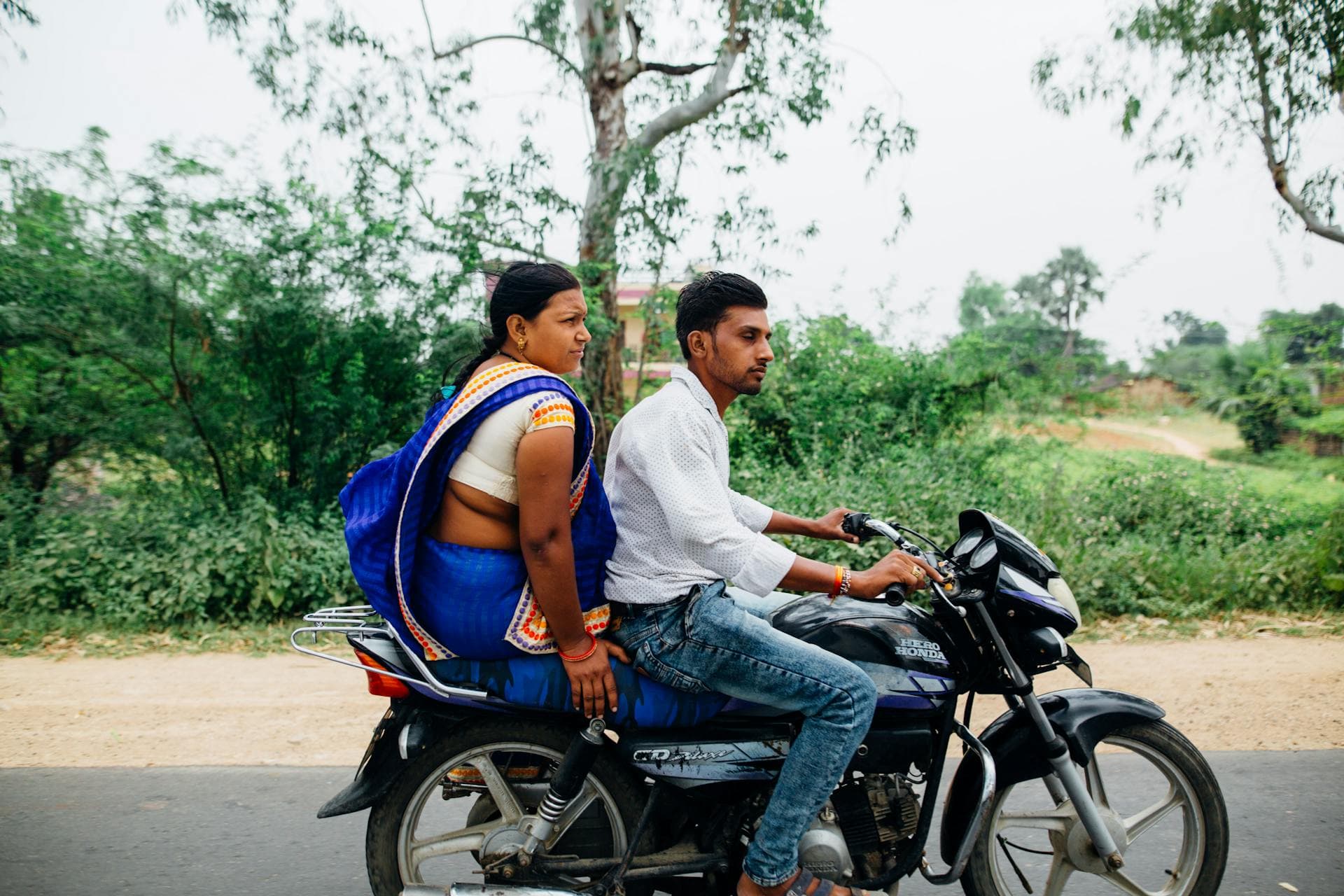
How to Ride a Motorcycle with a Passenger: The Complete Pillion Guide
Taking a passenger changes everything — braking, turning, balance, and communication. Here's how to do it safely without terrifying the person on the back.
What is Engine Braking on a Motorcycle?
Engine braking is one of the most important concepts for new riders. Here's exactly what it is, how it works, and how to use it safely every time you ride.
How to Ride a Motorcycle: Complete Step-by-Step Beginner's Guide (2026)
Learn how to ride a motorcycle from scratch — clutch control, shifting, braking, cornering, and highway riding. The complete beginner's guide with step-by-step instructions.