This post may contain affiliate links. We only recommend gear we'd use ourselves. If you click a link and make a purchase, we may earn a small commission at no extra cost to you.
In This Article
The best motorcycle pants for beginners are the Scorpion EXO Covert Pro Jeans (~$170) — they protect like dedicated motorcycle gear but look and feel like regular jeans, so you'll actually wear them on every ride. If you need to save money, the Bull-it Covert Evo (~$140) offers similar CE AA-rated protection for less, and the Street & Steel Oakland (~$90) is the cheapest way to get real abrasion protection without looking like a Power Ranger. Your legs are the first thing to hit the ground in a crash, and regular jeans shred in under one second at just 30 mph — kevlar-lined riding jeans survive 4+ seconds at the same speed, which is often the difference between walking away with minor road rash and months of skin grafts.
Kevlar-lined riding jeans are the best motorcycle pants for beginners — they protect like dedicated gear but look and feel like normal jeans, so you'll actually wear them every ride. Budget $80-$200 for a quality pair with CE-rated knee armor. Regular jeans offer zero abrasion protection and will shred instantly in even a low-speed slide.
Quick Comparison Table
| Pants | Type | Price | CE Rating | Armor | Waterproof | Best For |
|---|---|---|---|---|---|---|
| Scorpion Covert Pro | Kevlar Jeans | ~$170 | CE AA | Knee/hip pockets | No | Best Overall |
| Bull-it Covert Evo | Kevlar Jeans | ~$140 | CE AA | Knee/hip pockets | No | Best Value |
| Street & Steel Oakland | Aramid Jeans | ~$90 | CE A | Knee pockets | No | Budget Pick |
| REV'IT Horizon 3 H2O | Textile | ~$280 | CE AA | CE Level 2 knee/hip | Yes | All-Weather |
| BILT Storm 2 | Overpants | ~$120 | CE A | Knee pockets | Yes | Commuting |
| Klim Badlands Pro | Textile | ~$550 | CE AAA | D3O Level 2 | Yes (Gore-Tex) | Premium |
| REV'IT Apex | Leather | ~$400 | CE AAA | CE Level 2 knee/hip | No | Track/Sport |
Why Can't You Skip Motorcycle Pants?
Most new riders spend weeks researching the perfect full-face helmet, then throw on a pair of regular jeans and call it good. That's backwards. According to NHTSA motorcycle safety data, the legs are the most frequently injured body part in motorcycle crashes, accounting for nearly 30% of all motorcycle injuries. Your helmet protects you in the worst-case scenario — your pants protect you in the most common one.
Here's the reality: standard 12-ounce denim (the kind in your closet) shreds in under 1 second when sliding on asphalt at 30 mph. Kevlar-lined riding jeans survive 4+ seconds at the same speed. At 60 mph, regular jeans might as well not exist — they're gone in a fraction of a second, leaving nothing between your skin and the pavement. The difference isn't academic. A single skin graft surgery costs between $5,000 and $50,000, and that's before physical therapy, lost work, and the permanent scarring.
I learned this the hard way when a friend went down at 35 mph in regular Levi's. The jeans disintegrated instantly. He spent six months in and out of the hospital for skin grafts on his right leg and hip. The total cost exceeded $40,000, and he still has limited mobility in that hip. He was wearing a $600 helmet and a $400 jacket — but $30 jeans. Don't make that mistake.
The data backs this up. Independent testing shows that at just 30 mph, standard denim provides effectively zero meaningful abrasion protection. You might as well be riding in shorts. Kevlar and aramid-reinforced riding jeans, by contrast, are tested to survive slides of 4-7 seconds depending on the CE rating. That's enough time to slow from 45 mph to a stop in most crash scenarios. The difference is literally the difference between skin and bone.
Regular jeans provide ZERO meaningful abrasion protection on a motorcycle. At just 30 mph, standard denim shreds in under 1 second of sliding. Kevlar-lined riding jeans survive 4+ seconds at the same speed — that's the difference between road rash and walking away.
Even on short rides, you're at risk. Most motorcycle crashes happen within 5 miles of home, at speeds under 40 mph. That's the exact scenario where regular jeans fail catastrophically and riding jeans save your skin — literally. If you're serious about riding motorcycles, investing in proper pants is non-negotiable. The Motorcycle Safety Foundation emphasizes protective gear as a critical component of rider safety training. The question isn't whether you need them. The question is which type fits your riding style and budget.
For more context on motorcycle safety statistics and how to talk to skeptical family members about riding safely, check out how dangerous are motorcycles and how to convince parents or a partner about getting a motorcycle.
What Are the Different Types of Motorcycle Pants?
Kevlar / Aramid Riding Jeans
These look like normal jeans but have a layer of kevlar or aramid fiber sewn into the impact zones (knees, hips, seat) or the entire pant. They're the best option for beginners who want protection without looking like they're cosplaying a MotoGP racer. Most riding jeans are rated CE A or AA, meaning they survive 1.5 to 4 seconds of sliding on asphalt. Prices range from $80 to $250.
The biggest advantage is wearability. You can ride to dinner, take off your jacket and helmet, and look completely normal. No one knows you're wearing motorcycle gear. The downside is that most riding jeans aren't waterproof (though some come with a waterproof membrane), and they run warmer than regular jeans in summer heat because of the extra lining.
Best for: Daily commuting, casual street riding on cruiser or naked motorcycle styles, riders who want to blend in off the bike.
Textile / Adventure Pants
Textile pants are made from abrasion-resistant synthetic fabrics like Cordura nylon or Dyneema. They're often waterproof (or come with a waterproof liner), and they usually include CE AA or AAA-rated armor at the knees and hips. Prices range from $150 to $600+ depending on features like Gore-Tex membranes, ventilation zippers, and removable thermal liners.
The advantage is versatility. A good pair of textile pants will keep you dry in the rain, cool in summer (with vents), warm in winter (with a liner), and protected in a crash. The downside is they look obviously like motorcycle gear. You're not wearing these to a restaurant unless you're okay with looking like you just stepped off an adventure bike.
Best for: All-weather commuting, touring motorcycle riding, adventure riding, riders who prioritize function over fashion.
Leather Pants
Full-grain leather offers the maximum abrasion protection available. Quality leather pants are rated CE AAA and can survive 7+ seconds of sliding. They're the standard for track days and aggressive sport riding. Prices range from $200 for entry-level to $600+ for premium race-spec pants.
The advantages are protection and durability. Leather is nearly impossible to shred in a street-speed crash. The downsides are significant: leather is expensive, hot in summer, restrictive until broken in, requires maintenance (conditioning to prevent cracking), and is completely impractical for daily use unless you only ride sport bikes. I don't recommend leather as a beginner's first pant purchase unless you're planning to do track days on a sportbike immediately.
Best for: Track days, aggressive sport riding, riders who prioritize maximum protection over comfort and practicality.
Overpants (Wear Over Your Clothes)
Overpants are waterproof pants designed to pull on over your regular clothes. They usually have full-length side zippers so you can put them on and take them off without removing your shoes. Most are CE A rated and cost between $80 and $200.
The advantage is convenience for commuters. You can wear your work clothes, pull on overpants for the ride, then take them off when you arrive and look professional. The downsides are bulk (they're an extra layer, which gets hot in summer), and they're awkward to carry when you're off the bike. They also don't look or feel as good as dedicated riding jeans or textile pants.
Best for: Commuters who need to arrive in specific clothing, riders who don't want to invest in multiple pants, rain protection on short notice.
What Are the 7 Best Motorcycle Pants for Beginners in 2026?
1. Scorpion EXO Covert Pro Jeans — Best Overall

Scorpion EXO Covert Pro Jeans
Full DuPont Kevlar lining waist-to-ankle, SAS-Tec armor pockets at knees and hips, looks like regular jeans. The best balance of protection, comfort, and wearability for new riders.
Price: ~$170 | Type: Kevlar jeans | CE Rating: AA | Armor: Knee/hip pockets (armor sold separately) | Waterproof: No
The Scorpion Covert Pro jeans are the best all-around motorcycle pants for beginners because they nail the balance between protection, comfort, and looking normal off the bike. These jeans feature a full DuPont Kevlar lining that runs from the waist all the way down to the ankles — not just in the impact zones like cheaper riding jeans. That means protection everywhere your leg might touch the ground in a slide. They're CE AA rated, meaning they'll survive approximately 4 seconds of sliding on asphalt at highway speeds.
The fit is true to size and designed to look like regular straight-leg jeans. SAS-Tec CE-rated armor pockets are built into the knees and hips, though you'll need to buy the armor inserts separately (add another $40-60 depending on whether you go Level 1 or Level 2). The pockets are positioned correctly so the armor sits directly over your kneecap and hip bone when you're in a riding position, which is critical for impact protection.
The denim is slightly heavier than regular jeans due to the Kevlar lining, which means they run a bit warm in summer. They're also not waterproof, so you'll get soaked in the rain. But for most beginners riding in dry weather, these are the best option. You can wear them to work, to dinner, or anywhere else without looking like you're dressed for a track day. The downside is the cost — at $170 plus armor, you're looking at over $200 total. But considering that's less than a single emergency room visit, it's a worthwhile investment.
2. Bull-it Covert Evo Slim Jeans — Best Value

Bull-it Covert Evo Slim Jeans
Covec single-layer construction with CE AA rating, slim fit that looks good on and off the bike. Great protection at a lower price than the Scorpion.
Price: ~$140 | Type: Kevlar jeans | CE Rating: AA | Armor: Knee/hip pockets | Waterproof: No
The Bull-it Covert Evo jeans offer CE AA protection for about $30 less than the Scorpion Covert Pro, making them the best value pick for beginners on a budget. These jeans use Bull-it's proprietary Covec material, which is a single-layer construction that integrates the protective fiber directly into the denim weave instead of adding a separate lining. The result is a lighter, more breathable jean that still meets the same CE AA abrasion resistance standard as the Scorpion.
The slim fit is modern and looks great both on and off the bike. Armor pockets at the knees and hips are included, and Bull-it's own CE-rated armor inserts come standard (unlike the Scorpion, where you have to buy them separately). That makes the total cost closer to the Scorpion once you factor in armor, but you save the hassle of sourcing compatible inserts.
The main downside is availability. Bull-it is a UK brand, and while they're becoming more common in the US, sizing can be inconsistent and the range is limited. If you're outside the standard size range (28-36 waist), you might struggle to find a fit. They also run slightly smaller than US jeans, so size up if you're between sizes. Like the Scorpion, these aren't waterproof, and they run warm in summer due to the protective lining. But for $140 with armor included, they're hard to beat.
3. Street & Steel Oakland Jeans — Best Budget
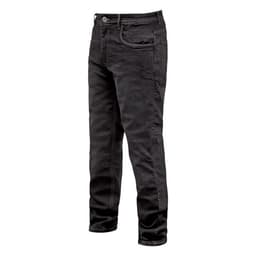
Street & Steel Oakland Jeans
Aramid-reinforced denim with CE knee armor pockets for under $100. The cheapest way to get real motorcycle protection that you'll actually wear.
Price: ~$90 | Type: Aramid jeans | CE Rating: A | Armor: Knee pockets (no hip) | Waterproof: No
If $170 for the Scorpion or $140 for the Bull-it is outside your budget, the Street & Steel Oakland jeans are the best budget option for beginners. At around $90, they're the cheapest way to get real motorcycle protection that doesn't look or feel like motorcycle gear. These jeans use aramid fiber reinforcement in the seat, knees, and hips, and they include CE-rated armor pockets at the knees (knee armor included).
The biggest compromise is the CE A rating instead of AA. That means they're tested to survive approximately 1.5 seconds of sliding on asphalt instead of 4 seconds. For urban commuting and lower-speed riding, that's adequate. For highway speeds or aggressive riding, it's cutting it close. The other downside is the lack of hip armor pockets — you get knee protection, but your hips are covered only by the aramid reinforcement, not by impact-absorbing armor.
The fit is relaxed and comfortable, and they look like normal jeans. The denim is slightly heavier than regular Levi's but lighter than the Scorpion or Bull-it, so they're more breathable in summer. They're also not waterproof. For a brand-new rider on a tight budget, these are a solid first pair of riding jeans. You can always upgrade to CE AA-rated jeans later as your budget allows. The key is getting something — anything — that's better than regular jeans. At $90, the Oakland jeans clear that bar easily.
4. REV'IT Horizon 3 H2O — Best All-Weather Textile

REV'IT Horizon 3 H2O
CE AA-rated textile with waterproof Hydratex membrane, CE Level 2 knee and hip armor included. Rides through rain, cold, and heat with removable thermal liner.
Price: ~$280 | Type: Textile | CE Rating: AA | Armor: CE Level 2 knee/hip (included) | Waterproof: Yes (Hydratex membrane)
If you need pants that can handle rain, cold, and heat without changing gear, the REV'IT Horizon 3 H2O are the best all-weather option for beginners. These textile pants use REV'IT's Hydratex waterproof membrane, which keeps you dry in heavy rain while still allowing sweat to escape. The CE AA abrasion rating matches the Scorpion and Bull-it jeans, but you also get CE Level 2 armor at the knees and hips included in the price.
The removable thermal liner makes these pants work year-round. In winter, keep the liner in for warmth. In summer, remove it and open the ventilation zippers for airflow. The fit is comfortable in a riding position, with pre-curved knees and stretch panels at the waist and knees. Adjustable straps at the waist and cuffs let you dial in the fit over different layers.
The downside is obvious: these look like motorcycle pants. You're not wearing these to a business meeting or a restaurant without looking out of place. They're also bulkier than riding jeans, which makes them less comfortable for walking around off the bike. Many adventure motorcycle riders prefer these for their all-weather versatility. At $280, they're nearly double the price of the Scorpion jeans. But if you commute year-round or live in an area with unpredictable weather, having waterproof pants is worth the investment. Showing up to work soaked and freezing because you got caught in a rainstorm isn't fun.
5. BILT Storm 2 Overpants — Best for Commuters

BILT Storm 2 Overpants
Wear over work clothes for instant protection. Waterproof, CE-rated knee armor pockets, full-length side zips for quick on/off over shoes.
Price: ~$120 | Type: Overpants | CE Rating: A | Armor: Knee pockets | Waterproof: Yes
The BILT Storm 2 overpants are the best option for commuters who need to arrive at work in specific clothing (business casual, a suit, etc.) and don't want to change pants when they get there. These are designed to pull on over your regular clothes, with full-length side zippers that let you put them on and take them off without removing your shoes. The waterproof outer shell keeps you dry in rain, and CE-rated armor pockets at the knees (armor included) provide basic impact protection.
The appeal is convenience. You can wear your work pants, pull the BILT overpants on in 30 seconds, ride to work, then take them off and look professional. No need to carry an extra pair of pants or find a place to change. The downside is they're an extra layer, which makes them hot in summer. They're also bulky to carry when you're off the bike — you'll need a backpack or saddlebag to stash them.
The CE A rating means they're adequate for urban commuting but not ideal for highway speeds. The lack of hip armor pockets is another compromise. At $120, they're cheaper than dedicated riding jeans or textile pants, but you're also getting less protection. If your commute is short (under 10 miles) and mostly at city speeds (under 45 mph), these are a practical solution. For longer rides or highway commuting, invest in the REV'IT Horizon 3 or riding jeans instead.
6. Klim Badlands Pro — Best Premium
Klim Badlands Pro
Gore-Tex waterproofing, D3O CE Level 2 armor at knees and hips, CE AAA rated. Built to survive anything — rain, cold, heat, and crashes.
Price: ~$550 | Type: Textile ADV | CE Rating: AAA | Armor: D3O CE Level 2 knee/hip (included) | Waterproof: Yes (Gore-Tex)
The Klim Badlands Pro are the best premium option for beginners who want top-tier protection and don't mind paying for it. These adventure-style textile pants are CE AAA rated, meaning they're tested to survive 7+ seconds of sliding on asphalt — nearly double the protection of CE AA-rated jeans. They use Gore-Tex for waterproofing, which is the gold standard for breathable, durable, waterproof membranes. D3O CE Level 2 armor at the knees and hips is included, providing maximum impact absorption.
The feature list is extensive: removable thermal liner, ventilation zippers, adjustable waist and cuffs, reinforced seat and knees, and reflective panels for visibility. The fit is designed for long days in the saddle, with pre-curved legs and stretch panels that move with you. These pants are built to handle everything from 100-degree desert heat to freezing rain to high-speed crashes.
The downside is the price. At $550, these are overkill for most beginners, especially if you're only commuting or riding casually on weekends. They're also bulky and look aggressively like motorcycle gear — you're not blending in at a coffee shop. But if you're planning to do serious touring, adventure riding, or long-distance commuting in all weather conditions, the Klim Badlands Pro are worth the investment. They'll last for years and protect you better than anything else on this list.
7. REV'IT Apex Leather — Best for Track/Sport

REV'IT Apex Leather Pants
Full leather construction with CE Level 2 knee and hip armor. Maximum slide protection for track days and aggressive sport riding.
Price: ~$400 | Type: Leather | CE Rating: AAA | Armor: CE Level 2 knee/hip (included) | Waterproof: No
The REV'IT Apex leather pants are the best option for beginners who are serious about track days or aggressive sport riding. Full-grain leather construction provides CE AAA abrasion resistance, and CE Level 2 armor at the knees and hips offers maximum impact protection. These are designed to pair with a leather jacket (with a zipper connection) for a full race suit alternative.
The leather is pre-curved for a riding position and includes accordion stretch panels at the waist, knees, and calves for flexibility. Reinforced stitching at the seams and impact zones ensures durability. The fit is snug and race-oriented — these are meant to be worn on the bike, not for walking around. The break-in period is significant; expect the leather to feel stiff for the first few rides until it conforms to your body.
The downsides are significant for street riding. Leather is hot in summer, offers zero waterproofing, and looks completely out of place off the bike. At $400, they're also expensive for a beginner who isn't planning to hit the track regularly. Leather also requires maintenance — you'll need to condition it periodically to prevent cracking. I don't recommend leather as a first pant purchase unless you're planning to do track days on a sportbike immediately. If that's your goal, the REV'IT Apex pants are an excellent choice. For street riding, go with the Scorpion jeans or REV'IT Horizon 3 instead.
How Do You Choose the Right Motorcycle Pants?
What Do CE Safety Ratings Mean? (A, AA, AAA)
The CE (European Conformity) rating system for motorcycle gear measures abrasion resistance — how long the material can slide on asphalt before it tears through. The CE EN 17092 standard defines these protection levels for motorcycle clothing. Understanding these ratings is critical when choosing pants, because the difference between CE A and CE AAA can mean the difference between minor road rash and a trip to the emergency room.
| CE Rating | Slide Time | Protection Level | Best For |
|---|---|---|---|
| CE A | ~1.5 seconds | Basic | Urban commuting, short rides under 40 mph |
| CE AA | ~4 seconds | Standard | Street riding, daily use, highway speeds |
| CE AAA | ~7+ seconds | Maximum | Track days, high-speed riding, touring |
CE A is the minimum standard for motorcycle gear. Pants rated CE A will survive approximately 1.5 seconds of sliding on asphalt before the protective material wears through. That's adequate for low-speed urban riding but marginal for highway speeds. If you go down at 60 mph, 1.5 seconds of protection might not be enough to slow you down before the material fails.
CE AA is the standard for street riding. These pants survive approximately 4 seconds of sliding, which is enough to protect you in most real-world crash scenarios at highway speeds. This is the minimum rating I recommend for beginners who plan to ride on highways or at speeds above 40 mph.
CE AAA is maximum protection. These pants survive 7+ seconds of sliding and are typically made from leather or heavy-duty textile with extensive reinforcement. Unless you're doing track days or aggressive sport riding, CE AAA is overkill — but it's never a bad thing to have more protection than you need.
What's the Difference Between CE Level 1 and Level 2 Armor?
CE armor ratings (Level 1 and Level 2) are separate from the abrasion resistance ratings (A, AA, AAA). Armor ratings measure impact absorption — how much force the armor can absorb when you hit something (the ground, a curb, a car).
CE Level 1 armor meets the minimum standard for impact protection. It must absorb enough energy to limit the force transmitted to your body to under 35 kilonewtons (kN) in testing. This is adequate for basic protection but not ideal for high-impact crashes.
CE Level 2 armor absorbs significantly more energy, limiting transmitted force to under 20 kN. That's a 43% reduction in force compared to Level 1. For knees and hips — which are critical joints that can be permanently damaged in a crash — Level 2 armor is worth the extra cost.
Most beginner-level riding jeans come with Level 1 armor or armor pockets that let you upgrade to Level 2. If you have the budget, go with Level 2 armor at the knees and hips. The extra $20-40 is worth it for the added protection.
Fit and Sizing Tips
Motorcycle pants should fit snug but not restrictive. The armor needs to sit directly over the kneecap and hip bone to be effective, which means the pants can't be too loose or too baggy. Here's what to look for when trying on motorcycle pants:
Armor placement: Sit in a riding position (lean forward, knees bent) and check that the knee armor sits directly over your kneecap — not above or below it. Hip armor should sit over the hip bone (the bony protrusion on the side of your pelvis). If the armor shifts when you move, the pants are too big.
Waist fit: The waist should be snug enough to stay up without a belt, but not so tight that it digs in when you sit. Many riding jeans and textile pants have adjustable waist straps or elastic panels to dial in the fit.
Length: Pants should be slightly longer than regular pants to account for the riding position. When you're standing, the cuffs should reach the top of your boot heel. When you're sitting on the bike, they should cover your boots completely without riding up your shins.
Pre-curved legs: Look for pants with pre-curved or articulated knees. This means the knees are sewn with a slight bend, which makes them more comfortable in a riding position and keeps the armor in place.
Try sitting: Don't just stand in the fitting room. Sit down and lean forward as if you're on a bike. The pants should feel comfortable without pulling tight across the knees or crotch. If they're uncomfortable sitting, they'll be worse on a two-hour ride.
Buy your riding jeans a size up if you plan to wear knee armor inserts. Most kevlar jeans have built-in armor pockets, but the extra bulk of CE Level 2 armor can make a snug fit uncomfortable on long rides.
Can You Wear Regular Jeans on a Motorcycle?
No. The short answer is no, you should not wear regular jeans on a motorcycle. The longer answer is that regular jeans provide effectively zero abrasion protection in a crash, and wearing them is only marginally better than riding in shorts.
Here's the data: standard 12-ounce denim (the material used in most regular jeans) survives less than 0.5 seconds of sliding on asphalt at 30 mph before it tears through completely. Kevlar-lined riding jeans survive 4-7 seconds at the same speed depending on the CE rating. At 60 mph, regular jeans disintegrate almost instantly — in under 0.2 seconds. You might as well be wearing nothing.
The consequences are severe. Road rash from a 30 mph slide in regular jeans typically requires skin grafts, which cost between $5,000 and $50,000 per affected area depending on the severity. Recovery time ranges from weeks to months, and permanent scarring is common. I've seen photos of riders who went down at 40 mph in regular jeans — the results are horrific. Bone is often exposed after the jeans shred, and infection is a serious risk.
The excuse I hear most often is "I'm just going down the street, I don't need pants." But most motorcycle crashes happen within 5 miles of home, at speeds under 35 mph. That's exactly the scenario where regular jeans fail and riding jeans succeed. The ATGATT philosophy (All The Gear, All The Time) exists for this reason — you can't predict when you'll crash, so you need to be protected every time you ride.
If cost is the issue, buy the Street & Steel Oakland jeans for $90. If fit is the issue, try the Scorpion Covert Pro or Bull-it Covert Evo — they look and feel like regular jeans. If convenience is the issue, get a pair of overpants and wear them over your regular clothes. There's no valid excuse to ride in regular jeans when CE-rated riding jeans cost less than a tank of gas.
A common beginner mistake: "I'm just going down the street, I don't need pants." Most motorcycle crashes happen within 5 miles of home, at speeds under 35 mph. That's exactly the speed where regular jeans fail and riding jeans save your skin — literally.
Frequently Asked Questions
Are motorcycle jeans as safe as leather pants?
It depends on the CE rating. CE AA-rated kevlar jeans (like the Scorpion Covert Pro or Bull-it Covert Evo) provide similar abrasion protection to entry-level leather pants in real-world street crashes. CE AAA-rated leather pants offer more protection — typically 7+ seconds of slide time versus 4 seconds for CE AA jeans — but for street riding at legal speeds, the difference is marginal. Leather has an edge in extreme scenarios (track crashes, high-speed highway slides), but for daily riding, quality riding jeans are adequate. The key is to choose jeans with a proper CE rating and wear the armor inserts.
What CE rating do I need for motorcycle pants?
For street riding, I recommend a minimum of CE AA. This provides approximately 4 seconds of abrasion resistance, which is enough to protect you in most real-world crashes at highway speeds. CE A-rated pants (1.5 seconds) are adequate for low-speed urban commuting but marginal for highway riding. CE AAA (7+ seconds) is ideal but not necessary unless you're doing track days or aggressive sport riding. Most beginners will be well-protected with CE AA-rated jeans like the Scorpion Covert Pro.
Can you wear regular jeans on a motorcycle?
No. Regular jeans provide virtually no abrasion protection in a crash. Standard denim shreds in under 1 second at 30 mph, leaving your skin exposed to the pavement. Kevlar-lined riding jeans survive 4+ seconds at the same speed. At highway speeds, regular jeans might as well not exist. The cost of skin grafts from a single crash ($5,000-$50,000+) far exceeds the cost of riding jeans ($80-$200). Don't ride in regular jeans.
Do I need motorcycle pants for short rides?
Yes. Most motorcycle crashes happen within 5 miles of home, at speeds under 40 mph. Short rides are statistically just as dangerous as long rides — you're at risk every time you're on the bike. Wearing proper motorcycle pants on short rides is just as important as wearing them on highway trips. If anything, short urban rides expose you to more hazards (intersections, distracted drivers, pedestrians) than open highway riding. Get a pair of riding jeans like the Scorpion Covert Pro that you can wear comfortably for any length of ride.
What is the difference between CE Level 1 and Level 2 armor?
CE Level 1 armor limits the force transmitted to your body to under 35 kilonewtons (kN) in impact testing. CE Level 2 armor limits force to under 20 kN — a 43% reduction. For critical joints like knees and hips, Level 2 armor provides significantly better protection and is worth the extra $20-40 cost. Most beginner-level riding jeans come with Level 1 armor or empty armor pockets. If you have the budget, upgrade to Level 2 inserts.
Are overpants worth it for commuting?
Yes, if you need to arrive at work in specific clothing (business casual, a suit, etc.) and don't want to change pants. Overpants like the BILT Storm 2 let you wear your work clothes and pull waterproof, CE-rated protection on over them in under a minute. The downside is they're an extra layer (hot in summer) and bulky to carry off the bike. For short urban commutes under 10 miles, they're a practical solution. For longer rides or highway commuting, invest in dedicated riding jeans or textile pants instead.
How should motorcycle pants fit?
Motorcycle pants should fit snug but not restrictive. The knee and hip armor must sit directly over the kneecap and hip bone to be effective — if the pants are too loose, the armor will shift out of position in a crash. When trying on pants, sit in a riding position (lean forward, knees bent) and check that the armor stays in place. The waist should be snug enough to stay up without a belt, and the length should cover your boots completely when sitting on the bike. Pre-curved legs are more comfortable for riding. Most riding jeans fit true to regular jean sizing, but textile pants often run larger.
Do motorcycle pants need to be waterproof?
Not necessarily. If you live in a dry climate or only ride in good weather, non-waterproof riding jeans like the Scorpion Covert Pro or Bull-it Covert Evo are fine. If you commute year-round or live in an area with frequent rain, waterproof textile pants like the REV'IT Horizon 3 H2O are worth the investment. Some riding jeans come with a waterproof membrane (at a higher price), but most sacrifice waterproofing for breathability and comfort. You can also keep a pair of overpants in your bag for unexpected rain.
Final Thoughts
Choosing the right motorcycle pants comes down to how you plan to ride. If you want protection that looks normal off the bike, go with the Scorpion Covert Pro jeans (~$170) — they're the best all-around option for beginners. If you need to save money, the Bull-it Covert Evo (~$140) or Street & Steel Oakland (~$90) offer solid protection at lower price points. If you commute year-round or ride in unpredictable weather, invest in the REV'IT Horizon 3 H2O (~$280) for waterproof, all-weather versatility.
Whatever you choose, make sure it's CE-rated and includes armor at the knees and hips. Regular jeans will shred in under a second at 30 mph — riding jeans survive 4+ seconds at the same speed. That difference can mean the difference between walking away from a crash and spending months in the hospital. Invest in your legs. You only get one pair.
For more beginner gear guides, check out best motorcycle helmets for beginners. And if you're still convincing yourself (or someone else) that riding is worth the risk when you're properly protected, read how to convince parents or a partner about getting a motorcycle.
Written by
6FOOT4HONDAMotorcycle creator with 1.2M+ subscribers on YouTube and 2M+ across all platforms. Riding and filming since 2016, with 1,000+ videos covering beginner riding tips, gear reviews, stunts, and road trips. Every product recommended on this site has been personally tested on real rides — from highway touring to track days to stunt sessions. Based in the US, riding year-round.
Related Articles
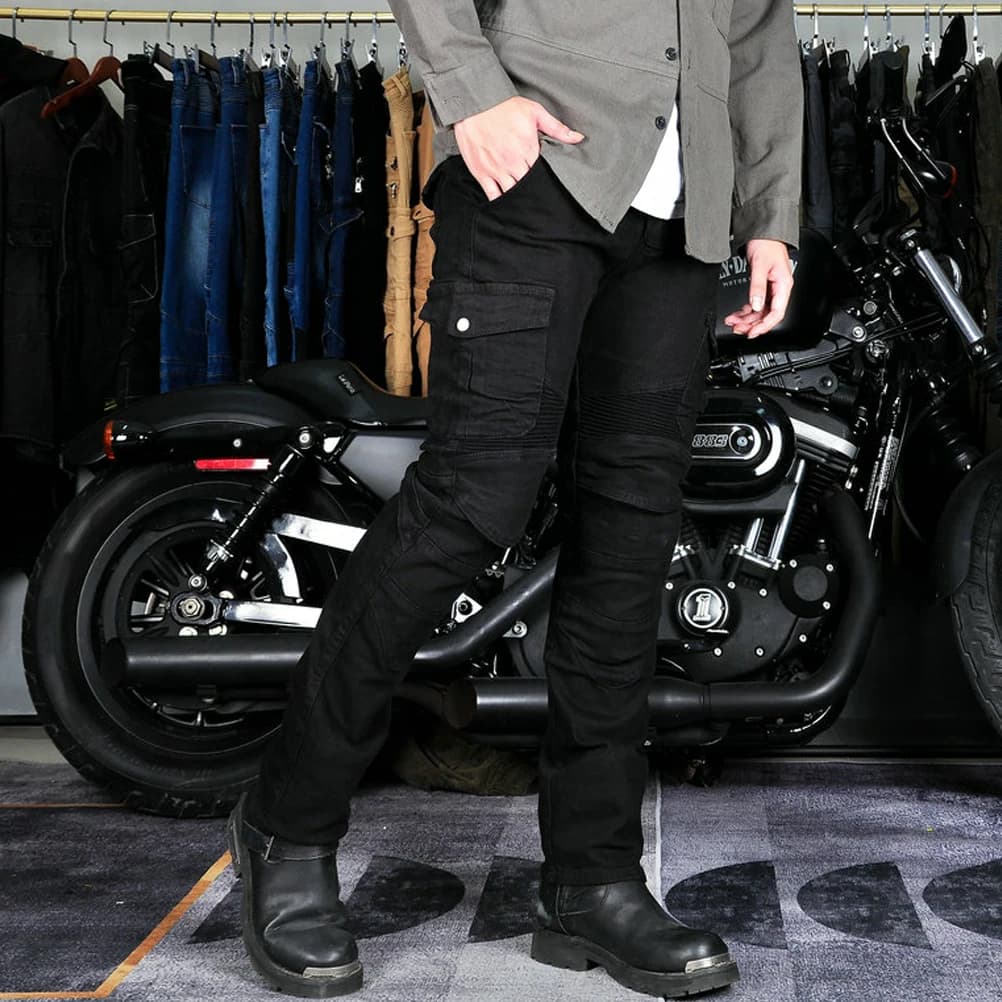
Best Armored Motorcycle Riding Jeans (2026)
I tested 9 armored riding jeans from $100-$457. The $140 Cortech AA Dyneema is the clear winner for most riders.
Full Face vs Modular vs Half Helmet 2026
I've worn all 4 helmet types. Full face wins for beginners — here's noise data, safety stats, and top picks.
Best Motorcycle Helmets Under $200 (Safety Tested, 2026)
You don't need to spend $500 for a safe helmet. These are the 7 best motorcycle helmets under $200 — Snell and ECE certified options that protect as well as helmets costing twice the price.