This post may contain affiliate links. We only recommend gear we'd use ourselves. If you click a link and make a purchase, we may earn a small commission at no extra cost to you.
In This Article
For beginners, a full-face helmet is the only smart choice — 35% of all impacts hit the chin bar and only full-face helmets protect it. The best overall full-face is the Shoei RF-1400 ($480-690) with DOT + Snell at 1,400g. For touring and commuting, the Schuberth C5 ($700-900) is the quietest modular ever made. On a tight budget, the HJC i71 ($170-200) is the lightest budget full-face at 1,300g with DOT + ECE dual certification.
Full-face helmets offer the most protection with the lowest noise and the widest range of price options. Modular helmets are great for touring riders who want to flip up at gas stops. Half helmets and open-face lids look cool but leave your face completely exposed — and your face is where 35% of impacts land in crashes.
All right guys so here's the thing — I've worn every type of helmet at this point. Started with a cheap full-face when I got my first bike back in 2013, tried a modular for a bit because I thought flipping the chin bar up at Tim Hortons drive-throughs was the move, and I even went through a phase where I thought half helmets looked sick on cruisers. I'm not gonna lie, I learned some of these lessons the hard way and some of them I learned from watching other people learn the hard way which is honestly worse because you can't do anything about it.
So I'm gonna break down every helmet type with real data — noise levels in decibels, actual weight comparisons, safety ratings, and specific helmet picks in each category. If you're trying to figure out which type to buy for your first helmet, check our 7 best beginner motorcycle helmets guide for specific picks. This post is about understanding the difference between the types so you can make the right call before you spend money. And if you're shopping on a tight budget, our best helmets under $200 guide has you covered too.
What Are the Different Types of Motorcycle Helmets?
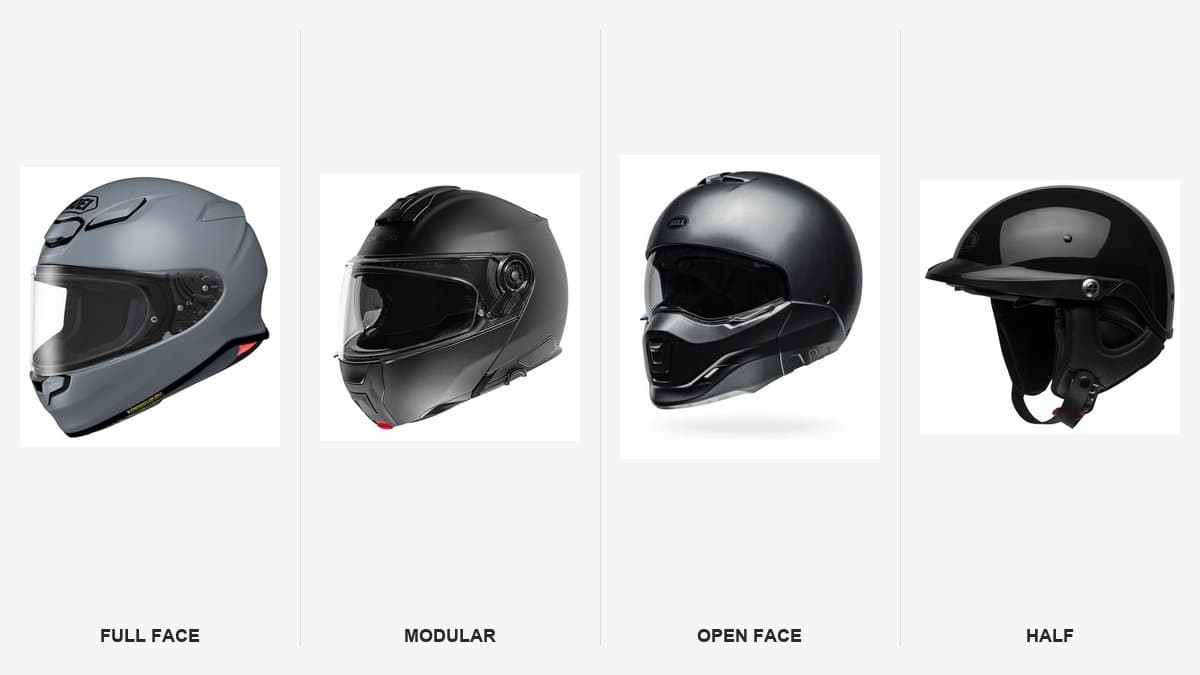
There are four main types and they each protect a different amount of your head. That sounds obvious but bro you'd be surprised how many people don't actually understand what they're giving up when they go from a full-face to a half helmet.
Full-Face — Covers your entire head including chin bar, full face shield. This is the standard for sport bikes, adventure bikes, and honestly most motorcycle riding. Maximum protection, minimum wind noise, and the most options in every price range.
Modular (Flip-Up) — Looks like a full-face but the chin bar hinges up so you can talk, eat, drink, or just get some air without taking the whole helmet off. Popular with touring riders and commuters. The tradeoff is they're heavier and slightly louder than full-face because of the hinge mechanism.
3/4 Open Face — Covers the top, back, and sides of your head but leaves your entire face exposed. Some have face shields, some don't. Popular with cruiser and scooter riders who want more airflow and that classic retro look.
Half Helmet — Covers the crown of your head and that's it. Your face, jaw, ears, and the back of your neck are completely exposed. These are basically the absolute minimum to be street legal in states that require helmets.
| Type | Face Protection | Noise Level | Weight Range | Price Range |
|---|---|---|---|---|
| Full Face | Full chin + face | 80-88 dB | 1,300-1,800g | $100-1,900+ |
| Modular | Full when closed | 82-92 dB | 1,500-2,000g | $200-1,200 |
| 3/4 Open Face | None | 95-100+ dB | 1,000-1,400g | $100-600 |
| Half Helmet | None | 100-110+ dB | 700-1,000g | $50-250 |
If you're a brand new rider, skip straight to the full-face section. Seriously. You can always try other types later once you have experience and understand the risks you're accepting. Your first helmet should protect your entire head.
How Safe Is Each Helmet Type? (Real Crash Data)
This is where things get real and I'm not gonna sugarcoat it. The Dietmar Otte study — which analyzed thousands of real motorcycle crashes — found that roughly 35% of all helmet impacts hit the chin bar area. Think about that for a second. More than a third of impacts hit the one part that half helmets and open-face helmets don't protect at all.
According to NHTSA motorcycle crash data, helmeted riders are 37% less likely to die in a crash than unhelmeted riders and 69% less likely to sustain brain injuries. But that stat assumes a full-face helmet. The protection drops significantly with each type you step down.
| Type | Chin Protection | SNELL Eligible | Impact Zone Coverage | Relative Injury Risk |
|---|---|---|---|---|
| Full Face | Yes — 35% of impacts hit chin bar | Yes | Full head + face | Baseline (lowest) |
| Modular | ~95% of full face when locked shut | No (hinge weakness) | Full when closed | Slightly higher than full face |
| 3/4 Open Face | None | No | Top, back, sides only | 2x+ head/brain injury risk vs full face |
| Half Helmet | None | No | Crown only | Highest — zero face/jaw protection |
Here's what really got me — the Hurt Report, the largest motorcycle crash study ever done in the US, found that the chin and face are among the most frequently impacted areas in crashes. That's not highway crashes either. We're talking neighborhood speeds, parking lots, intersections. The kinds of places you ride every single day.
Modular helmets are only safe when the chin bar is locked in the closed position. Riding with the chin bar flipped up gives you the same protection as a 3/4 open-face — which means zero chin protection. If you buy a modular, keep it closed while moving.
Oh by the way guys — Tina was riding with a 3/4 open-face for like the first month because she liked how it looked and I didn't push hard enough on the full-face thing. Then she caught a rock to the face shield area at highway speed and was like "yeah I'm getting a full-face tomorrow." She rides a Shoei now. But anyways, let's talk about noise because that's another massive difference between helmet types.
How Loud Is Each Helmet Type at Highway Speed?
This is one that nobody talks about enough and it drives me insane because hearing damage is permanent bro. You don't get it back. Wind noise at highway speed is legitimately damaging to your hearing over time and the type of helmet you wear makes a huge difference.
| Type | dB Range at ~62 mph | Context | Hearing Damage Risk |
|---|---|---|---|
| Full Face | 80-88 dB | Quietest: Schuberth S3, Shoei RF-1400 | Low with earplugs |
| Modular | 82-92 dB | 3-5 dB louder due to chin bar seams | Moderate without earplugs |
| 3/4 Open Face | 95-100+ dB | Significant wind noise around ears | High — earplugs essential |
| Half Helmet | 100-110+ dB | Equivalent to a chainsaw or rock concert | Very high — damage guaranteed over time |
For reference, sustained exposure above 85 dB causes hearing damage. A full-face helmet at highway speed sits right at that threshold, which is why I always recommend motorcycle earplugs regardless of helmet type. But with a half helmet you're sitting at chainsaw levels. That's not an exaggeration — 100-110 dB is literally what a chainsaw puts out.
The Schuberth C5 modular and the Shoei RF-1400 full-face are consistently the quietest helmets in independent testing. If you do a lot of highway riding and noise matters to you, those two are worth every penny.
Even with the quietest full-face helmet, always wear earplugs on rides longer than 20 minutes. Wind noise at highway speed causes cumulative hearing damage that you won't notice until it's too late. Good motorcycle earplugs cost $20-30 and last for years.
Should You Get a Full Face or Modular Helmet?
This is the big question and honestly it depends on how you ride. Let me break it down real simple.
Get a full-face if: You ride sport bikes, do any kind of spirited riding, prioritize safety and low noise above all else, or you're a beginner who wants the safest possible option. Full-face helmets are lighter, quieter, and structurally stronger than modulars because there's no hinge mechanism compromising the chin bar.
Get a modular if: You do a lot of touring or commuting, you wear glasses and hate the struggle of getting them on and off with a full-face, you want to grab a coffee at a gas stop without removing your entire helmet, or you ride in hot climates and want to flip up the chin bar while sitting at red lights. The convenience is real — I used a modular for a summer of touring and being able to flip up at toll booths and drive-throughs is honestly pretty nice.
The key difference is that modular helmets have a hinge mechanism at the chin bar, which means they're heavier (typically 150-300g more than an equivalent full-face), slightly louder because of the seams, and they can't achieve Snell certification because the hinge is a structural weak point. Most modulars are still DOT + ECE certified though, which is plenty safe for street riding.
Here's my honest take — if I could only own one helmet for everything, it'd be a full-face. The Shoei RF-1400 specifically. But if I had two, I'd keep the full-face for canyon runs and spirited riding and add a Schuberth C5 modular for touring and commuting. Best of both worlds.
Why Are Half Helmets a Bad Idea for Beginners?
I know this is gonna upset some people and I don't care because I'd rather you be mad at me than missing teeth. Half helmets cover the crown of your head and literally nothing else. No chin bar, no face shield, no ear coverage, no back-of-head protection below the occipital bone. You're exposed from the eyebrows down.
Let me tell you something — I get the appeal. Half helmets are light as hell (700-1,000g vs 1,300-1,800g for full-face), they're cheap, they look great on cruisers, and on a hot summer day the airflow is unbeatable. I rode with a half helmet exactly twice before I noped out of it forever.
The reality is that a half helmet at highway speed puts you at 100-110+ dB of wind noise, offers zero protection to your face and jaw (where 35% of impacts hit), and provides minimal protection to the sides and back of your head. You're essentially wearing a DOT sticker and a prayer.
In the 19 states plus DC that have universal helmet laws, a half helmet is technically legal as long as it carries DOT certification. But legal and safe are two very different things.
Half helmets provide zero face, jaw, or ear protection. In a crash at any speed, your face hits the ground or another vehicle with nothing between you and the impact. For beginners with less crash avoidance experience, a half helmet is genuinely dangerous.
If you ride a cruiser and want the look without dying, check out the Bell Broozer — it's a convertible that goes from full-face to open-face and back. You get the cruiser aesthetic when you want it and real chin protection when you're actually riding. More on that below.
Which Helmet Type Fits Your Riding Style?
All right so instead of just listing pros and cons like every other article out there, here's a decision tree based on how you actually ride.
You mostly ride in the city and suburbs (under 50 mph): Go full-face. The AGV K6 S or HJC i71 are lightweight enough that you won't hate wearing them in stop-and-go traffic, and the chin bar protects you in the low-speed crashes that are most common in urban riding.
You do long highway touring and road trips: Modular is your friend. The Schuberth C5 or Shoei Neotec 3 give you full-face protection at speed with the convenience of flipping up at rest stops. Pair with a Cardo or Sena intercom for music and nav.
You ride a cruiser and want the classic look: 3/4 open-face with a good face shield. The Shoei J-Cruise II is the safest option in this category. But honestly I'd still recommend the Bell Broozer convertible — cruiser look when parked, full-face protection when riding.
You're a brand new beginner: Full-face. Period. Get the HJC i71 if you're on a budget or the Shoei RF-1400 if you can swing it. Your first year of riding is when you're statistically most likely to crash and you want maximum protection while you build skills. Check our complete beginner's guide for everything else you need to know.
You ride in extreme heat: Full-face with excellent ventilation. The AGV K6 S has some of the best airflow in any helmet at any price. A modular with the chin bar up at stops works too but keep it closed while moving.
What Are the Best Helmets in Each Category for 2026?
All right let me give you specific picks because general advice only gets you so far. These are the helmets I'd buy with my own money in each type.
Best Full-Face Helmets
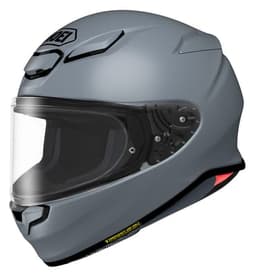
Shoei RF-1400
The gold standard. DOT + Snell certified, 1,400g, incredible ventilation, emergency quick-release cheek pads. This is the one I keep coming back to.
The Shoei RF-1400 is the helmet I recommend more than any other and the one I personally wear the most. It's one of the quietest full-face helmets at highway speed, the ventilation is insane for hot days, and it carries both DOT and Snell M2020 certification which means it passed the strictest consumer safety standard available. At 1,400g it's not the lightest but the weight balance is so good you barely notice it. I talked about this one extensively in our beginner helmets guide — it's the best overall pick there too.
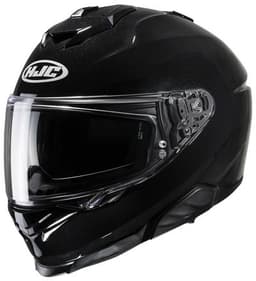
HJC i71
Lightest budget full-face at 1,300g. DOT + ECE dual certified, Pinlock-ready, glasses-friendly channel. Insane value under $200.
If the Shoei is out of your budget bro I completely get it — the HJC i71 is what I'd buy. At $170-200 you're getting DOT + ECE certification, a polycarbonate shell that weighs only 1,300g (lighter than most helmets twice its price), and it's Pinlock-ready so your visor won't fog up on cold mornings. It also has a glasses-friendly channel carved into the EPS liner which is clutch if you wear glasses. We featured this in our helmets under $200 guide and it's still the top pick there.
Best Modular Helmets
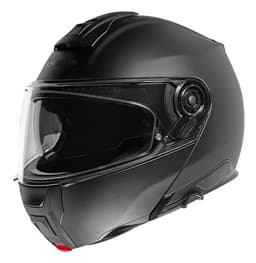
Schuberth C5
The quietest modular helmet ever tested. ECE 22.06 certified, 1,580g, built-in sun visor, designed for Sena SC2 integration. Touring perfection.
If you've decided modular is the way to go, the Schuberth C5 is the one. It's consistently the quietest modular helmet in independent noise tests — we're talking 82-85 dB at highway speed which is insane for a flip-up. It's designed specifically for the Sena SC2 communication system which drops right into built-in recesses, so there's no clamp or adhesive ugliness. This is the touring rider's dream helmet.
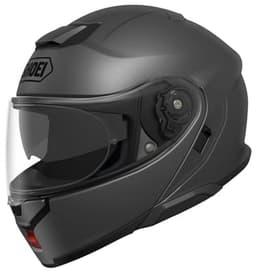
Shoei Neotec 3
Best overall modular. DOT + ECE, 1,650g, seamless Sena SRL2 integration, micro-ratchet chin strap. Premium in every way.
The Shoei Neotec 3 is the other top-tier modular and honestly it's a coin flip between this and the Schuberth depending on your head shape. The Neotec 3 has a micro-ratchet chin strap instead of the typical D-ring, which makes one-handed operation way easier with gloves on. It's designed for the Sena SRL2 system — same idea as the Schuberth, the comm unit fits into purpose-built recesses for a clean look. At about $1,050 it's pricey but if you're a touring rider who puts on serious miles, this helmet pays for itself in comfort.
Best Open-Face and Half Helmets
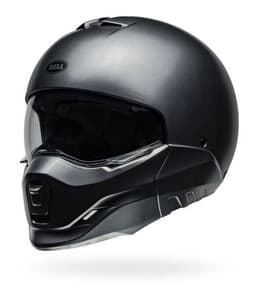
Bell Broozer
Converts from full-face to open-face and back. DOT + ECE certified at ~1,400g. Best of both worlds for cruiser riders who want options.
The Bell Broozer is my pick for anyone who wants the open-face cruiser look but doesn't want to give up chin protection. The chin bar is fully removable so you can run it as a full-face on the highway and pop the chin bar off when you're cruising around town or want that classic open-face aesthetic for photos. At ~$275 with DOT + ECE certification it's a sick deal and honestly one of the most versatile helmets you can buy. Glasses wearers love this one too because of the wide eye port.
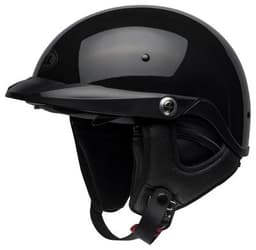
Bell Pit Boss
If you must go half helmet, this is the one. TriMatrix shell, Speed Dial fit system, retractable sun visor. The best half helmet for the money.
Look, I've already told you half helmets aren't my recommendation for anyone especially beginners. But if you're dead set on a half helmet — maybe you ride a bobber at low speeds or you live in a state with helmet laws and you want the bare minimum — the Bell Pit Boss is the one to get. TriMatrix composite shell keeps it light, the Speed Dial fit system is actually really nice for dialing in the fit, and it has a retractable sun visor so you don't need sunglasses. At $119-230 depending on the colorway, it's solid for what it is.
Which Helmets Work Best with Cardo and Sena Intercoms?
This is something nobody else puts in their helmet comparison articles and it drives me crazy because your communication system matters. If you're riding with friends or want music and GPS audio, your helmet needs to work with your comm unit. Our full Cardo vs Sena breakdown covers every model in detail, but here's the compatibility matrix for the helmets in this guide.
| Helmet | Native Comm Integration | Universal Mount Compatible? |
|---|---|---|
| Shoei RF-1400 | None (universal mount only) | Yes — Cardo/Sena clamp fits great |
| HJC i71 | None (universal mount only) | Yes — speaker pockets built in |
| Schuberth C5 | Sena SC2 (purpose-built) | Yes — clamp works too |
| Shoei Neotec 3 | Sena SRL2 (purpose-built) | Yes — clamp works too |
| Bell Broozer | None | Yes — clamp fits |
| Bell Pit Boss | None | Limited — adhesive mount only |
| Cardo Beyond GTS | Fully integrated | N/A — built-in comm system |
| Sena Stryker | Fully integrated | N/A — built-in comm system |
If you want the cleanest possible comm setup, the Schuberth C5 + Sena SC2 or Shoei Neotec 3 + Sena SRL2 are designed to work together — no external clamp, no exposed wires, just a flush fit. For everything else, the universal clamp versions of the Cardo Packtalk Edge or Sena 60S mount to any full-face or modular helmet without issues. Half helmets are tough — most comm systems don't mount cleanly and you're stuck with adhesive which looks scuffed.
If you're buying a new helmet and a new comm system at the same time, match them. Schuberth → Sena SC2, Shoei Neotec/GT-Air → Sena SRL2. The integrated look and sound quality are noticeably better than universal clamp mounts. Check our bluetooth headset guide for the full breakdown.
What Are the Best Helmets for Glasses Wearers?
Bro I don't wear glasses but Tina does and she made me add this section because she says every helmet guide ignores glasses wearers and she's right. If you wear glasses, getting them on and off inside a full-face helmet is a legitimate pain and certain helmets are way better than others for it.
Best full-face for glasses: The HJC i71 and AGV K6 S both have glasses-friendly channels carved into the EPS liner that give your temples room to slide in without bending. The Shoei RF-1400 is okay for glasses but the cheek pads are tighter.
Best modular for glasses: Any modular is automatically better for glasses because you flip the chin bar up, put your glasses on normally, then close it. The Schuberth C5 and Shoei Neotec 3 both have wide eye ports that work great with glasses.
Best convertible for glasses: The Bell Broozer is excellent because the wide eye port and removable chin bar make glasses a non-issue.
If you wear glasses and you're frustrated with full-face helmets, a modular is genuinely worth considering just for the convenience factor. Being able to put your glasses on before closing the chin bar instead of trying to thread them through a tiny gap is a legitimate quality of life upgrade. Check our women's gear guide too — Tina covers her glasses setup in detail there.
Are Smart Helmets Worth It in 2026?
All right so 2026 is the year smart helmets finally stopped being vaporware and started actually shipping. Here's what's happening:
| Product | Price | What It Does | Status |
|---|---|---|---|
| Shoei Opticson | $980 + $79 battery | First production HUD helmet — GPS, call/text alerts, AR overlay | Japan-only limited release |
| Shoei GT-Air 3 Smart (EyeLights) | TBD | GPS/phone HUD projected into visor | Deliveries mid-2026 |
| Cardo Beyond GTS | $1,199 | Carbon fiber shell, integrated comms, active brake light, wireless charging | Summer 2026 |
| Cardo Beyond GT | $949 | Fiberglass version, wired charging, reflective strip | Summer 2026 |
| Sena Stryker | $499 | Full-face with Mesh 3.0, Harman Kardon speakers, LED taillight | Available now |
The Sena Stryker is the only one you can actually buy right now and for $499 you get a full-face helmet with a fully integrated Mesh 3.0 + Bluetooth 5.0 communication system, Harman Kardon speakers, and an LED taillight on the back. That's actually pretty dope for the money when you consider a decent helmet plus a standalone comm unit would run you $400-600 anyway.
The Cardo Beyond helmets are the ones I'm most hyped about because Cardo makes my favorite communication system and them making their own helmet with everything integrated from the ground up should be fire. But they're not shipping until summer 2026 so we'll have to wait and see.
For beginners right now — don't wait for smart helmets. Buy a proven full-face like the Shoei RF-1400 or HJC i71 and add a comm system later. Smart helmets are first-gen products and I'd rather see you protected with a proven lid than waiting for tech that might have firmware bugs or fit issues.
What Are the Helmet Laws in Your State?
Before I wrap up — here's the legal side since I get asked about this constantly.
- 19 states + DC: Universal helmet law (all riders must wear one)
- 28 states: Partial law (riders under 18 or 21 only)
- 3 states: No helmet law at all (Illinois, Iowa, New Hampshire)
- All US street-legal helmets must carry DOT certification
- ECE 22.06 is stricter but doesn't satisfy US legal requirements alone
- Snell M2020 is voluntary — the strictest consumer standard available
Regardless of what your state requires, wear a helmet. Full-face. Every ride. That's not a legal recommendation, that's a "I want you to keep your face" recommendation. Our riding gear guide covers everything else you should be wearing too.
All right guys that's the full breakdown on every helmet type. If this helped you figure out which direction to go, check the specific helmet picks linked throughout this post and our complete gear buying guide for the rest of your setup. Ride safe out there and protect your head bro. Let's go.
Frequently Asked Questions
Can you ride with a modular helmet chin bar flipped up?
Are half helmets legal in all states?
How often should you replace a motorcycle helmet?
Is a more expensive helmet actually safer?
What is the difference between DOT ECE and Snell helmet certifications?
Do modular helmets protect as well as full face helmets?
Why are modular helmets heavier than full face helmets?
What is the best helmet type for a cruiser motorcycle?
Written by
6FOOT4HONDAMotorcycle creator with 1.2M+ subscribers on YouTube and 2M+ across all platforms. Riding and filming since 2016, with 1,000+ videos covering beginner riding tips, gear reviews, stunts, and road trips. Every product recommended on this site has been personally tested on real rides — from highway touring to track days to stunt sessions. Based in the US, riding year-round.
Related Articles
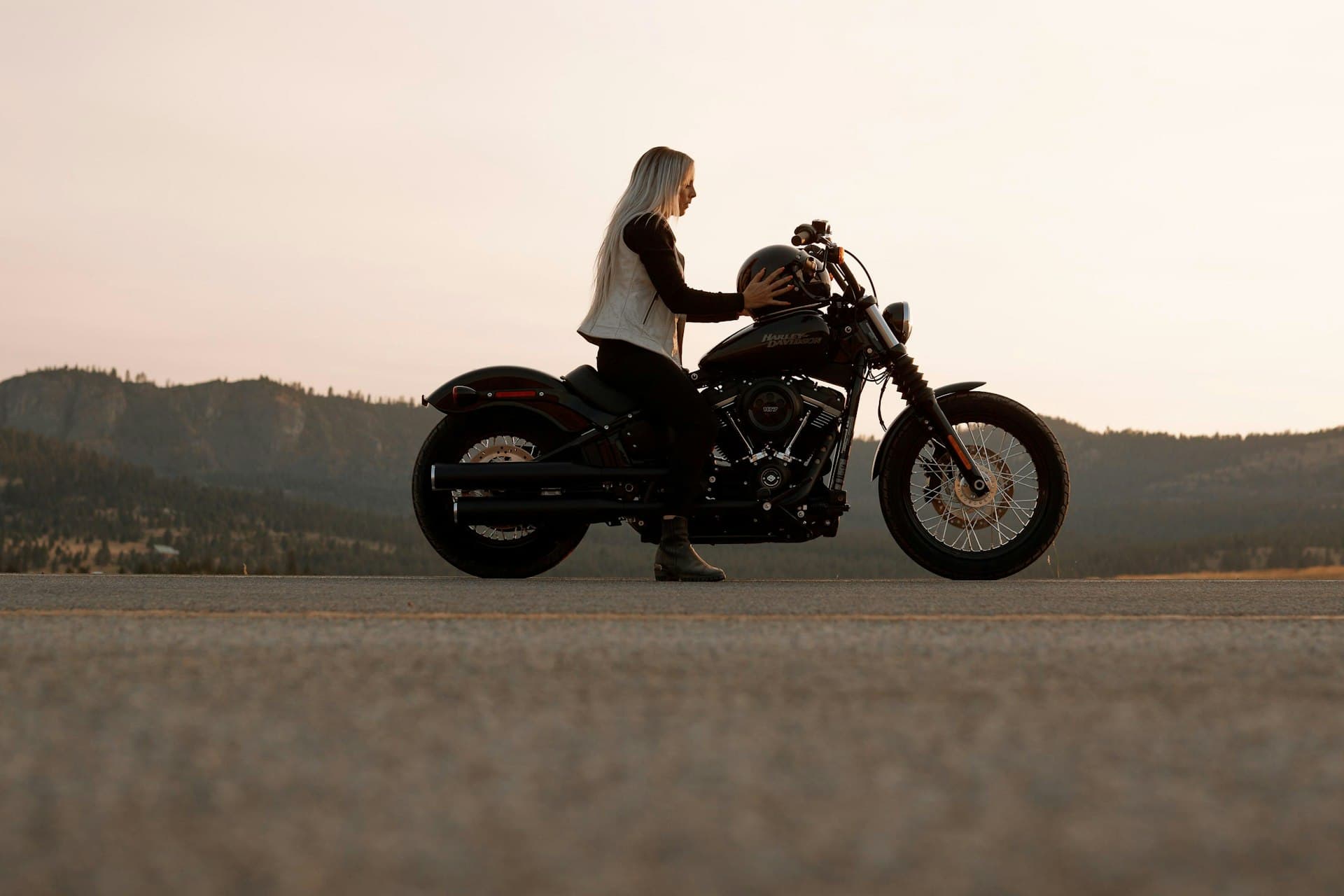
Best Motorcycle Helmets Under $200 (Safety Tested, 2026)
You don't need to spend $500 for a safe helmet. These are the 7 best motorcycle helmets under $200 — Snell and ECE certified options that protect as well as helmets costing twice the price.
Motorcycle Gear Guide: Everything You Need to Ride Safe (2026)
The complete hub for every piece of motorcycle gear you need - helmets, jackets, gloves, boots, tech, and more. One page to find it all.
The Complete Motorcycle Riding Gear Guide for Beginners
Everything you need to wear before your first ride — from helmet to boots. No fluff, just what actually protects you and why it matters.