Why Every Motorcyclist Needs Ear Plugs: The Science of Wind Noise and Hearing Loss
By 6FOOT4HONDA · 12 min read · Mar 3, 2026 · Updated Mar 4, 2026

This post may contain affiliate links. We only recommend gear we'd use ourselves. If you click a link and make a purchase, we may earn a small commission at no extra cost to you.
In This Article
Every motorcyclist needs ear plugs because wind noise at highway speed reaches 95-105 decibels, causing permanent hearing damage after just 15 minutes at 70 mph. Filtered ear plugs like the NoNoise Motorsport ($25) reduce damaging wind roar while still letting you hear traffic, your engine, and Bluetooth communicators clearly.
At 60 mph, the wind noise inside your helmet is approximately 95-105 decibels. That's louder than a power tool. OSHA says exposure above 85 dB causes permanent hearing damage. At 100 dB, permanent damage begins after just 15 minutes.
Every highway ride you take without ear plugs is damaging your hearing. Not "might be" — is. Noise-induced hearing loss is cumulative, irreversible, and the #1 preventable health risk for motorcyclists.
The fix costs $5. A pair of foam ear plugs. That's it. But if you want something better — filtered plugs that block wind noise while letting you hear your exhaust, music, and communicator — this guide covers every option.
The Science: Why Wind Noise Is Dangerous
It's Not Your Exhaust
Most riders think the loudest sound while riding is the engine. It's not. Wind turbulence around your helmet produces the most damaging noise. Even on a near-silent electric motorcycle, wind noise at highway speed exceeds safe levels.
The noise is generated by turbulent air flowing around the edges of your helmet, the visor gap, and the chin bar. It creates a low-frequency roar that you stop consciously noticing but your ears never stop absorbing.
The Damage Is Permanent and Cumulative
Your inner ear contains approximately 15,000 hair cells that convert sound vibrations into electrical signals your brain interprets as sound. Excessive noise destroys these cells. They don't grow back. Ever.
The timeline of damage:
- First few years: Subtle. You might notice ringing after long rides (tinnitus). It fades, so you ignore it.
- 5-10 years: Tinnitus becomes permanent — a constant ringing or buzzing that never stops. You start asking people to repeat themselves.
- 10-20 years: Measurable hearing loss. Conversations in noisy environments become difficult. Music doesn't sound the same.
The cruel part: by the time you notice the damage, years of prevention have already been missed. Hearing loss from noise exposure is gradual enough that most riders don't realize it's happening.
Tinnitus (ringing in the ears) after a ride is a warning sign. If your ears ring after riding, your hearing is being damaged. It's not "normal." It's your inner ear telling you the noise level exceeded its capacity. Start wearing ear plugs immediately.
Decibel Levels While Riding
| Speed | Approximate Noise Level | Safe Exposure Time (OSHA) |
|---|---|---|
| 40 mph | 85-90 dB | 8 hours |
| 50 mph | 90-95 dB | 2-4 hours |
| 60 mph | 95-100 dB | 30-60 minutes |
| 70 mph | 100-105 dB | 15 minutes |
| 80 mph | 105-110 dB | Less than 5 minutes |
At 70 mph, you have 15 minutes before permanent damage begins. Most highway rides are longer than 15 minutes.
Your helmet helps, but not enough. Even premium helmets with excellent noise ratings only reduce wind noise by 3-5 dB. That helps, but it doesn't bring levels below the damage threshold at highway speeds. A well-fitting, aerodynamic helmet does reduce turbulence — see our best motorcycle helmets guide for options with the quietest designs — but plugs are still essential.
Types of Motorcycle Ear Plugs
Foam Ear Plugs (Cheapest, Most Effective)
3M 1100 Foam Ear Plugs (200 Pack)
The highest Noise Reduction Rating (NRR 29) of any disposable plug. Soft foam compresses for insertion and expands to fill your ear canal completely. A 200-pair box costs under $20 — about 10 cents per ride. The same plugs used on construction sites and shooting ranges.
Pros: Cheapest option, highest noise reduction, available everywhere. Cons: Block ALL sound — music, communicator, and traffic sounds are muffled significantly. Single-use (though many riders reuse them for a few rides). Inserting them with gloves on is annoying.
Best for: Budget-conscious riders, long highway trips, maximum noise reduction.
Filtered/Musician Ear Plugs (Best All-Around)
NoNoise Motorsport Ear Plugs
Specifically designed for motorcyclists. The ceramic filter reduces wind noise by 21 dB while allowing speech, music, and engine sounds through clearly. You can hear your Cardo communicator, your exhaust note, and traffic — just without the damaging wind roar. Reusable, washable, comes with a carrying case. Under $25.
How filtered plugs work: Instead of blocking all sound equally (like foam), filtered plugs use an acoustic filter that reduces specific frequency ranges. Wind noise is predominantly low-frequency (100-500 Hz). Filtered plugs attenuate those low frequencies while allowing higher frequencies (speech, music, sirens) to pass through more clearly.
The result: Wind roar disappears, but you can still hear your communicator, your engine, horns, and sirens. It's like turning down the volume on a bad sound while keeping the good ones.
Other Filtered Options
Alpine MotoSafe Pro
Comes with two sets of filters — one for touring (medium attenuation) and one for racing (maximum attenuation). Swap filters based on your riding. Soft, comfortable for all-day wear. Under $30 with both filter sets.
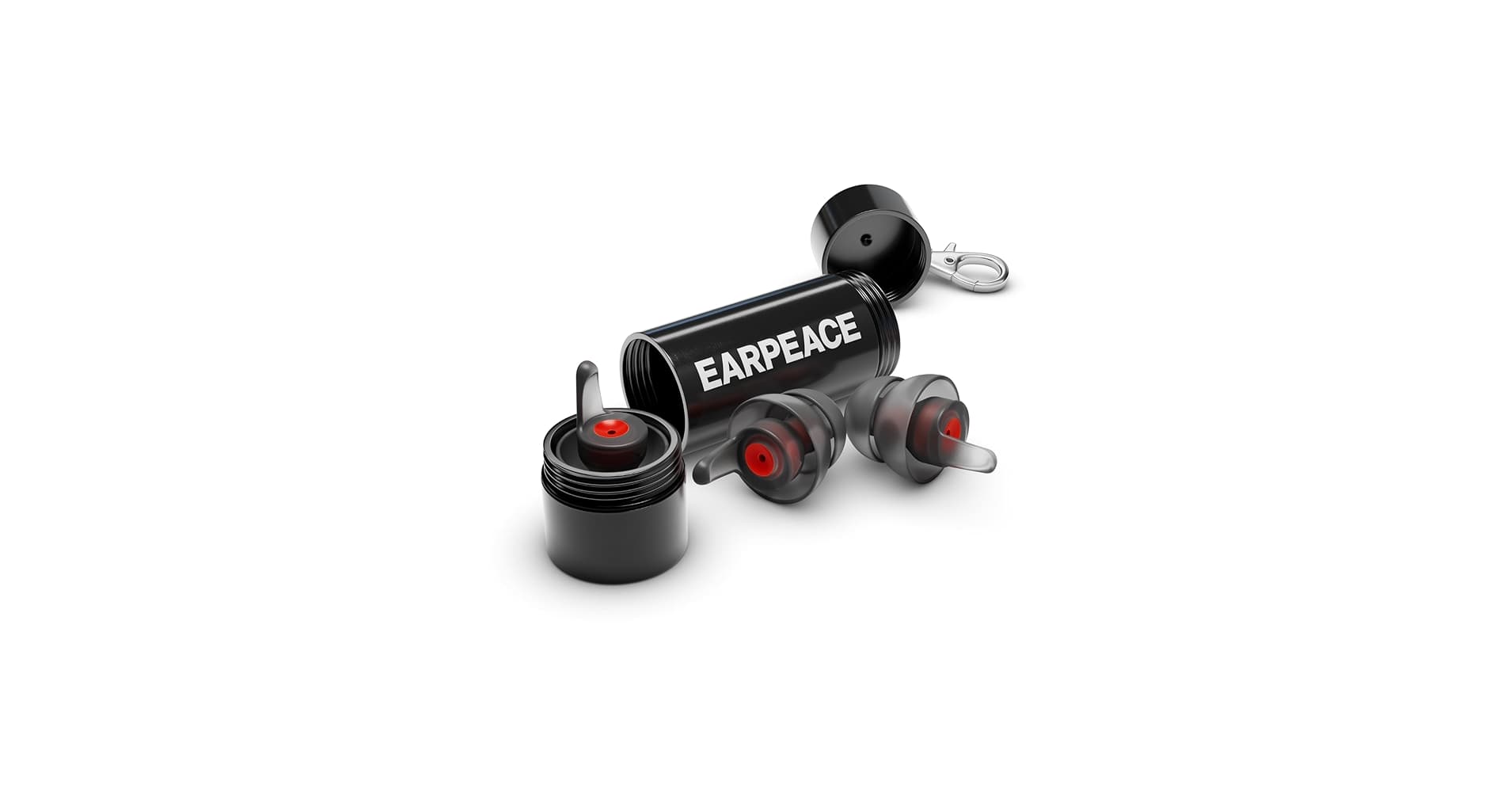
EarPeace Motorcycle Ear Plugs
Three interchangeable filter levels (low, medium, high protection) so you can adjust noise reduction to your preference. Discreet, nearly invisible when inserted. Popular with riders who want protection without visible ear plugs. Under $25.
Custom-Molded Ear Plugs (Premium)
What they are: An audiologist takes impressions of your ear canals and creates plugs that fit your ears perfectly. They include acoustic filters rated for specific noise reduction levels.
Cost: $100-250 from an audiologist. Some online services (like Decibullz) offer DIY moldable plugs for $30-40.
Pros: Perfect fit = maximum comfort for all-day wear, zero pressure points, consistent seal.
Cons: Expensive, need professional fitting, replacement if your ear shape changes.
Best for: Daily commuters and touring riders who wear plugs for hours at a time.
Start with filtered plugs, not foam. Foam plugs muffle everything and make many riders feel "disconnected" from the bike — which discourages wearing them consistently. Filtered plugs let you hear what matters while cutting the damaging noise. Consistency beats maximum protection every time.
"But I Won't Hear Traffic / Sirens / My Engine"
This is the #1 objection, and it's wrong. Here's why:
Your hearing IMPROVES with ear plugs at speed. Sound counterintuitive? Without plugs, the 100 dB wind roar drowns out everything — engine tone, approaching vehicles, sirens. Your brain is overwhelmed by the loudest noise and can't pick out quieter, important sounds.
With filtered plugs, the wind roar drops by 15-21 dB, but speech and higher-frequency sounds only drop 5-8 dB. The result is a dramatically better signal-to-noise ratio. You hear engine changes, tire noise, and approaching vehicles MORE clearly with plugs than without.
You also hear your Bluetooth communicator better. The Cardo Packtalk system already compensates for wind noise by boosting volume, but it's fighting a losing battle above 70 mph. With ear plugs reducing the background noise, your communicator sounds clearer at lower volumes.
How to Insert Ear Plugs Properly
Bad insertion is why most people think ear plugs don't work. A poorly inserted plug provides almost no protection.
Foam Plugs
- Roll the plug between your fingers into the thinnest cylinder possible.
- Reach over your head with the opposite hand and pull the top of your ear up and back. This straightens your ear canal.
- Insert the rolled plug about halfway into the ear canal. Don't push it in fully — it needs room to expand.
- Hold it in place for 15-20 seconds while the foam expands and seals.
Silicone/Filtered Plugs
- Pull your ear up and back with the opposite hand (same technique).
- Twist the plug gently while inserting until it seats firmly.
- You should feel a clear drop in ambient noise when it's properly sealed.
The test: Cup your hands tightly over your ears. If the noise drops dramatically, the plugs aren't sealed well. If it barely changes, the plugs are doing their job.
Ear Plugs + Helmet Fit
Some riders worry that ear plugs make their helmet fit differently. With properly sized plugs, this isn't an issue — they sit inside the ear canal, not between your ear and the helmet padding.
Tips for comfortable combo:
- Insert plugs BEFORE putting on your helmet
- If foam plugs push against your helmet padding, switch to lower-profile silicone/filtered plugs
- Custom-molded plugs have the lowest profile and zero interference with any helmet
Which Ear Plugs Should You Buy?
| If You... | Get These |
|---|---|
| Want the cheapest possible protection | 3M foam plugs (box of 200, ~$18) |
| Want to hear your engine and communicator | NoNoise Motorsport (~$25) |
| Want adjustable protection levels | Alpine MotoSafe Pro (~$28) or EarPeace (~$25) |
| Ride daily for hours | Custom-molded from audiologist ($100-250) |
| Want to try before investing | Any filtered plug under $30 |
The Real Cost of Not Wearing Ear Plugs
- Hearing aids: $2,000-7,000 per pair, replaced every 5-7 years
- Tinnitus treatment: No cure exists. Management includes therapy, sound machines, and medication. Lifetime cost of living with permanent tinnitus is difficult to quantify but impacts sleep, concentration, and mental health.
- A pair of NoNoise Motorsport plugs: $25. Lasts 1-2 years with regular use.
Hearing protection is the cheapest, easiest safety upgrade you can make. Cheaper than a tire. Cheaper than an oil change. You literally cannot afford not to wear ear plugs. For a complete breakdown of every piece of safety gear you should own, check our motorcycle gear buying guide.
Put them in your jacket pocket next to your keys. Make it the same habit as putting on your helmet. Building consistent pre-ride habits like this is part of developing solid riding skills that keep you safe for years. Your future self — the one who can still hear conversations, music, and the sound of their own bike — will thank you.
Frequently Asked Questions
Do motorcyclists need to wear ear plugs?
Yes, wind noise at highway speeds reaches 95-105 decibels, which causes permanent hearing damage after just 15 minutes at 70 mph. Noise-induced hearing loss is cumulative and irreversible, making ear plugs the cheapest and most important safety gear a rider can use.
Can you still hear traffic with motorcycle ear plugs?
Yes, especially with filtered ear plugs. Filtered plugs reduce damaging low-frequency wind noise by 15-21 dB while allowing higher-frequency sounds like sirens, horns, and engine noise to pass through clearly. Most riders actually hear traffic better with plugs in.
What are the best ear plugs for motorcycle riding?
NoNoise Motorsport ear plugs are the top overall choice at around $25. They use a ceramic filter designed for motorcyclists that cuts wind roar while preserving speech, music, and engine sounds. For the cheapest option, 3M foam plugs work well at about 10 cents per pair.
Is it legal to wear ear plugs while riding a motorcycle?
Ear plugs are legal for motorcycle riders in all 50 US states. In fact, many safety organizations and rider training courses actively recommend them. Filtered plugs are preferred because they reduce harmful noise while still allowing you to hear important traffic sounds.
How loud is wind noise on a motorcycle?
Wind noise inside a helmet reaches approximately 85-90 dB at 40 mph, 95-100 dB at 60 mph, and 100-105 dB at 70 mph. OSHA standards say exposure above 85 dB causes permanent hearing damage, and at 100 dB damage begins after just 15 minutes.
Written by
6FOOT4HONDAMotorcycle creator with 1.2M+ subscribers on YouTube and 2M+ across all platforms. Riding and filming since 2016, with 1,000+ videos covering beginner riding tips, gear reviews, stunts, and road trips. Every product recommended on this site has been personally tested on real rides — from highway touring to track days to stunt sessions. Based in the US, riding year-round.
Related Articles
Best Motorcycle Earplugs for Riding (Noise Tested, 2026)
We tested the top motorcycle earplugs for wind noise, comfort, and sound quality. Here are the 7 best earplugs for riders in 2026 — from $5 foam to $35 high-fidelity filtered plugs.
7 Best Motorcycle Jackets for Beginners (2026)
The best beginner motorcycle jackets compared. Textile vs leather, CE armor ratings, ventilation, and waterproofing explained — plus what to actually spend.

Motorcycle Airbag Vests Explained: The Safety Gear Nobody Talks About (2026)
Motorcycle airbag vests inflate in milliseconds and reduce impact force by up to 90%. They're more affordable than you think. Here's everything you need to know.