Best Motorcycle Earplugs for Riding (Noise Tested, 2026)
By 6FOOT4HONDA · 10 min read · Mar 4, 2026
This post may contain affiliate links. We only recommend gear we'd use ourselves. If you click a link and make a purchase, we may earn a small commission at no extra cost to you.
In This Article
The best motorcycle earplugs for most riders are the EarPeace Moto Pro (~$30), which reduce wind noise by up to 24 dB while letting you hear your engine, communicator, and traffic clearly through a high-fidelity filter. For budget riders, the Hearos Xtreme Protection foam plugs (~$5) offer the highest noise reduction rating (NRR 33) of any earplug on this list. And if you want flat attenuation that preserves every frequency equally, the Alpine MotoSafe Pro (~$25) is the best choice — it ships with two filter sets for different riding conditions.
Our Top Picks:
| Pick | Product | Rating |
|---|---|---|
| Best Overall | EarPeace Moto Pro | 5/5 |
| Best Budget | Hearos Xtreme Protection | 4.5/5 |
| Best Flat Attenuation | Alpine MotoSafe Pro | 4.5/5 |
Why Every Motorcyclist Needs Earplugs
This is not optional advice. This is a medical fact: wind noise at highway speed causes permanent, irreversible hearing damage.
At 60 mph, the noise inside your helmet reaches 95-105 decibels. That is louder than a power tool. The CDC's National Institute for Occupational Safety and Health (NIOSH) confirms that sustained exposure above 85 dB damages your hearing. At 100 dB, permanent damage begins after just 15 minutes. Most highway rides are longer than 15 minutes.
Here is what most riders do not realize: the loudest sound on a motorcycle is not the exhaust. It is turbulent air flowing around your helmet. The visor gap, the chin bar edges, and the aerodynamic profile of the shell create a low-frequency roar that never stops. Even a dead-silent electric motorcycle produces dangerous wind noise at highway speed.
The Damage Timeline
Your inner ear contains roughly 15,000 hair cells that convert sound into electrical signals. Excessive noise kills these cells. They do not regenerate. The World Health Organization estimates that over 1 billion young adults are at risk of permanent hearing loss from recreational noise exposure. The damage is cumulative and permanent.
- First 1-3 years of riding without plugs: You notice occasional ringing after long rides (tinnitus). It fades, so you ignore it.
- 5-10 years: The ringing becomes permanent. You start asking people to repeat themselves in noisy restaurants.
- 10-20 years: Measurable hearing loss. Music sounds flat. Conversations in groups become difficult.
By the time you notice the damage, years of prevention have already been missed. The fix costs less than a cup of coffee.
Decibel Levels at Speed
| Speed | Noise Level (in helmet) | Safe Exposure Time (OSHA) |
|---|---|---|
| 40 mph | 85-90 dB | 8 hours |
| 50 mph | 90-95 dB | 2-4 hours |
| 60 mph | 95-100 dB | 30-60 minutes |
| 70 mph | 100-105 dB | 15 minutes |
| 80+ mph | 105-110 dB | Less than 5 minutes |
Even a premium quiet helmet only reduces wind noise by 3-5 dB. That helps, but it does not bring levels below the damage threshold at highway speeds. Earplugs are the only real solution. For more on choosing a helmet that minimizes noise, check our Best Motorcycle Helmets for Beginners guide.
If your ears ring after a ride, your hearing is already being damaged. Tinnitus after riding is not "normal." It is a warning signal from your inner ear that the noise exceeded its capacity. Start wearing earplugs immediately — every ride, every time.
Types of Motorcycle Earplugs
Before diving into specific products, you need to understand the three main categories. Each has distinct trade-offs.
Disposable Foam Earplugs
Foam plugs are the cheapest and most effective at raw noise reduction. You roll them between your fingers, insert them into your ear canal, and they expand to create a full seal. NRR ratings of 29-33 dB are common — the highest of any earplug type.
The downside: Foam blocks ALL frequencies equally, which means music, communicator audio, engine sounds, and traffic all get muffled together. Many riders feel "disconnected" from the bike and stop wearing them consistently. They are also single-use (realistically, 2-3 uses before they lose their shape).
Best for: Long highway trips, budget riders, maximum noise blocking when sound quality does not matter.
Filtered / High-Fidelity Earplugs
Filtered earplugs use an acoustic filter that reduces specific frequency ranges instead of blocking everything equally. Wind noise is predominantly low-frequency (100-500 Hz). Good filters attenuate those damaging low frequencies while allowing higher frequencies — speech, music, sirens, engine tones — to pass through more clearly.
The result: The wind roar disappears, but you can still hear your Bluetooth communicator, your exhaust note, approaching traffic, and emergency sirens. Your situational awareness actually improves with filtered plugs because the signal-to-noise ratio gets dramatically better.
Best for: Daily riders, commuters, anyone who uses a communicator or wants to hear their engine.
Custom-Molded Earplugs
Custom-molded plugs are shaped to your exact ear canal geometry. Professional audiologist molds cost $100-250 and include acoustic filters. DIY options like Decibullz use thermoplastic that you heat in boiling water and mold at home for $25-35.
The advantage: Perfect fit means maximum comfort for all-day wear, zero pressure points, and a perfectly consistent seal every time. No fiddling with insertion.
Best for: Daily commuters, touring riders, anyone who wears plugs for hours at a time.
Start with filtered plugs, not foam. Foam plugs muffle everything and make many riders feel disconnected — which discourages consistent use. Filtered plugs let you hear what matters while cutting the damaging noise. Consistency beats maximum protection every time. You only get the benefit of earplugs if you actually wear them on every ride.
The 7 Best Motorcycle Earplugs in 2026
1. EarPeace Moto Pro — Best Overall
EarPeace Moto Pro
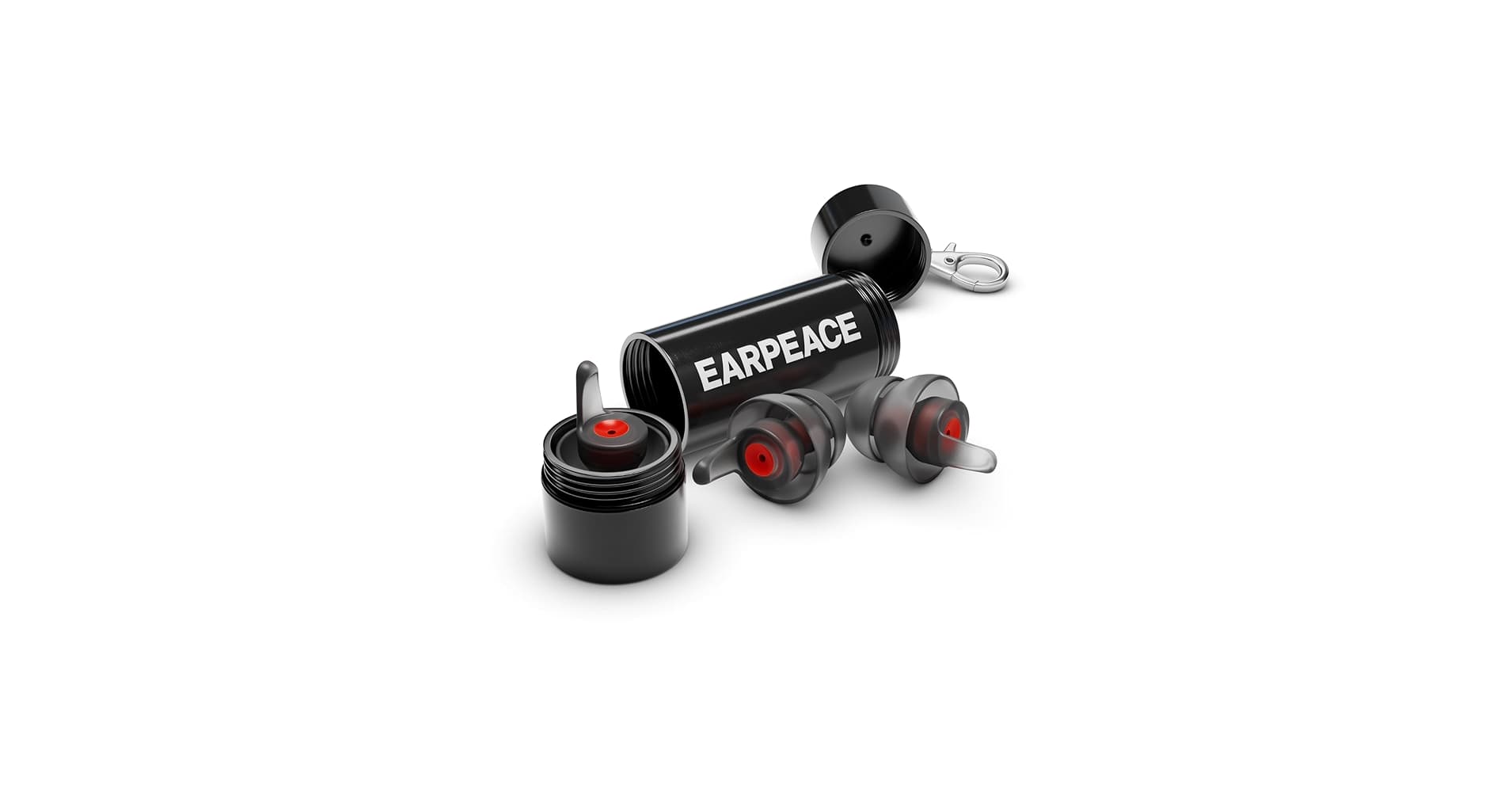
The best all-around motorcycle earplug. The high-fidelity filter reduces wind noise by up to 24 dB while preserving speech, music, and engine sounds with impressive clarity. Contoured profile sits flush in your ear, making them comfortable under any helmet for hours. Comes with medium and large shells, a Pro filter set, and a compact aluminum carrying case. Reusable for 6+ months with regular cleaning.
EarPeace has been making motorcycle-specific earplugs since 2008, and the Moto Pro is the result of years of iteration. The filter technology is the star here — it brings wind noise down to safe levels while letting you hear your communicator, your exhaust note, and the horn of the car behind you.
The contoured profile is designed specifically to sit flush under helmet padding without creating pressure points. That is a bigger deal than it sounds. Many earplugs push against helmet cheek pads after an hour and create a dull ache that makes you want to rip them out. The Moto Pro avoids this.
You get two shell sizes (medium and large) and one Pro filter set rated at 24 dB reduction. The aluminum carrying case clips to a keychain or fits in a jacket pocket. At around $30, this is the earplug most riders should start with.
Pros: Best filter quality for the price, motorcycle-specific design, comfortable under helmets, compact case. Cons: Only one filter level included (no adjustable attenuation like Alpine).
2. Hearos Xtreme Protection — Best Budget
Hearos Xtreme Protection
NRR 33 — the highest noise reduction rating of any earplug on this list. Soft polyurethane foam compresses for easy insertion and expands to fill your ear canal completely. A 14-pair pack costs under $5, making these the cheapest hearing protection money can buy. Each pair is realistically good for 2-3 rides before losing its shape.
If you have never worn earplugs on a motorcycle and want to try hearing protection before investing in filtered plugs, Hearos Xtreme are the move. Fourteen pairs for under five dollars means you have zero excuse not to try them.
The NRR 33 rating is the highest on this list — even higher than most construction-grade hearing protection. The soft foam compresses to a thin cylinder for insertion, then expands to fill your ear canal and seal out noise completely. The first time you ride at highway speed with NRR 33 foam plugs, the silence is startling. You can actually think.
The trade-off is exactly what you would expect: everything gets muffled. Music from your communicator sounds like it is coming from another room. Engine sounds are distant. Sirens and horns are audible but significantly reduced. For a long highway blast where you are just putting in miles, that is perfectly fine. For city commuting where you want awareness, filtered plugs are better.
Pros: Cheapest option, highest noise reduction, available at every drugstore and gas station. Cons: Muffles ALL sound including traffic and communicator, single-use, tricky to insert with gloves on.
3. Alpine MotoSafe Pro — Best Flat Attenuation
Alpine MotoSafe Pro
The only motorcycle earplug that ships with two complete filter sets. The Tour filter reduces noise by 17 dB for relaxed riding, while the Race filter provides 20 dB for high-speed or track use. The patented AlpineThermoShape material is hypoallergenic and molds slightly to your ear canal for a custom-like fit. Reusable for 100+ uses.
Alpine takes a different approach to motorcycle hearing protection. Instead of one filter that emphasizes certain frequencies, the MotoSafe Pro delivers flat attenuation — meaning all frequencies are reduced equally. The result is that everything sounds exactly the same, just quieter. Music still sounds like music. Your engine still sounds like your engine. Nothing is distorted or muffled in a way that changes the character of the sound.
The dual-filter system is the standout feature. The Tour filter (17 dB reduction) is designed for casual riding, commuting, and touring — situations where you want moderate protection without isolating yourself. The Race filter (20 dB reduction) is for highway blasts, track days, and sustained high-speed riding where you need maximum protection.
Alpine's AlpineThermoShape material is a significant comfort advantage. It is softer than standard silicone and gently molds to your ear canal over time, creating a semi-custom fit without the heat-molding process. The material is also hypoallergenic and silicone-free, which matters if your ears are sensitive to typical earplug materials.
Pros: Two filter levels, flat frequency response, semi-custom fit, 100+ reuses. Cons: 17-20 dB reduction is lower than foam or EarPeace (less raw blocking power).
4. NoNoise Motorsport — Best Ceramic Filter
NoNoise Motorsport
The patented ceramic filter made from zirconium oxide provides precision attenuation that most polymer filters cannot match. Reduces wind noise while allowing speech, music, sirens, and engine sounds through clearly. Comfortable silicone-free design sits deep in the ear canal for a secure fit under helmets. Comes with an aluminum carrying case.
NoNoise uses a fundamentally different filter technology than every other earplug on this list. Instead of polymer or foam, the filter is made from zirconium oxide ceramic — a precision-machined material that provides extremely consistent attenuation across its rated frequency range.
What does that mean in practice? The ceramic filter creates a clean, predictable reduction in wind noise without the "underwater" feeling that cheaper filtered plugs sometimes produce. Speech frequencies come through with notable clarity, and your engine note retains its character. Riders who have tried multiple filtered earplugs often describe NoNoise as the most "natural" sounding option.
The design sits deep in the ear canal with a low profile that does not interfere with helmet padding. The silicone-free material is comfortable for extended wear and works well for riders who find other plugs irritating after a few hours.
At around $25, NoNoise competes directly with Alpine and EarPeace on price while offering a unique filter technology that some riders strongly prefer.
Pros: Ceramic filter technology, natural sound quality, silicone-free, low profile. Cons: Single filter level (no swappable filters), can be hard to find in stores.
5. Decibullz Custom Molded — Best Custom Fit
Decibullz Custom Molded
DIY custom-molded earplugs at a fraction of the audiologist price. Heat the thermoplastic molds in boiling water for 5 minutes, let them cool briefly, then press them into your ears for a perfect fit. If you mess up, just reheat and try again. NRR 31 once molded. Includes three sets of foam tips and a carrying case.
Professional custom-molded earplugs from an audiologist cost $100-250. Decibullz delivers about 80% of that experience for $25-30 using a clever thermoplastic system you do at home.
The process is simple: drop the molds in boiling water for five minutes, remove them, let them cool for about a minute until they are warm but not hot, then press them into your ears and hold for a few minutes while they set. The thermoplastic conforms to your exact ear shape and hardens into a permanent custom mold. If the fit is not right, you reheat them and start over — the material can be remolded as many times as you need.
Once molded, the fit is dramatically better than any universal earplug. There are zero pressure points because the plug matches your ear canal exactly. They seal perfectly on the first try, every time, without fiddling with insertion angle or depth. For riders who have always found universal earplugs uncomfortable or who could never get a consistent seal, Decibullz solve the problem permanently.
The NRR 31 rating puts them close to foam plugs in raw noise reduction, but because they seal so consistently, the real-world performance is often better than foam plugs that riders insert poorly.
Pros: True custom fit at $30, remoldable, NRR 31, stays in place perfectly. Cons: Blocks all frequencies (no filter), requires boiling water and patience, bulkier than other plugs.
Mold your Decibullz without your helmet on first, then test the fit with your helmet. If the molds push against your helmet padding uncomfortably, reheat and remold them with a slightly lower profile. You want the mold to sit flush inside your ear canal, not protrude beyond the opening.
6. Eargasm High Fidelity — Premium Reusable
Eargasm High Fidelity
Originally designed for musicians and concert-goers, these high-fidelity plugs have become a favorite among motorcyclists for their clear, balanced sound reduction. Two shell sizes (standard and small) fit most ears. The hypoallergenic silicone is soft enough for all-day wear. Reduces noise by up to 21 dB with minimal distortion across the frequency range.
Eargasm built their reputation in the music world, where musicians need hearing protection that does not change the sound of their instruments or the crowd. That same philosophy translates perfectly to motorcycle riding — you want wind noise gone, but you want your engine, your communicator, and your music to sound right.
The filter design reduces volume across the frequency spectrum without favoring or cutting any particular range. At 21 dB reduction, they sit between foam plugs (NRR 33) and lighter filtered options (17 dB) — a solid middle ground for most riding situations. The sound quality is noticeably better than cheaper filtered plugs, with less of the hollow or tinny character that budget filters sometimes introduce.
Eargasm includes both standard and small shell sizes, which improves the odds of a comfortable fit out of the box. The hypoallergenic silicone is one of the softest materials on this list, and riders consistently report wearing them for 3-4+ hours without discomfort.
At $35, these are the most expensive option here. The premium is for the filter quality and comfort — if sound accuracy matters to you (especially for music), the Eargasm filter is hard to beat.
Pros: Best sound quality for music, two shell sizes, extremely comfortable, 21 dB reduction. Cons: Most expensive on the list, not motorcycle-specific (universal design), lower noise reduction than foam or Decibullz.
7. Loop Experience Plus — Most Stylish
Loop Experience Plus
The Loop's iconic circular design makes these the most visually distinctive earplugs on the market. But they are not just fashion — the acoustic channel and filter reduce noise by 18 dB (SNR) with genuine high-fidelity sound quality. Ships with four sizes of silicone tips, three sizes of foam tips, and an extra set of Mute filters for additional attenuation when needed.
Loop made earplugs into a fashion statement, and the Experience Plus delivers on both style and substance. The circular housing is visible when worn, which is the opposite approach from brands like EarPeace that aim for invisibility. Some riders like the look. Others find it too conspicuous. That is a personal call.
What matters for motorcycle use is the filter performance, and the Loop holds up. The acoustic channel running through the circular housing, combined with the mesh filter, provides 18 dB of noise reduction with decent high-fidelity characteristics. Wind noise is noticeably reduced, and speech and music come through with reasonable clarity.
The real strength of the Loop Experience Plus is the tip selection. You get four sizes of silicone tips AND three sizes of memory foam tips — more fit options than any other earplug on this list. Finding the right seal is almost guaranteed with that many choices. The included Mute filters snap over the existing filter to add extra attenuation when you need more blocking power (track days, long highway stints).
At around $30, the Loop is priced in line with the competition. The decision comes down to whether you value the styling, the tip variety, and the modular Mute filter system.
Pros: Seven tip sizes for perfect fit, modular Mute filters, stylish design, good sound quality. Cons: Circular housing can press against some helmet padding, 18 dB is on the lower end for highway use, more conspicuous than low-profile options.
How to Insert Motorcycle Earplugs Properly
Poor insertion is the reason most people think earplugs do not work. A badly inserted plug provides almost no protection — the seal is broken, and wind noise bypasses the filter or foam entirely.
Foam Plugs (Hearos, Decibullz foam tips)
- Roll the plug between clean fingers into the thinnest possible cylinder.
- Reach over your head with the opposite hand and pull the top of your ear up and back. This straightens your ear canal.
- Insert the rolled plug about halfway into the ear canal. Do not push it all the way in — it needs space to expand.
- Hold it in place for 15-20 seconds while the foam expands and seals.
Silicone / Filtered Plugs (EarPeace, Alpine, NoNoise, Eargasm, Loop)
- Pull your ear up and back with the opposite hand (same technique as foam).
- Twist the plug gently while inserting until it seats firmly.
- You should feel a clear, immediate drop in ambient noise when the seal is correct.
The Seal Test
Cup your hands tightly over your ears. If the noise drops significantly, your plugs are not sealed properly — hand cupping would not change much if the plugs were already blocking the sound. If cupping your hands makes almost no difference, the plugs are doing their job.
Always insert earplugs BEFORE putting on your helmet. Trying to insert plugs with your helmet on is awkward and usually results in a poor seal. Make earplug insertion part of your pre-ride routine: plugs in, helmet on, gloves on, ride.
"But I Won't Be Able to Hear Traffic"
This is the number one objection to motorcycle earplugs, and it is wrong. Here is why:
Your hearing actually improves with earplugs at speed. Without plugs, the 100 dB wind roar drowns out everything — engine tone, approaching vehicles, sirens. Your brain is overwhelmed by the loudest noise and cannot isolate quieter but important sounds.
With filtered plugs, wind roar drops 18-24 dB, but speech and higher-frequency sounds (sirens, horns, engine tones) only drop 5-10 dB. The signal-to-noise ratio improves dramatically. You hear engine changes, tire noise, and approaching vehicles more clearly with plugs than without.
Your Bluetooth communicator also benefits. Systems like the Cardo Packtalk already boost volume to fight wind noise, but they are fighting a losing battle above 70 mph. With earplugs reducing background noise, your communicator sounds clearer at lower volumes — and you avoid the double hearing damage of wind noise plus maxed-out speaker volume in your ears.
Earplugs and Helmet Compatibility
Every earplug on this list is designed to fit under a motorcycle helmet, but some combinations work better than others.
Low-profile plugs (EarPeace, NoNoise, Alpine) sit flush inside the ear canal and create zero interference with any helmet. These are the safest choice if you have tight-fitting cheek pads.
Protruding plugs (Loop, Eargasm) extend slightly outside the ear canal. With most helmets, this is not a problem. But if your helmet has aggressive cheek pads that press tightly against your ears, the protrusion can create a pressure point after an hour or two.
Custom-molded plugs (Decibullz) depend entirely on how you shape them. Mold them to sit flush and they work with any helmet. Mold them too far out and they will press against padding.
The rule: If a plug creates a dull ache behind your ears after 30 minutes of helmet wear, it is either the wrong size, the wrong shape for your helmet, or poorly inserted. Try a different size tip before switching brands.
Which Earplugs Should You Buy?
| If You... | Get These | Price |
|---|---|---|
| Have never tried earplugs | Hearos Xtreme Protection | ~$5 |
| Want the best all-around riding plug | EarPeace Moto Pro | ~$30 |
| Want adjustable protection levels | Alpine MotoSafe Pro | ~$25 |
| Prioritize natural sound quality | NoNoise Motorsport | ~$25 |
| Can never get a comfortable fit | Decibullz Custom Molded | ~$30 |
| Listen to a lot of music while riding | Eargasm High Fidelity | ~$35 |
| Want the most stylish option | Loop Experience Plus | ~$30 |
| Ride daily for hours | Decibullz or audiologist custom molds | $30-250 |
The Real Cost of Not Wearing Earplugs
Let us put this in perspective:
- Hearing aids: $2,000-7,000 per pair, replaced every 5-7 years
- Tinnitus treatment: No cure exists. Lifetime management includes therapy, sound machines, and medication. The impact on sleep, concentration, and mental health is incalculable.
- A pair of EarPeace Moto Pro plugs: $30. Lasts 6-12 months of daily use.
- A 14-pack of Hearos foam: $5. That is 35 cents per ride.
Motorcycle earplugs are the cheapest, easiest, most impactful safety upgrade you can make. Cheaper than an oil change. Cheaper than a tank of gas. And unlike a helmet that sits on a shelf, earplugs weigh nothing, take up no space, and take five seconds to put in.
Put a pair in your jacket pocket right next to your keys. Make it the same non-negotiable habit as putting on your helmet and gloves. Your future self — the one who can still hear conversations, music, and the sound of their own bike in twenty years — will be glad you did.
Planning a long ride? Our First Motorcycle Road Trip Guide covers everything from route planning to packing — and yes, earplugs are on the essential gear list.
Frequently Asked Questions
Do motorcyclists need to wear earplugs?
Yes. Wind noise at highway speeds reaches 95-105 decibels inside your helmet, which causes permanent hearing damage after just 15 minutes at 70 mph according to OSHA standards. Noise-induced hearing loss is cumulative and irreversible. Earplugs are the cheapest and most important safety gear a motorcyclist can use.
Can you hear traffic with motorcycle earplugs in?
Yes, especially with filtered earplugs like the EarPeace Moto Pro or Alpine MotoSafe Pro. Filtered plugs reduce damaging low-frequency wind noise by 17-24 dB while allowing higher-frequency sounds like sirens, horns, and engine noise to pass through clearly. Most riders hear traffic better with plugs in because the wind roar no longer drowns out important sounds.
Is it legal to ride a motorcycle with earplugs?
Earplugs are legal for motorcycle riders in all 50 US states. Many safety organizations and rider training courses actively recommend them. Filtered earplugs are preferred because they reduce harmful wind noise while preserving your ability to hear traffic and emergency vehicles.
What is the best NRR for motorcycle earplugs?
For foam earplugs, NRR 29-33 provides maximum noise blocking and is ideal for long highway rides. For filtered earplugs, 17-24 dB reduction is the sweet spot — enough to protect your hearing while still allowing you to hear your engine, communicator, and traffic. Higher NRR is not always better if it makes you feel too isolated to ride safely.
How often should you replace motorcycle earplugs?
Foam earplugs like Hearos should be replaced every 1-3 uses as the foam loses its ability to expand and seal properly. Reusable filtered earplugs like EarPeace, Alpine, and NoNoise last 3-12 months with regular cleaning depending on use frequency. Custom-molded plugs like Decibullz last 1-2 years or until the material degrades. Replace any earplug that no longer seals properly or shows visible wear.
Are foam or filtered earplugs better for motorcycle riding?
Filtered earplugs are better for most riding situations because they reduce wind noise while preserving important sounds like traffic, sirens, and communicator audio. Foam earplugs block more total noise (NRR 33 vs 17-24 dB) but muffle everything equally, which can make riders feel disconnected. Start with filtered plugs for daily riding and keep foam plugs as a backup for long highway trips where maximum noise reduction matters most.
Can you use AirPods or earbuds instead of motorcycle earplugs?
AirPods and earbuds are not a substitute for proper motorcycle earplugs. Active noise cancellation in consumer earbuds is designed for office and commute environments, not the extreme 100+ dB wind noise on a motorcycle. They do not seal the ear canal like earplugs do, they can fall out at speed, and relying on ANC alone leaves your hearing unprotected when the battery dies. Use proper earplugs and a Bluetooth communicator built into your helmet for music and calls.
Written by
6FOOT4HONDAMotorcycle creator with 1.2M+ subscribers on YouTube and 2M+ across all platforms. Riding and filming since 2016, with 1,000+ videos covering beginner riding tips, gear reviews, stunts, and road trips. Every product recommended on this site has been personally tested on real rides — from highway touring to track days to stunt sessions. Based in the US, riding year-round.
Related Articles

Why Every Motorcyclist Needs Ear Plugs: The Science of Wind Noise and Hearing Loss
Wind noise at highway speed causes permanent hearing damage — it's happening right now. Here's the science behind noise-induced hearing loss, decibel exposure data, and why even a $5 pair of plugs changes everything.
7 Best Motorcycle Boots for Beginners (2026)
The best beginner motorcycle boots compared. Ankle protection, waterproofing, and sole grip explained — from casual riding shoes to full touring boots.
Best Motorcycle Gloves for Every Season (2026 Guide)
The best motorcycle gloves for summer, winter, and rain compared. Knuckle armor, palm sliders, touchscreen tips, and what to actually buy for each season.