7 Best Motorcycle Boots for Beginners (2026)
By 6FOOT4HONDA · 12 min read · Mar 3, 2026 · Updated Mar 7, 2026
This post may contain affiliate links. We only recommend gear we'd use ourselves. If you click a link and make a purchase, we may earn a small commission at no extra cost to you.
In This Article
The best motorcycle boots for beginners are the TCX Street 3 WP for all-around riding, the Alpinestars SMX-1 R v2 for sport bikes, and the SHIMA Rebel WP if you want something that looks like a normal boot. All three offer CE-certified ankle protection, grippy soles, and shift pads — the three things that separate a real riding boot from whatever sneakers you're currently eyeing.
The TCX Street 3 WP (~$180-220) is the best overall motorcycle boot for beginners -- it looks like a normal sneaker but packs CE-certified ankle protection, a waterproof membrane, and an oil-resistant sole. Ankle fractures are the most common lower-body injury in motorcycle crashes, and proper riding boots are the only way to prevent them.
Why Can't You Wear Regular Shoes on a Motorcycle?
Ankle fractures are the single most common lower-body injury in motorcycle crashes, according to data from the National Highway Traffic Safety Administration. Your ankle joint is a complex collection of small bones and ligaments held together by basically nothing, and it takes shockingly little force to destroy them. A low-speed drop — the kind every new rider eventually has — is enough.
Regular shoes fail in four ways on a motorcycle. They have zero ankle reinforcement, so any lateral impact snaps things that shouldn't snap. They have no abrasion resistance, meaning a slide across asphalt shreds them in seconds. The soles aren't oil-resistant, so your foot slips off a wet peg at the worst possible moment. And they have no shift pad, so your left shoe develops a permanent ugly scuff within a week.
You don't have to spend $400 on race boots. But you do need purpose-built motorcycle footwear. The difference between sneakers and a proper riding shoe is the difference between a broken ankle and walking away sore.
What Is the Difference Between Riding Shoes, Mid Boots, and Tall Boots?
Motorcycle footwear falls into three categories, and each one trades off between protection and convenience.
Riding shoes look like sneakers or casual shoes from the outside but hide reinforced ankle cups, shift pads, and grippy soles underneath. They're the most walkable option and the easiest to wear all day off the bike. Protection is lower than a full boot — most cover just above the ankle bone — but they're a massive upgrade from regular shoes. Best for commuting, city riding, and riders who won't wear anything that looks "motorcycle-y."
Mid boots hit about 6-8 inches up the shin and offer the best balance of protection and comfort for most beginners. They cover the ankle completely, often include a rigid heel cup and toe box, and are still comfortable enough to walk around in. This is the sweet spot for new riders.
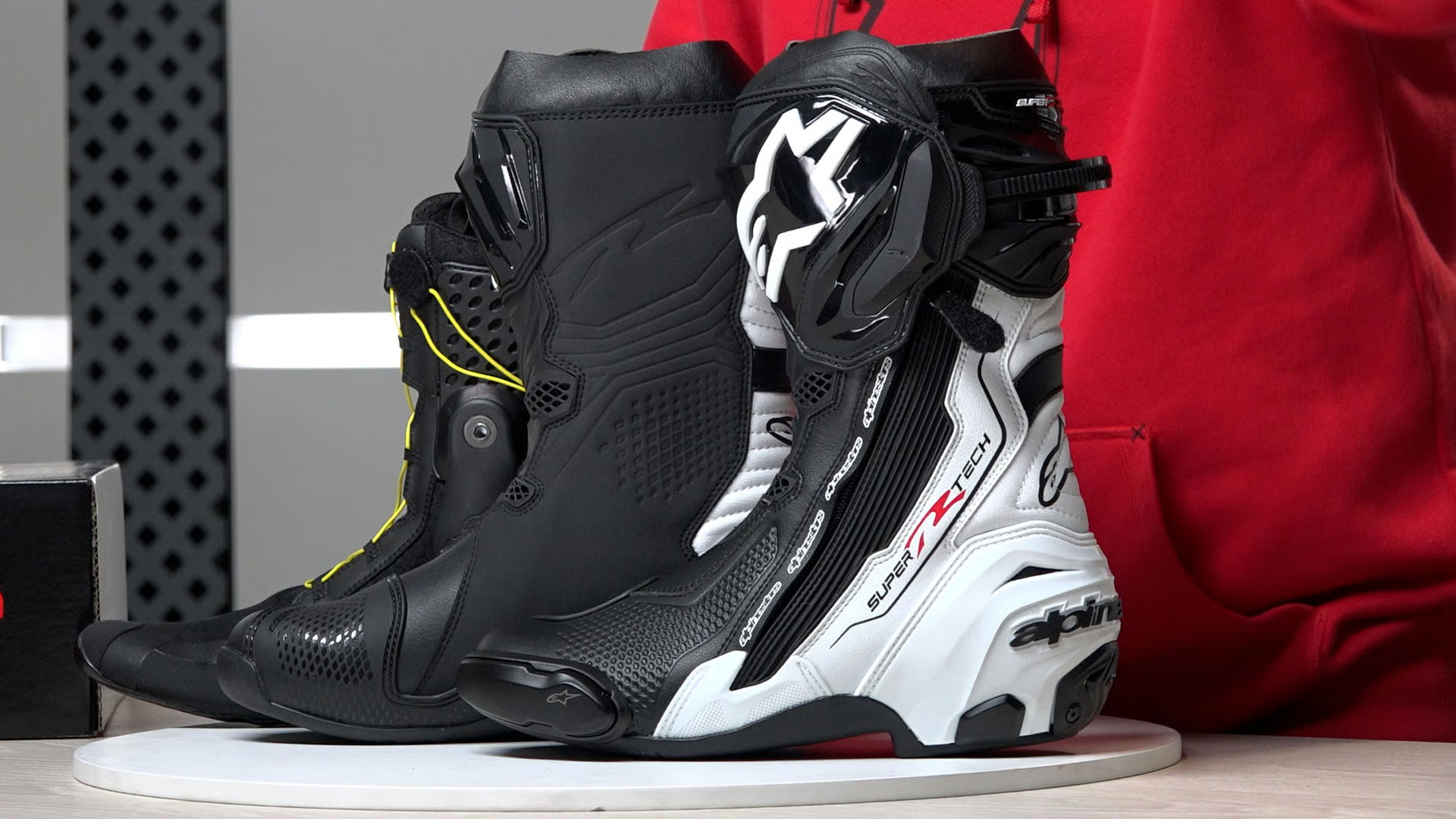
Tall boots extend to just below the knee and offer maximum protection. They're standard for sport riding (think Alpinestars SMX-6) and touring. The trade-off is walkability — you'll look and feel like you're wearing ski boots at the coffee shop. Worth it on the track or long-distance rides, overkill for running errands.
For your first pair of riding footwear, mid boots or riding shoes are the way to go. Tall boots offer more protection, but beginners who find their gear uncomfortable tend to stop wearing it. The best boot is the one you actually put on every ride.
What Should You Look For in Motorcycle Boots?
Not all motorcycle boots are created equal. Here's what separates good boots from expensive ankle casts:
Ankle armor or reinforcement — This is the whole point. Look for hard ankle cups (internal or external) on both sides of the ankle bone, or CE-certified ankle protectors tested under the EN 13634 standard. Soft padding alone is not enough. Your malleolus (that bony bump on each side of your ankle) needs rigid protection.
Toe box — A reinforced toe protects against crushing injuries and gives you a solid surface for the shift lever. It should be stiff enough to resist impact but not so rigid that you can't feel the shifter.
Heel cup — A rigid heel counter keeps your foot locked in place during impact and prevents your heel from twisting on landing. Squeeze the heel of any boot you're considering — if it collapses easily, move on.
Sole grip — Motorcycle boots need oil-resistant rubber soles with a tread pattern that grips wet metal pegs and pavement. Flat leather soles are a liability. Look for rubber compounds rated for oil and fuel contact.
Waterproofing — Not strictly necessary for every rider, but if you commute or get caught in rain, a waterproof membrane keeps your feet dry and warm. Wet feet are cold feet, and cold feet are slow feet on the controls.
Shift pad — A reinforced panel over the left toe area where the shift lever contacts. Without it, your boot wears through surprisingly fast. Some boots build this into the toe box; others add a separate rubber or leather overlay.
Closure system — Zippers are fast and secure. Laces are adjustable but can snag on pegs or the shift lever (tuck them in). Buckles offer the most precise fit but are slower. Velcro works on riding shoes but wears out over time. Many boots combine two systems — a zipper plus a velcro flap is common and effective. Pair your boots with proper motorcycle gloves to round out your extremity protection.
The 7 Best Motorcycle Boots for Beginners
TCX Street 3 WP
TCX Street 3 WP
The best all-around motorcycle shoe for beginners. Waterproof, CE-certified, and looks enough like a regular sneaker that you'll actually wear it every ride. Reinforced ankle, shift pad, and a sole that grips wet pegs. Only downside: sizing runs slightly narrow.
The TCX Street 3 WP is the boot I recommend to almost every new rider who asks. It solves the biggest problem with motorcycle footwear — getting people to actually wear it. From the outside, it looks like a normal high-top sneaker. On the inside, it's packing a reinforced ankle cup, a padded shift zone, and a waterproof membrane that holds up in genuine downpours.
The sole is the standout feature. TCX uses an oil-resistant rubber compound with a tread pattern designed for wet pegs and slick pavement. You can walk comfortably in these all day, ride in rain, and never feel like you're wearing "motorcycle gear." CE certified as a riding shoe, the Street 3 WP is proof you don't have to sacrifice style for safety.
The one complaint: they run about a half size narrow. If you have wide feet, order a half size up or try them in-store first.
Alpinestars SMX-1 R v2
Alpinestars SMX-1 R v2
Built for sport bike riders who want serious ankle protection in a low-profile package. The dual-density ankle protector and reinforced heel/toe make this the most protective riding shoe on this list. Runs warm in summer due to limited ventilation.
Alpinestars has been making motorcycle boots longer than most of us have been alive, and the SMX-1 R v2 distills decades of race boot engineering into a shoe-height package. The dual-density ankle protector system is borrowed from their race boots — a hard outer shell absorbs impact while a softer inner layer conforms to your ankle. It's the most protective riding shoe in this roundup.
The sole is tuned for sport bike pegs — thin enough to feel the footpeg but grippy enough to hold. The toe box is reinforced and shaped for aggressive shifting. If you ride a sport bike or plan to do spirited canyon riding, this is your boot.
The trade-off: no waterproof membrane, and the tight, protective fit means limited airflow. Summer riding gets warm. But for pure riding performance and protection, the SMX-1 R v2 is hard to beat.
Rev'It Ginza 3
Rev'It Ginza 3
The best-looking motorcycle boot on this list, bar none. Subtle built-in armor, a walkable sole, and materials that look like premium fashion footwear. Protection is solid but a step below dedicated sport boots.
Rev'It designed the Ginza 3 for riders who want protection without broadcasting it. It looks like a premium casual boot — the kind you'd see in a menswear shop — but hides D3O ankle protectors, a reinforced heel counter, and an anti-slip sole. Nobody at the restaurant knows you rode there.
The construction quality is genuinely impressive. The leather is thick but supple, the stitching is clean, and the sole feels like a good pair of dress boots. Walkability is excellent. The Ginza 3 is the boot for riders who wear their gear on and off the bike all day and want to look good doing it.
The honest downside: at $200-250, you're paying a premium for aesthetics. The protection, while genuine, doesn't match a dedicated sport boot like the SMX-1 R v2. And they're not waterproof out of the box — you'll want to treat them if you ride in rain.
Forma Adventure Low
Forma Adventure Low
Rugged, waterproof, and built to walk in. The adventure-style sole grips dirt, gravel, and wet pavement equally well. Ideal for ADV riders and anyone who spends time off the bike on rough terrain. The stiff sole takes a break-in period.
If your riding involves gravel roads, gas station parking lots covered in diesel, or any time standing on the pegs, the Forma Adventure Low belongs on your feet. It's a short-height adventure boot with a Vibram-style sole that grips everything — wet rock, loose gravel, oil-slicked concrete, you name it.
The ankle protection uses Forma's dual-flex system, which locks out lateral movement (the kind that breaks ankles) while allowing natural forward-backward flex for walking and shifting. A waterproof membrane keeps your feet dry, and the full-grain leather upper handles abrasion well.
The sole is noticeably stiffer than the other shoes on this list, which is great for standing on pegs but means a break-in period of about a week before they feel natural. Once broken in, these are incredibly comfortable for long days that mix riding and walking.
Milwaukee Leather MBM9000
Milwaukee Leather MBM9000
Classic harness boot styling at a price that won't hurt. Genuine leather, solid construction, and the cruiser aesthetic riders want. Not CE certified and lacks modern armor, but far better than fashion boots.
Cruiser riders have a style problem: most motorcycle boots look terrible with a Harley. The Milwaukee Leather MBM9000 fixes that with a classic harness boot design — oil-tanned leather, a square toe, and a harness strap — that looks right at home on a cruiser.
Protection-wise, it's not in the same league as the CE-certified options above. There's no formal ankle armor, just the natural rigidity of the thick leather shaft. The sole is oil-resistant rubber but less technical than the Forma or TCX offerings. The heel cup is solid, and the construction is genuine leather throughout — no synthetic shortcuts.
For $80-120, this is the best cruiser-styled boot you'll find. It's far more protective than fashion boots or work boots, and it actually looks the part. Just know that you're getting style-appropriate protection, not sport-level protection.
Avoid cheap "motorcycle-style" fashion boots from non-motorcycle brands. They look similar but use thinner leather, glued (not stitched) soles, and have zero ankle reinforcement. A real motorcycle boot's sole is stitched and cemented, and the ankle is reinforced with rigid internal or external protectors.
Fly Racing Milepost II
Fly Racing Milepost II
Solid waterproof touring boot at a budget price. Decent ankle protection, a comfortable footbed for long rides, and a price that leaves room in your gear budget. Interior materials wear faster than premium options.
Not everyone can drop $200+ on boots, and the Fly Racing Milepost II proves you don't have to. At $100-140, it delivers a waterproof membrane, internal ankle reinforcement, a shift pad, and a comfortable footbed that holds up on long rides. The closure is a side zipper with a velcro storm flap — fast on, fast off, and sealed against water.
The build quality is honest for the price. The synthetic leather upper won't age as gracefully as full-grain leather, and the interior lining shows wear faster than the TCX or Forma options. But the protection is legitimate, the waterproofing works, and the sole grips well.
If you're buying your first full set of gear and need to stretch every dollar, put your money in the helmet and jacket first, then grab the Milepost II to cover your ankles without breaking the bank.
SHIMA Rebel WP
SHIMA Rebel WP
Looks like a normal casual boot, rides like proper motorcycle footwear. Hidden D3O ankle armor, waterproof membrane, and a sole that grips pegs and pavement. The zipper closure can be fiddly with thick socks.
SHIMA built the Rebel WP for riders who refuse to look like they're wearing motorcycle gear. It's a mid-height casual boot with a clean, urban design that hides serious protection underneath. D3O ankle protectors on both sides absorb impacts. A waterproof membrane keeps your feet dry. The sole is oil-resistant rubber with just enough tread to grip without looking aggressive.
The shift pad is subtle — a reinforced panel integrated into the toe that doesn't scream "motorcycle boot." The leather is good quality with a slightly distressed finish that looks better with wear. These are boots you wear to dinner after the ride and nobody knows the difference.
The minor complaint: the side zipper is snug when you're wearing thick riding socks, and the waterproof membrane reduces breathability somewhat. In summer heat, your feet will be warmer than in a vented riding shoe. But for three-season riding with a focus on everyday style, the Rebel WP is the one to beat.
Comparison Table
| Boot | Type | Waterproof | Best For | Price |
|---|---|---|---|---|
| TCX Street 3 WP | Riding shoe | Yes | All-around / commuting | $180-220 |
| Alpinestars SMX-1 R v2 | Sport shoe | No | Sport bikes / canyon riding | $170-200 |
| Rev'It Ginza 3 | Urban boot | No | Style-conscious riders | $200-250 |
| Forma Adventure Low | ADV boot | Yes | Adventure / mixed terrain | $160-200 |
| Milwaukee Leather MBM9000 | Harness boot | No | Cruisers / classic style | $80-120 |
| Fly Racing Milepost II | Touring boot | Yes | Budget riders / touring | $100-140 |
| SHIMA Rebel WP | Casual boot | Yes | Casual / everyday wear | $130-170 |
How Should Motorcycle Boots Fit?
A motorcycle boot that doesn't fit right is a boot you won't wear. Here's how to get it dialed:
Ankle lockdown — Your ankle should feel snug and supported, with zero lateral play. When you rock your foot side to side, the boot should move as a unit with your foot. If your ankle slides inside the boot, the armor can't protect you properly.
No heel lift — When you walk, your heel should stay planted in the heel cup. Any lift means the boot is too big or the heel counter is too soft. Heel lift on a motorcycle means your foot shifts on the peg under braking — bad news.
Toe room for shifting — You need enough room to curl your toes slightly and feel the shift lever through the toe box. Too tight and you lose sensation. Too loose and the boot rotates on your foot when you shift. About a thumb's width of space in front of your longest toe is the target.
Break-in period — Leather boots need 3-7 days of wear to conform to your foot. They'll feel stiff at first — that's normal. Synthetic boots have almost no break-in period. Don't judge a leather boot's fit on day one; judge it at the end of the first week.
Try them with your riding socks — Always try boots on with the socks you'll actually ride in. A boot that fits perfectly with thin dress socks will be painfully tight with thick riding socks.
What About Riding in Regular Boots?
Let's be honest. Sometimes you're going to ride in regular boots. Here's the realistic breakdown:
Work boots (Timberlands, Red Wings) — Better than sneakers by a mile. They offer some ankle height, thick leather, and usually a decent sole. What they lack: purpose-built ankle armor, a shift pad, and oil-resistant soles designed for motorcycle pegs. They're an acceptable compromise for short rides if proper boots aren't available.
Hiking boots — Similar story. Good ankle height and sole grip, but no lateral ankle reinforcement and no shift pad. The sole tread pattern can actually work against you — deep lugs can catch on pegs. Acceptable in a pinch, not a long-term solution.
Cowboy boots — Worse than you'd think. The smooth leather sole has almost no grip on a peg, the heel can catch on controls, and the shaft offers minimal lateral support despite the height. They look the part on a cruiser, but they perform poorly.
The bottom line: regular boots are better than sneakers but worse than purpose-built motorcycle boots. If you ride regularly, invest in proper motorcycle footwear. If you're caught without it for a single ride, work boots or hiking boots are your least-bad option.
For a complete look at what gear to buy as a new rider, check out our Complete Riding Gear Guide. And if you're still building out your safety kit, don't miss our guides on Best Motorcycle Helmets and Winter Riding Gear. New to riding entirely? Start with the Complete Beginner's Guide.
Buy your boots at the same time as your helmet and gloves if possible. Many gear shops offer package deals, and trying boots on in-store is always better than guessing at sizing online. If you do buy online, order from a retailer with free returns so you can exchange sizes without hassle.
The Bottom Line
Your ankles are fragile, and a motorcycle gives them about a hundred new ways to get hurt. The good news is that beginner-friendly motorcycle boots have never been better — you can get genuine CE-certified protection for under $200, and many options look good enough to wear off the bike all day.
Start with the TCX Street 3 WP if you want one boot that does everything well. Go Alpinestars SMX-1 R v2 if you ride a sport bike. Grab the SHIMA Rebel WP if looking like a normal human matters to you. And if you're on a tight budget, the Fly Racing Milepost II covers the essentials for about a hundred bucks.
Whatever you pick, wear them every single ride. A motorcycle boot only protects you when it's on your foot.
Frequently Asked Questions
Can you wear regular boots on a motorcycle?
You can, but they lack the ankle armor, shift pad, and oil-resistant soles that motorcycle boots provide. Work boots and hiking boots are better than sneakers, but they are not designed for the lateral impacts and abrasion of a motorcycle crash. Dedicated motorcycle boots are always the safer choice.
How much should I spend on motorcycle boots?
Plan to spend $130-$220 for a quality pair of beginner motorcycle boots. Below $100, you start losing important features like CE-certified ankle armor and waterproofing. The Fly Racing Milepost II at $100-140 is the best budget option that still offers genuine protection.
Do motorcycle boots need to be waterproof?
Not strictly, but waterproof boots are a major quality-of-life upgrade if you commute or ride in unpredictable weather. Wet feet get cold fast and lose sensitivity on the controls. If you only ride in dry conditions, you can save money by skipping waterproofing.
What is the difference between motorcycle boots and riding shoes?
Riding shoes are ankle-height and look like sneakers or casual shoes, while motorcycle boots extend higher up the shin. Boots offer more coverage and protection, especially for the lower shin and calf. Riding shoes prioritize walkability and everyday wearability while still providing ankle armor and a reinforced sole.
Should motorcycle boots be tight or loose?
Motorcycle boots should fit snug, especially around the ankle, but not painfully tight. Your heel should not lift when you walk, and your ankle should not slide laterally inside the boot. Allow about a thumb's width of space in front of your toes, and always try boots on with the socks you plan to ride in.
Written by
6FOOT4HONDAMotorcycle creator with 1.2M+ subscribers on YouTube and 2M+ across all platforms. Riding and filming since 2016, with 1,000+ videos covering beginner riding tips, gear reviews, stunts, and road trips. Every product recommended on this site has been personally tested on real rides — from highway touring to track days to stunt sessions. Based in the US, riding year-round.
Related Articles
Best Motorcycle Gloves for Every Season (2026 Guide)
The best motorcycle gloves for summer, winter, and rain compared. Knuckle armor, palm sliders, touchscreen tips, and what to actually buy for each season.
7 Best Motorcycle Jackets for Beginners (2026)
The best beginner motorcycle jackets compared. Textile vs leather, CE armor ratings, ventilation, and waterproofing explained — plus what to actually spend.
Best Motorcycle Riding Shoes 2026 (Not Boots)
The TCX Street 3 WP is the best motorcycle riding shoe at $95-$110 on closeout. D3O ankle armor, waterproof, looks like a normal sneaker.