How Dangerous Are Motorcycles? (What the Data Actually Says)
By 6FOOT4HONDA · 18 min read · Mar 6, 2026
This post may contain affiliate links. We only recommend gear we'd use ourselves. If you click a link and make a purchase, we may earn a small commission at no extra cost to you.
In This Article
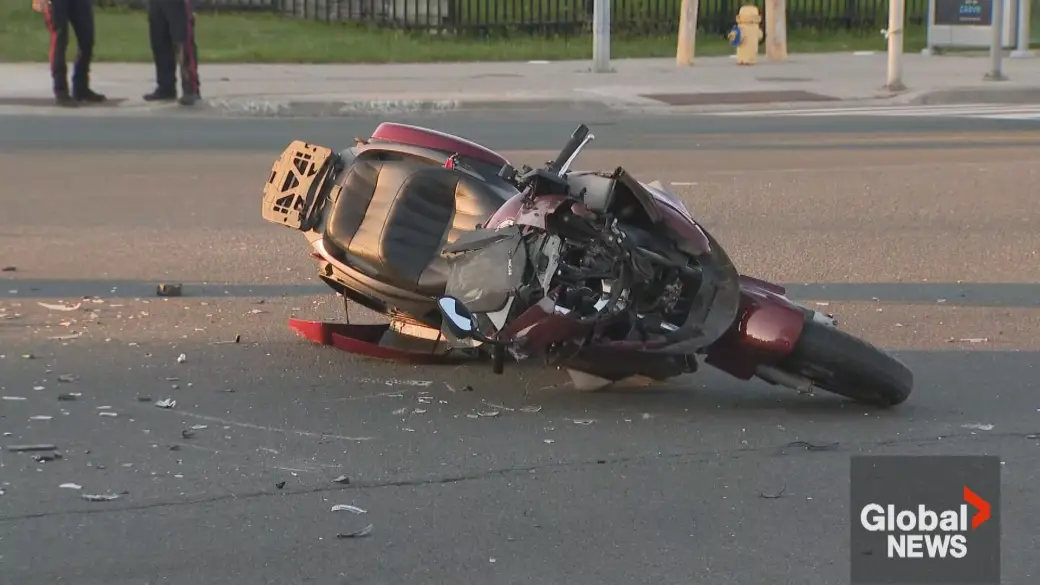
Every person who has ever considered getting a motorcycle has googled some version of this question. So has their mom, their partner, and probably their coworker who "knew a guy." The answers they find are usually one of two extremes — either fear-mongering news articles designed to scare you, or forums full of riders dismissing the risk entirely.
Neither is helpful. The truth is somewhere in between, and it is backed by decades of crash data from the National Highway Traffic Safety Administration (NHTSA), the Insurance Institute for Highway Safety (IIHS), and the Motorcycle Safety Foundation (MSF).
This guide presents the actual numbers — what the risks are, what causes crashes, what kills riders, and most importantly, what you can control. Because the data is clear: most motorcycle fatalities involve specific, avoidable factors. The riders who understand the data ride for decades. The ones who ignore it become the statistics.
Motorcyclists are roughly 24 times more likely to die in a crash than car occupants per mile traveled. However, wearing a helmet reduces fatality risk by 37%, and riders who complete the MSF course are involved in significantly fewer crashes.
The Big Number Everyone Quotes
Motorcyclists are approximately 28 times more likely to die in a crash per vehicle mile traveled than passenger car occupants — 31.39 deaths per 100 million miles versus 1.13 for cars (NHTSA 2023).
That is the headline stat. And it is real. But it needs context:
- This is a per-mile comparison, not a per-ride or per-year comparison. Most motorcycle riders put far fewer miles on their bikes than car drivers put on their cars. The average motorcycle logs ~3,000 miles per year versus ~13,500 for a car.
- The stat includes every type of motorcycle rider — including those riding drunk at 2 AM without a helmet. It does not distinguish between safe and unsafe riders.
- It is a fatality rate, not an injury or crash rate. Motorcycles offer less physical protection, so crashes that would be fender-benders in a car can be fatal on a bike. The crash rate itself is closer to cars than most people think.
Does this mean motorcycles are dangerous? Yes. Does it mean riding is a death sentence? Not even close. The data shows that the risk is heavily concentrated among riders who make specific, identifiable mistakes.
How Many Motorcyclists Die Each Year?
Here are the most recent NHTSA numbers:
| Year | Motorcycle Fatalities (US) | All Traffic Fatalities | Motorcycle % |
|---|---|---|---|
| 2019 | 5,014 | 36,096 | 13.9% |
| 2020 | 5,579 | 38,824 | 14.4% |
| 2021 | 5,932 | 42,939 | 13.8% |
| 2022 | 6,218 | 42,795 | 14.5% |
| 2023 | 6,335 | 40,990 | 15.5% |
The 2023 number — 6,335 motorcyclists killed — is the highest ever recorded since NHTSA began tracking in 1975. That is a 26% increase from 2019.
The pattern: motorcycles represent roughly 3% of all registered vehicles but account for 15% of all traffic fatalities. That disproportionate ratio is real and undeniable.
The 2020–2023 escalation correlates with the pandemic era and its aftermath — more new riders entered the market with less training, emptier roads encouraged higher speeds, and overall traffic deaths spiked across all vehicle types. Early 2024 estimates show a slight ~2% decline as conditions begin normalizing.
What Actually Kills Motorcycle Riders
This is where the data gets actionable. The major factors in motorcycle fatalities are not random bad luck — they are specific, measurable, and mostly preventable.
1. No Helmet (36% of fatalities)
Roughly 36% of motorcyclists killed in crashes were not wearing helmets (NHTSA). In states without universal helmet laws, the unhelmeted fatality rate is dramatically higher than in states that require helmets for all riders.
Helmet effectiveness data:
- Helmets are 37% effective at preventing death for motorcycle riders and 41% effective for passengers (NHTSA)
- Helmets reduce the risk of head injury by 69% (IIHS)
- In 2022, helmets saved an estimated 1,931 lives — and 749 more lives could have been saved if all riders had worn helmets (NHTSA)
This is not debatable. Helmets are the single most effective piece of safety equipment ever studied for motorcyclists. If you only do one thing from this entire article, wear a quality helmet. Every single ride.
States without universal helmet laws have motorcycle fatality rates per registered motorcycle that are consistently higher than states with helmet laws. The data is overwhelming — helmets save lives. No experienced rider debates this.
2. Alcohol (26% of fatalities)
26% of motorcycle operators killed in crashes had a blood alcohol concentration (BAC) of .08 or higher (NHTSA 2023) — the highest percentage of any vehicle type on the road. In single-vehicle fatal crashes, that number jumps to 40%.
Among riders killed at night, 44% were alcohol-impaired. And alcohol-impaired riders were significantly less likely to be wearing helmets — only 55% were helmeted versus 70% for sober riders. The bad decisions compound.
The fix: never ride after drinking. This single decision eliminates you from over a quarter of the fatality statistics instantly. Not "one beer." Not "I feel fine." Zero alcohol, every ride.
3. Speeding (36% of fatalities)
36% of motorcycle riders in fatal crashes were speeding (NHTSA 2023) — compared to 22% for car drivers and 15% for light trucks. Among riders aged 21–24, the speeding involvement rate in fatal crashes was 54%.
Speeding reduces your reaction time, increases stopping distance, and dramatically raises the severity of any impact. At 30 mph, a crash is survivable with proper gear. At 80 mph, the physics become unforgiving regardless of what you are wearing.
4. No Formal Training (~45% of fatally injured riders)
NHTSA data consistently shows that a disproportionate number of fatally injured riders never completed a formal riding course. The Motorcycle Safety Foundation (MSF) reports that riders who complete the Basic RiderCourse are significantly less represented in crash statistics than untrained riders.
If you have not taken the MSF course, get your motorcycle license the right way. The course teaches emergency braking, swerving, and low-speed control — the exact skills that prevent the most common crashes.
5. Other Vehicles Turning Left (42% of multi-vehicle crashes)
In crashes involving a motorcycle and another vehicle, the other vehicle violated the motorcycle's right-of-way approximately two-thirds of the time (Hurt Report, confirmed by subsequent NHTSA studies). The single most common scenario: a car turning left in front of an oncoming motorcycle at an intersection.
The driver does not see the motorcycle, turns, and the rider has fractions of a second to react. This scenario accounts for roughly 42% of all multi-vehicle motorcycle fatalities.
How to mitigate this:
- Assume every car at an intersection will turn in front of you. Cover your brakes approaching every intersection.
- Watch the front wheel of waiting cars, not the driver. The wheel tells you when they start moving before anything else does.
- Use lane positioning to maximize your visibility to turning drivers.
- Read our motorcycle traffic survival guide for the complete intersection strategy.
6. Single-Vehicle Crashes (35% of fatalities)
About 35% of fatal motorcycle crashes involve only the motorcycle — no other vehicle (IIHS 2023). These are typically caused by:
- Entering a corner too fast
- Running off the road
- Hitting a fixed object (guardrail, pole, curb)
- Loss of control on road hazards (gravel, oil, potholes)
These crashes are almost entirely skill-based. Better cornering technique, understanding road hazards, and practicing in rain and wind conditions eliminate the majority of single-vehicle crash risk.
When Crashes Happen
The data shows clear patterns in when motorcycle fatalities occur:
Time of Day
- 3 PM to 6 PM accounts for 21% of all fatal motorcycle crashes — the single deadliest three-hour window (NHTSA 2023)
- Weekends between 3 PM and midnight are the most dangerous overall period
- Riders killed at night are 3 times more frequently alcohol-impaired than those killed during the day
- Read our night riding guide if you ride after dark
Day of Week
- 47% of motorcycle fatalities occur on weekends (Friday 6 PM through Monday 6 AM) (IIHS 2023)
- Saturday and Sunday alone account for 41% of fatal crashes
- Weekend rides tend to be recreational — higher speeds, unfamiliar roads, group rides, and unfortunately more alcohol
Season
- June through September are the deadliest months, simply because more riders are on the road
- The per-ride risk is relatively consistent year-round for riders who ride in all conditions
Rider Age
The age profile of motorcycle fatalities has shifted dramatically over the decades:
- Riders aged 50+ now account for 33% of all motorcycle deaths — up from just 3% in 1975 (IIHS 2023). These are often returning riders who have not ridden in years, riding bikes too powerful for their current skill level.
- Riders under 30 account for 30% of deaths, down from 80% in 1975.
- Riders aged 15–20 saw fatalities surge 44% in a single year (350 in 2022 to 505 in 2023) — a concerning spike in young rider deaths.
- Riders aged 21–24 have the highest speeding involvement at 54% in fatal crashes.
The Gear Factor
Beyond helmets, full protective gear dramatically changes crash outcomes. The GEAR Study (the largest peer-reviewed study on motorcycle protective clothing) found:
- Motorcycle jackets reduce hospitalization risk by 21%
- Motorcycle pants reduce hospitalization risk by 51%
- Gloves reduce hospitalization risk by 59%
- Full upper body protection (jacket + gloves) reduces upper limb injury risk by 72%
- Full lower body protection (pants + boots) reduces lower limb injury risk by 40%
A fully geared rider who crashes at 35 mph typically walks away with bruises. An ungeared rider at the same speed is looking at road rash requiring skin grafts, broken bones, and months of recovery.
The cost of a full gear setup ($1,000–$2,500 for quality helmet, jacket, gloves, boots, and pants) is less than the emergency room copay for a single unprotected crash. See our complete gear buying guide for specific recommendations at every budget.
How Motorcycles Compare to Other Activities
Context matters. Here is how motorcycle riding compares to other activities in terms of fatality risk per hour of exposure (approximate, from various transportation and recreation safety studies):
| Activity | Fatalities per 100 million hours |
|---|---|
| Motorcycle riding | ~8.5 |
| General aviation (small planes) | ~13.1 |
| Skydiving | ~12.8 |
| Scuba diving | ~3.4 |
| Driving a car | ~0.5 |
| Cycling (bicycle) | ~1.4 |
Motorcycling is riskier than driving a car — significantly so. But it is less dangerous per hour than flying a small plane or skydiving. The risk is real but it is in a range that millions of people accept every day for activities they find meaningful.
What You Can Actually Control
Here is the critical insight from all this data: the majority of motorcycle fatalities involve riders who made at least one preventable choice. When you stack the factors:
- Wear a helmet → eliminates you from 36% of fatality scenarios
- Do not ride drunk → eliminates 26%
- Do not speed → eliminates 36%
- Complete formal training → significantly reduces crash risk
- Wear full gear → dramatically reduces injury severity in survivable crashes
- Practice intersection awareness → mitigates the #1 multi-vehicle crash scenario
A sober, helmeted, trained, attentive rider in full gear is operating at a fundamentally different risk level than the "average" rider in the statistics. The NHTSA numbers include every rider — the ones riding drunk at midnight with no helmet and the ones commuting in full gear at the speed limit. You get to choose which group you belong to.
The data does not say "motorcycles are death traps." The data says "motorcycles are unforgiving of specific mistakes." Eliminate those mistakes and your risk profile changes dramatically. You will never make riding as safe as driving a car, but you can make it a calculated, manageable risk rather than a reckless one.
The Honest Answer
Are motorcycles dangerous? Yes. More dangerous than driving a car by a significant margin. The 28x fatality rate per mile is real.
Are motorcycles a death sentence? No. Millions of riders ride for decades without a serious crash. The fatality risk is concentrated among riders who ride impaired, unprotected, untrained, or recklessly.
Is it worth the risk? That is a personal decision that only you can make. But here is what 164 million YouTube views have taught us: the riders who last are not the ones who ignore the risk. They are the ones who understand it, respect it, gear up, train properly, and ride within their limits.
If you are considering getting a motorcycle, start here:
- Complete Beginner's Guide to Motorcycles — the full overview
- How to Get Your Motorcycle License — MSF course and licensing
- Best Beginner Motorcycles — start on the right bike
- Motorcycle Gear Guide — protect yourself from day one
- How Much Does It Really Cost? — the full financial picture
- How to Convince Your Parents/Partner — share this article with them
If you are already riding, the best thing you can do is sharpen your riding skills and make sure your gear is up to standard. The data is clear: preparation is the difference between a statistic and a story.
Frequently Asked Questions
How dangerous are motorcycles compared to cars?
Motorcyclists are approximately 28 times more likely to die per vehicle mile traveled than passenger car occupants — 31.39 deaths per 100 million miles versus 1.13 for cars (NHTSA 2023). However, this statistic includes all riders regardless of helmet use, sobriety, training, or speed. A sober, helmeted, trained rider in full gear faces significantly lower risk than the average.
What percentage of motorcycle riders get in accidents?
NHTSA data shows approximately 82,500 motorcycle injuries and 6,335 fatalities in 2023 among roughly 13 million registered motorcycles. The fatality rate is 66.57 per 100,000 registered motorcycles. Lifetime risk varies enormously based on riding behavior, gear use, and training.
Do helmets really save lives on motorcycles?
Yes. NHTSA data shows helmets are 37% effective at preventing motorcycle rider deaths and reduce head injury risk by 69% according to IIHS. In 2022 alone, helmets saved an estimated 1,931 lives in the US, and 749 additional lives could have been saved if all riders had worn helmets.
What is the number one cause of motorcycle accidents?
In multi-vehicle crashes, the most common cause is a car turning left in front of an oncoming motorcycle at an intersection, accounting for about 42% of fatal two-vehicle motorcycle crashes. In single-vehicle crashes (about 35% of all fatal motorcycle crashes), the most common causes are excessive speed in corners and loss of control.
Are motorcycles worth the risk?
This is a personal decision. The data shows motorcycling is riskier than driving a car but less dangerous per hour than small-plane aviation or skydiving. The majority of fatalities involve preventable factors like no helmet, alcohol, or speeding. Riders who wear full gear, ride sober, complete training, and ride within their limits operate at a fundamentally different risk level.
What percentage of motorcycle deaths involve alcohol?
According to NHTSA 2023 data, 26% of motorcycle operators killed in crashes had a blood alcohol concentration of .08 or higher — the highest percentage of any vehicle type. In single-vehicle fatal crashes, 40% of riders were alcohol-impaired. Never riding after drinking eliminates you from this entire risk category.
Written by
6FOOT4HONDAMotorcycle creator with 1.2M+ subscribers on YouTube and 2M+ across all platforms. Riding and filming since 2016, with 1,000+ videos covering beginner riding tips, gear reviews, stunts, and road trips. Every product recommended on this site has been personally tested on real rides — from highway touring to track days to stunt sessions. Based in the US, riding year-round.
Related Articles
How to Convince Your Parents (or Partner) to Let You Get a Motorcycle
How to convince your parents or partner to let you ride. Real data, proven strategies, and specific actions that actually change minds.
What to Do After a Motorcycle Crash: The Complete Step-by-Step Guide
The moments after a crash matter. Scene safety, injury assessment, documentation, insurance steps, and what NOT to do — from a rider's perspective, not a lawyer's.
Best Motorcycles for Women 2026
14 bikes ranked by seat height, weight, and fit. Includes the inseam-to-seat chart nobody else has and the gatekeeping myths you need to ignore.