Best Motorcycle Covers for Indoor and Outdoor Storage (2026)
By 6FOOT4HONDA · 10 min read · Mar 3, 2026 · Updated Mar 4, 2026
This post may contain affiliate links. We only recommend gear we'd use ourselves. If you click a link and make a purchase, we may earn a small commission at no extra cost to you.
In This Article
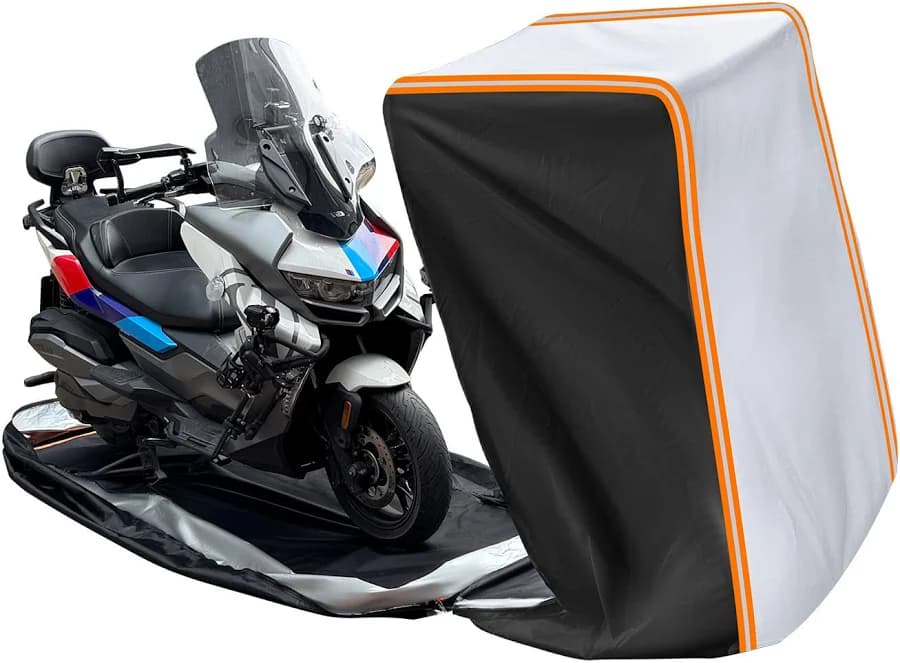
The best outdoor motorcycle cover is the Dowco Guardian WeatherAll Plus -- 300D waterproof polyester, UV coating, heat shield, and a lock hole for under $120. For indoor storage, the Dowco Guardian Indoor gives you soft, breathable dust protection without scratching your paint. Both fit most cruisers, sport bikes, and nakeds with proper sizing.
A motorcycle cover is one of those things you don't think about until it's too late. You leave your bike outside for a season, and suddenly the paint is faded, the chrome is pitted, and there's a layer of grime baked into every surface that no amount of detailing will fully undo.
A good cover costs $30-120. Your bike cost thousands. The math isn't complicated.
Why You Need a Motorcycle Cover
Even if you park in a garage, your bike faces threats you probably haven't considered:
UV damage is the silent killer. According to the EPA, ultraviolet radiation degrades polymers and organic materials over time. Sunlight fades paint, cracks plastic fairings, dries out rubber seals, and degrades seat material. A bike parked in direct sun for a single summer can lose noticeable color depth. Over a few years, you'll see cracked plastics, faded tank graphics, and dried-out tires.
Rain and moisture cause rust and corrosion on exposed metal -- chains, brake rotors, exhaust headers, bolts, and electrical connectors. The National Institute of Standards and Technology has documented how atmospheric corrosion accelerates on unprotected metal surfaces exposed to moisture and salt. Standing water pools in crevices and accelerates the damage. Even morning dew, repeated daily, creates corrosion over time.
Bird droppings and tree sap are acidic enough to etch through your clear coat permanently. If you park under trees, you know the drill. That stuff bakes on in the sun and leaves marks even after cleaning.
Dust and debris work into your air filter, chain, and moving parts. Indoor bikes aren't immune either -- garage dust, pet hair, and seasonal pollen settle on everything.
A $40 cover protects a $5,000+ bike. It's the cheapest insurance you can buy.
Indoor vs Outdoor Covers: They're Not the Same
This is where a lot of riders make the wrong purchase. Indoor and outdoor covers are designed for completely different jobs.
Outdoor covers need to handle real weather. That means waterproof or water-resistant material, UV-protective coating, heat-resistant panels over the exhaust area, tie-down straps or elastic hems for wind resistance, and ideally a lock hole for threading a cable lock through. They're built to take a beating from the elements so your bike doesn't have to.
Indoor covers have one job: keep dust off. They use soft, breathable fabric that won't scratch your paint or trap moisture underneath. They don't need waterproofing (and shouldn't have it -- a waterproof cover indoors traps condensation and actually causes the rust you're trying to prevent). Indoor covers are lighter, easier to put on and take off, and generally cheaper.
Bottom line: Don't use an outdoor cover indoors. Don't use an indoor cover outdoors. They're different tools for different problems.
What to Look For in a Motorcycle Cover
Not all covers are created equal. Here's what separates a quality cover from a glorified garbage bag:
Material matters most. Look for polyester or Oxford weave fabric -- 150D minimum for indoor, 300D+ for outdoor. Denier (D) measures thread thickness. Higher denier = more durable and tear-resistant. Cheap covers use thin nylon that rips the first time you snag it on a mirror.
Waterproof rating is listed in millimeters (mm). This measures how much water pressure the fabric can withstand before leaking. For outdoor use, you want at least 1000mm+. Anything below that is "water-resistant" at best -- it'll handle a light drizzle but fail in a real storm.
UV coating is a surface treatment that blocks ultraviolet rays from reaching your paint and plastics through the cover. Without it, even a covered bike gets UV exposure. Most quality outdoor covers include this.
Heat-resistant liner is critical if you want to cover your bike soon after riding. Exhaust pipes, headers, and engine cases stay hot for a while after shutdown. A heat-resistant panel on the lower section prevents the cover from melting onto your pipes. Without it, you'll either wait 30 minutes for cooldown or burn a hole in your cover.
Lock hole is a small reinforced grommet at the bottom of the cover, usually near the front wheel. Thread a cable lock through it, around your wheel, and the cover can't be easily removed by a thief. It adds a layer of security on top of your anti-theft setup.
Elastic hems and windproof straps keep the cover from blowing off. Elastic bottom hems grip under the bike, and belly straps buckle underneath the frame. Without them, one gust of wind and your cover becomes a neighborhood flag.
Ventilation might seem counterintuitive on a waterproof cover, but it's essential. Small vents near the top allow trapped moisture and heat to escape. Without ventilation, condensation builds up under the cover and promotes the exact rust you're trying to prevent.
Size up, not down. A cover that's too tight is worse than one that's slightly loose. Tight covers stress at the mirrors and handlebars, causing tears. They're also harder to put on and take off, which means you'll stop using it. Get the size that fits your bike class and err toward the next size up.
Best Outdoor Motorcycle Covers
These four covers handle rain, sun, wind, and everything else the outdoors throws at your bike.
Dowco Guardian WeatherAll Plus
Dowco Guardian WeatherAll Plus
The gold standard in motorcycle covers. 300D polyester with full waterproofing, UV coating, and an integrated heat shield so you can cover a warm bike. Includes a lock hole, elastic bottom hem, and windproof belly strap. Fits most bikes when properly sized. The only downside is the price -- but you buy it once.
The WeatherAll Plus is what most experienced riders end up with after trying cheaper options first. Dowco has been making motorcycle covers for decades, and the WeatherAll Plus is their flagship outdoor model.
The 300D polyester construction is thick enough to resist tears from wind whipping and branch contact, while the ClimaShield Plus fabric provides genuine waterproofing -- not just water resistance. The heat shield panel covers the exhaust and engine area, so you can throw it on after a ride without waiting for full cooldown.
It also includes a lock hole near the front wheel area for threading a cable lock and an elastic bottom hem with a belly strap to keep it secure in wind. Price: $80-120 depending on size.
Nelson-Rigg Defender Extreme
Nelson-Rigg Defender Extreme
Heavy-duty 600D polyester built for harsh weather and long-term outdoor storage. Tri-Max armor plates reinforce high-wear zones, and integrated wind straps keep it locked down in storms. Bulkier than most covers, but if you need maximum protection in rough conditions, this is the one.
If you park outside full-time in a climate that gets serious weather -- heavy rain, snow, coastal salt air, high winds -- the Defender Extreme is built for it. The 600D polyester is nearly twice the thickness of most competitors, and the Tri-Max armor plates reinforce the areas that take the most abuse (seat, tank, tail).
It features fully taped seams so water can't seep through stitching holes, integrated wind straps with quick-release buckles, and a soft interior lining to protect your paint. The trade-off is weight and bulk -- this cover is heavier to handle and takes up more storage space than thinner options. Price: $100-150.
Oxford Stormex
Oxford Stormex
Excellent all-around outdoor cover with a clever design detail: external seams. Since the stitching is on the outside, there are no needle holes on the interior surface to let water through. UV-resistant, waterproof, and heat-resistant. Strong value for the price point.
Oxford is a well-known UK brand in motorcycle accessories, and the Stormex is their premium outdoor cover. The standout feature is external seam construction -- the stitching is on the outside of the cover, which means no needle holes penetrate the interior waterproof layer. This eliminates the most common leak point on motorcycle covers.
It's waterproof, UV-resistant, and heat-resistant, with a soft lining to protect paintwork. The elastic hem and integrated straps keep it secure. At $70-100, it delivers near-premium performance at a noticeably lower price than the competition. A great middle ground between budget and high-end.
Favoto Motorcycle Cover
Favoto Motorcycle Cover
Amazon's bestselling motorcycle cover for a reason -- decent waterproof protection at a price that won't hurt if it tears or blows away. 210D Oxford fabric with reflective strips, elastic hem, and a lock hole. Not as durable as premium covers, but solid for the money.
Let's be honest -- not everyone wants to spend $100+ on a cover. The Favoto is the Amazon bestseller because it does the basics right at $25-35. You get 210D Oxford fabric with a waterproof coating, reflective strips for nighttime visibility, an elastic bottom hem, and a lock hole.
The downsides? The waterproofing degrades faster than premium covers, typically lasting one to two seasons of full outdoor exposure before you notice seeping. The fabric is thinner and more prone to tears. There's no heat shield panel, so you'll need to let your exhaust cool fully before covering.
But if you need something functional right now or you're covering a beater bike you're not precious about, the Favoto gets the job done for less than dinner for two.
Best Indoor Motorcycle Covers
Indoor covers are simpler -- soft fabric, dust protection, no scratching. Here are the two best options.
Dowco Guardian Indoor
Dowco Guardian Indoor
Soft, breathable polyester that protects against dust and light scratches without trapping moisture. Form-fitting design hugs your bike's shape for a clean look in the garage. The gold standard for indoor storage.
Dowco dominates both categories for good reason. The Guardian Indoor uses soft, breathable polyester that won't scratch your paint -- even on glossy black finishes that show every mark. It's form-fitting rather than baggy, which gives your garaged bike a clean, tucked-in look.
The breathable fabric is key. It lets air circulate underneath, preventing the moisture buildup that causes condensation and rust. If you're storing a bike for winter, this is what you want on it. Price: $40-60.
Nelson-Rigg UV-2000 Half Cover
Nelson-Rigg UV-2000 Half Cover
A half cover that protects the seat, tank, and instrument cluster while leaving the rest open. Perfect for daily riders who want quick on/off protection without wrestling a full cover. UV-resistant for garage parking near windows.
If you ride daily and the idea of pulling a full cover on and off every single day sounds exhausting, a half cover is the compromise. The UV-2000 covers your seat, tank, and gauges -- the parts most vulnerable to dust, sun, and cat paw prints (if you know, you know).
It takes about five seconds to throw on and five seconds to pull off. No straps, no elastic hems, no wrestling match with fabric. For garage-parked bikes that get ridden regularly, it's the most practical daily protection. Price: $30-50.
Motorcycle Cover Comparison Table
| Cover | Indoor/Outdoor | Material | Waterproof | Heat Shield | Price |
|---|---|---|---|---|---|
| Dowco WeatherAll Plus | Outdoor | 300D Polyester | Yes | Yes | $80-120 |
| Nelson-Rigg Defender Extreme | Outdoor | 600D Polyester | Yes | Yes | $100-150 |
| Oxford Stormex | Outdoor | Polyester (external seams) | Yes | Yes | $70-100 |
| Favoto Cover | Outdoor | 210D Oxford | Yes | No | $25-35 |
| Dowco Guardian Indoor | Indoor | Soft Polyester | No | No | $40-60 |
| Nelson-Rigg UV-2000 Half | Indoor | Polyester | No | No | $30-50 |
How to Size Your Motorcycle Cover
Getting the wrong size is the most common mistake. Too small and it won't fit over your mirrors or stretch to the wheels. Too big and it flaps in the wind and pools water on top.
Here's how to measure:
- Length -- Measure from the tip of the front wheel to the end of the tail. This is your overall bike length.
- Width -- Measure at the widest point with mirrors extended. If you fold your mirrors in before covering (recommended), measure without mirrors.
- Height -- Measure from the ground to the tallest point, usually the windscreen or handlebar grips.
Most motorcycle cover brands use a size chart based on bike type: sport bikes, cruisers, touring bikes, adventure bikes. Within each type, you'll see S/M/L/XL/XXL options.
General sizing guidelines:
- Small/Medium -- Sport bikes and small nakeds (Ninja 400, MT-03, CBR500R)
- Large -- Standard nakeds and mid-size cruisers (MT-07, Rebel 500, SV650)
- XL -- Larger sport tourers and big nakeds (MT-09, Z900, Rebel 1100)
- XXL/3XL -- Full-size touring bikes and large cruisers (Gold Wing, Road Glide, big ADV bikes with panniers)
When in doubt, size up. A slightly loose cover is always better than a tight one. Tight covers tear at stress points, and they're miserable to put on and take off.
Pro Tips for Using a Motorcycle Cover
Owning a cover is one thing. Using it correctly is another. These tips will extend both your cover's life and your bike's condition.
Let the exhaust cool before covering -- unless your cover has a heat-resistant panel. Hot headers and exhaust cans will melt through standard cover material, leaving you with a hole right where water protection matters most. If you're impatient, invest in a heat-shield cover (the Dowco WeatherAll Plus and Oxford Stormex both have this).
Use a cable lock through the lock hole. Thread a cheap cable lock through the cover's grommet and around your front wheel or frame. This prevents both cover theft (yes, people steal covers) and makes it harder for a thief to uncover and assess your bike. Pair it with a disc lock for layered security.
Never cover a wet bike. If your bike is wet from rain or a wash, dry it first or let it air dry before covering. Trapping moisture under a cover -- even a breathable one -- creates a greenhouse effect that accelerates rust and mildew. This is the number one cause of "my cover caused rust" complaints.
Store the cover when you ride. Most covers fold down small enough to fit in a saddlebag, tail bag, or under a bungee net. Stuffing it in a tank bag works too. Don't leave it at home -- you might park somewhere unexpected and wish you had it.
Never tie a motorcycle cover to the exhaust pipe as an anchor point. This seems obvious, but riders do it. The heat will melt the cover material and the tie-down strap. Use the frame, wheel, or a ground anchor instead.
Related Guides
If you're looking at covers, you're probably thinking about long-term bike care. These guides cover the rest:
- Motorcycle Storage and Winterization Guide -- How to prep your bike for months of storage, including fuel stabilizer, battery maintenance, and tire care.
- Motorcycle Anti-Theft and Locks Guide -- Disc locks, chains, GPS trackers, and the layered security approach.
- Best Motorcycle Locks -- Disc locks, chain locks, and U-locks compared side by side.
- Best Motorcycle GPS Trackers -- Real-time tracking to recover a stolen bike.
- How to Clean Your Motorcycle -- Proper wash technique that won't damage paint, chrome, or electronics.
- Complete Beginner's Guide to Motorcycles -- Everything a new rider needs to know, start to finish.
Frequently Asked Questions
Should I cover my motorcycle every night?
If your bike lives outside, yes -- cover it every night. UV, dew, and bird droppings do cumulative damage. If your bike is in a garage, a cover is less critical daily but still worth using for long-term storage or dusty environments.
Can I use a tarp instead of a motorcycle cover?
You can, but it's a bad idea. Tarps trap moisture, scratch paint, don't breathe, and have no form-fitting shape to stay put in wind. A proper motorcycle cover costs $25-40 and does the job without causing new problems.
Do motorcycle covers cause rust?
Only if you use them wrong. Covering a wet bike traps moisture and accelerates rust. Using a non-breathable cover indoors creates condensation. Use a breathable indoor cover for garage storage and always dry your bike before covering it outdoors.
What size motorcycle cover do I need?
Measure your bike's length, width (with mirrors folded), and height. Match those dimensions to the manufacturer's size chart. When between sizes, always go one size up. A slightly loose cover is better than a tight one that tears.
Are motorcycle covers worth it?
Absolutely. A $40 cover protects a bike worth thousands from UV fading, rain corrosion, bird droppings, dust, and theft visibility. It's the cheapest form of motorcycle protection you can buy, and it pays for itself by preventing damage that costs hundreds to fix.
Written by
6FOOT4HONDAMotorcycle creator with 1.2M+ subscribers on YouTube and 2M+ across all platforms. Riding and filming since 2016, with 1,000+ videos covering beginner riding tips, gear reviews, stunts, and road trips. Every product recommended on this site has been personally tested on real rides — from highway touring to track days to stunt sessions. Based in the US, riding year-round.
Related Articles
Best Motorcycle Backpacks & Riding Bags (2026)
The best motorcycle backpacks and riding bags for every type of rider. Aerodynamic hardshells, waterproof packs, tank bags, and touring luggage compared with real-world pros and cons.
Best Motorcycle Bluetooth Headsets & Intercoms (2026)
The best motorcycle Bluetooth headsets ranked — Cardo, Sena, Fodsports, and budget picks. Music, calls, rider-to-rider intercom, and GPS audio compared at every price point.
Best Motorcycle GPS Trackers (Real-Time Tracking, 2026)
The best motorcycle GPS trackers for real-time tracking and theft recovery. AirTags, Monimoto, SpyTec, and more — compared by tracking type, battery life, and subscription cost.