How Much Does a Stunt Bike Cost? (Full Breakdown)
By 6FOOT4HONDA · 14 min read · Mar 5, 2026
This post may contain affiliate links. We only recommend gear we'd use ourselves. If you click a link and make a purchase, we may earn a small commission at no extra cost to you.
In This Article
The number one question every aspiring stunt rider asks after watching a few wheelie videos is: "How much is this actually going to cost me?" The honest answer is that it depends entirely on how you approach it — but it is probably less than you think if you are smart about it.
The real cost is not just the bike. It is the bike plus crash protection plus modifications plus the ongoing cost of parts you break while learning. Most people budget for the motorcycle and nothing else, then get blindsided when a single loop-out costs them a radiator, clutch cover, and set of handlebars.
This guide breaks down every cost involved in building a stunt bike in 2026, with real prices for three different budget levels.
The Bike Itself
The base motorcycle is usually the cheapest part of the equation relative to everything bolted onto it.
Budget Tier ($1,500–$3,000)
The most popular budget stunt platform in 2026 is still the Honda Grom (2014–2024 models). Used Groms with 5,000–15,000 miles sell for $1,800–$2,800 depending on your market. The reason is simple: they weigh 225 pounds, the clutch engagement is forgiving, parts are dirt cheap, and every stunt company on earth makes protection for them. See our Honda Grom stunt build guide for a step-by-step walkthrough of building one out.
Other options in this range:
- Honda CRF300L ($2,000–$3,000 used) — taller, lighter, and surprisingly good for wheelies
- Kawasaki Z125 ($1,500–$2,500 used) — similar to Grom but less aftermarket support
- Yamaha TW200 ($2,000–$3,000 used) — wide tires provide surprising stability at balance point
Mid Tier ($3,000–$5,500)
The Yamaha FZ-07/MT-07 is the go-to mid-budget stunt bike. Used examples with 10,000+ miles run $3,500–$5,000. The parallel twin makes predictable power, the chassis is narrow and light for a 700cc bike, and the aftermarket is massive. The Kawasaki Z650 and Suzuki SV650 compete in this range but have less stunt-specific aftermarket support.
Top Tier ($5,000–$8,000)
The Yamaha XSR900 and Kawasaki Z900 open up high-power stunting — supermoto switches, coaster wheelies at highway speed, and enough torque for instant power wheelies in any gear. Used examples with miles run $5,000–$7,000.
Buy a bike with cosmetic damage. Scratched fairings and dented tanks mean nothing on a stunt bike — you are going to add your own scratches on day one. A cosmetically damaged bike can save you $500–$1,000 off the price while being mechanically identical.
Crash Protection (Non-Negotiable)
This is where most of your modification budget goes, and it should be. Crash protection is not optional — it is the single best investment you will make. One unprotected loop-out at walking speed can cost $800+ in parts. A crash cage turns that into a $0 event.
Crash Cage ($200–$500)
A crash cage wraps around the frame and engine, creating a metal exoskeleton that takes impacts instead of your motorcycle. Every stunt bike needs one.
- Grom cage: Impaktech, $200–$280
- FZ-07/MT-07 cage: Impaktech or Sick Innovations, $350–$450
- Z900 cage: Impaktech, $400–$500
Subcage ($150–$350)
A subcage replaces or reinforces the subframe (rear section) so the tail does not collapse when you loop backwards. It also provides mounting points for a 12 o'clock bar.
- Grom subcage: $150–$200
- MT-07 subcage: $250–$350
12 O'Clock Bar ($40–$80)
A metal bar that extends from the subcage and drags on the ground when you pass balance point, preventing a full loop. Essential for learning balance point wheelies.
Engine Covers ($60–$150)
Woodcraft or GBRacing covers bolt over your stator cover and clutch cover. A single scrape without them can crack the case and total your engine.
Axle Sliders ($30–$60)
Front and rear axle sliders prevent the axle and forks/swingarm from grinding on pavement during lowsides.
Performance Modifications
These make the bike easier and safer to stunt on.
Handbrake ($150–$350)
A rear handbrake mounted on the left clip-on gives you independent rear brake control during wheelies. Your right foot stays on the rear brake pedal during normal riding, but during wheelies your feet leave the pegs — a handbrake lets you control the rear brake with your left hand.
- Cheapest route: eBay hydraulic handbrake, $50–$80 (works but bleed quality is inconsistent)
- Mid option: DarkStar or similar, $150–$200
- Premium: Brembo lever + custom line, $250–$350
Sprocket Change ($60–$120)
Going up 1–3 teeth on the rear sprocket (or down 1 on the front) lowers your wheelie-up speed and makes first/second gear wheelies easier. A sprocket set plus chain typically runs $80–$120 for a Grom and $100–$150 for an MT-07.
Rearsets/Pegs ($0–$200)
Stock pegs work fine for most stunting. Some riders switch to stunt pegs — longer, knurled pegs that give better grip during tank wheelies, coasters, and highchairs. Budget $50–$150 for aftermarket stunt pegs.
Radiator Guard ($30–$60)
A $40 radiator guard prevents a $300+ radiator replacement from a single rock or lowside.
The Full Build Cost Breakdown
Here is what each tier actually costs, all-in:
Budget Build (Honda Grom)
| Item | Cost |
|---|---|
| Used Grom (2014–2024) | $2,000 |
| Impaktech crash cage | $250 |
| Subcage + 12 bar | $220 |
| Engine covers | $80 |
| Axle sliders | $40 |
| eBay handbrake | $60 |
| Rear sprocket (+3T) | $80 |
| Radiator guard | $35 |
| Total | $2,765 |
Mid Build (Yamaha MT-07)
| Item | Cost |
|---|---|
| Used MT-07 (2015–2022) | $4,200 |
| Impaktech crash cage | $400 |
| Subcage + 12 bar | $320 |
| Engine covers (GBRacing) | $130 |
| Axle sliders | $50 |
| DarkStar handbrake | $180 |
| Sprocket change + chain | $130 |
| Radiator guard | $45 |
| Total | $5,455 |
Premium Build (Kawasaki Z900)
| Item | Cost |
|---|---|
| Used Z900 (2017–2023) | $6,000 |
| Impaktech crash cage | $480 |
| Subcage + 12 bar | $350 |
| Engine covers | $140 |
| Axle sliders | $55 |
| Brembo handbrake setup | $300 |
| Sprocket + chain | $150 |
| Radiator guard | $50 |
| Rearsets | $180 |
| Total | $7,705 |
Ongoing Costs (What You Will Break)
Even with full protection, stunting has running costs. Here is what you should expect to replace during your first year of learning:
- Clutch levers: $10–$20 each. Budget 3–5 per year. They snap during lowsides.
- Brake levers: $15–$25 each. Less frequent but still happens.
- Handlebars: $30–$60. A hard lowside can bend bars even with a cage.
- Tires: Stunting eats rear tires — especially if you practice burnouts. Budget a new rear every 2,000–4,000 miles depending on frequency. $80–$150 per tire. Wondering if burnouts are really that hard on your bike? Read are wheelies bad for your motorcycle for the full breakdown of stunt wear.
- Chain and sprockets: Replace every 6,000–10,000 miles with stunt use. $80–$150 per set.
- Oil changes: Stunting is hard on oil. Change every 2,000 miles or monthly. $20–$40 per change.
- Coolant: If you crack a radiator hose during a loop (it happens), $10 for coolant plus $20–$40 for the hose.
Realistic first-year running cost: $400–$800 on top of the build cost.
How to Save Money
Buy Used Protection
Stunt riders upgrade and sell old cages, subcages, and handbrakes constantly. Check Facebook Marketplace stunt groups for used parts at 40–60% off retail.
Start on a Grom
The cost difference between learning on a Grom versus an MT-07 is not just the purchase price — it is every single part you break. Grom levers cost $8. MT-07 levers cost $20. Grom tires cost $50. MT-07 tires cost $130. Over a year of learning, the small-bike savings compound significantly.
Protect Before You Ride
Every dollar spent on crash protection saves $5–$10 in crash repair. A $250 cage prevents a $2,000 frame replacement. A $130 set of engine covers prevents a $600 case repair. Never ride a stunt bike without full protection installed.
Do not skip the crash cage to save money. One single loop-out without a cage can cost more than the cage itself — bent frame, cracked engine case, destroyed radiator, and scraped bodywork. The cage is the first thing you buy, not the last.
Do Your Own Wrenching
Every modification listed above can be installed in a home garage with basic tools. YouTube has installation guides for every cage and subcage on every popular platform. The labor savings from installing your own parts: $500–$1,000+.
Is It Worth It?
A complete budget stunt build costs about the same as a decent road bicycle, a set of golf clubs, or three months of a gym membership you will not use. For that money you get a skill that takes years to master, a community of riders, content creation potential, and an adrenaline outlet that nothing else matches. Our stunt progression guide maps out exactly which tricks to learn first so you get the most out of that investment.
The key is setting the right expectations. You are not buying a pristine motorcycle — you are buying a tool. It will get scratched, dented, and dropped hundreds of times. That is the point. Budget accordingly and you will never be surprised by the cost.
For specific bike recommendations, see our Best Motorcycles for Stunting guide. Ready to start learning? Head to How to Wheelie a Motorcycle.
Frequently Asked Questions
How much does it cost to start stunting a motorcycle?
A complete beginner stunt setup costs $2,500–$3,000 on a budget (used Honda Grom with full crash protection), $5,000–$6,000 on a mid-tier bike (Yamaha MT-07), or $7,000–$8,000 on a premium platform (Kawasaki Z900). This includes the bike, crash cage, subcage, handbrake, engine covers, and sprocket change.
What is the cheapest stunt bike to build?
The Honda Grom is the cheapest stunt platform. A used Grom costs $1,800–$2,800 and full crash protection plus modifications add $700–$1,000, putting the total build around $2,500–$3,800. Parts are also the cheapest to replace when they break.
How much does a motorcycle crash cage cost?
Crash cages range from $200 to $500 depending on the motorcycle. Grom cages run $200–$280, MT-07 cages cost $350–$450, and liter bike cages can reach $500+. Impaktech and Sick Innovations are the most popular stunt cage brands.
How much should I budget for stunt bike maintenance per year?
Budget $400–$800 per year for ongoing stunt bike maintenance. This covers replacement levers, tires, chains, oil changes, and minor crash repairs. The cost is higher in your first year of learning when drops are most frequent.
Written by
6FOOT4HONDAMotorcycle creator with 1.2M+ subscribers on YouTube and 2M+ across all platforms. Riding and filming since 2016, with 1,000+ videos covering beginner riding tips, gear reviews, stunts, and road trips. Every product recommended on this site has been personally tested on real rides — from highway touring to track days to stunt sessions. Based in the US, riding year-round.
Related Articles
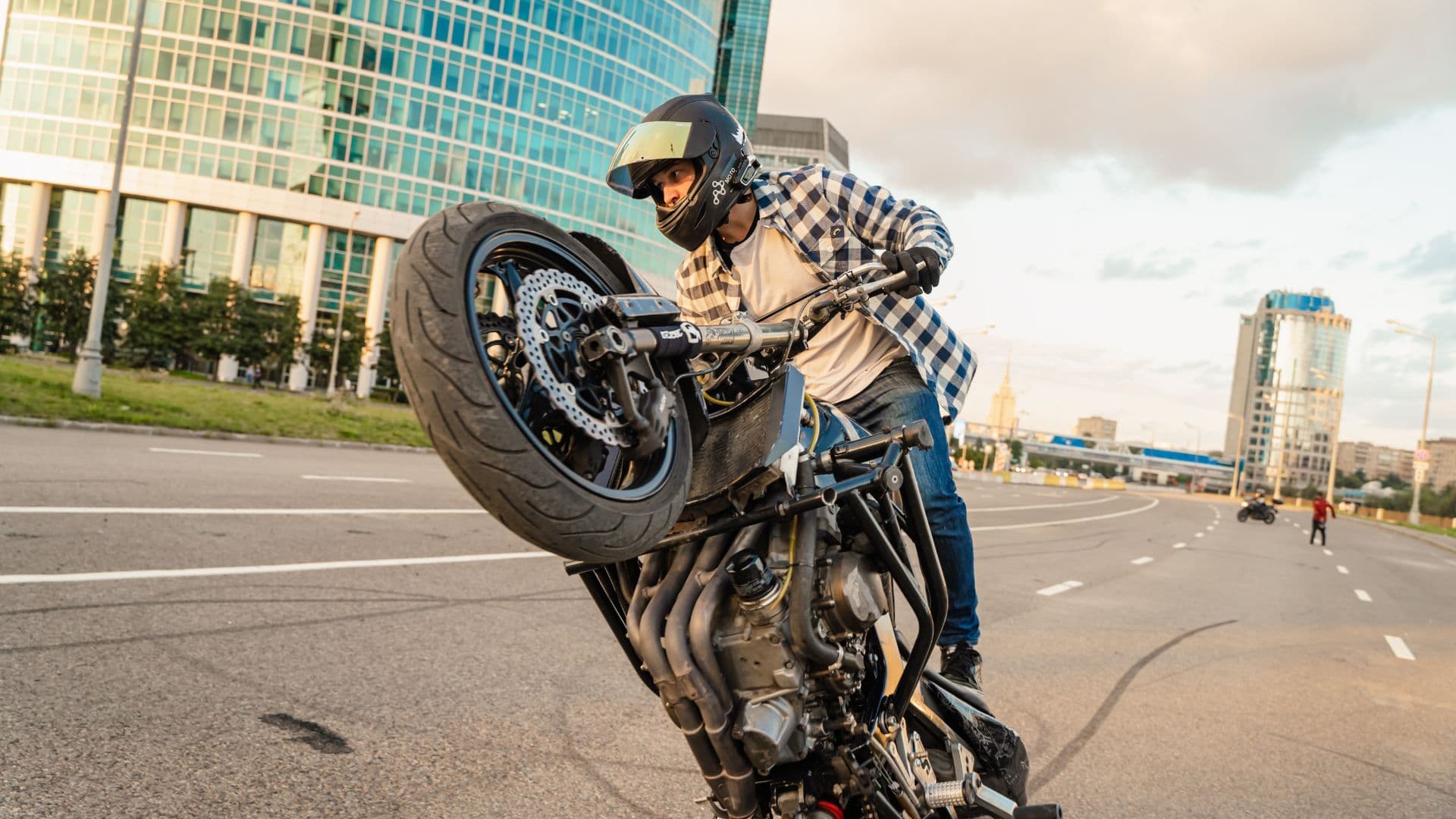
Are Wheelies Bad for Your Motorcycle? (What Actually Breaks)
Do wheelies damage your motorcycle? The real answer — what wears out, what breaks, what is fine, and how to minimize mechanical damage while learning to stunt.
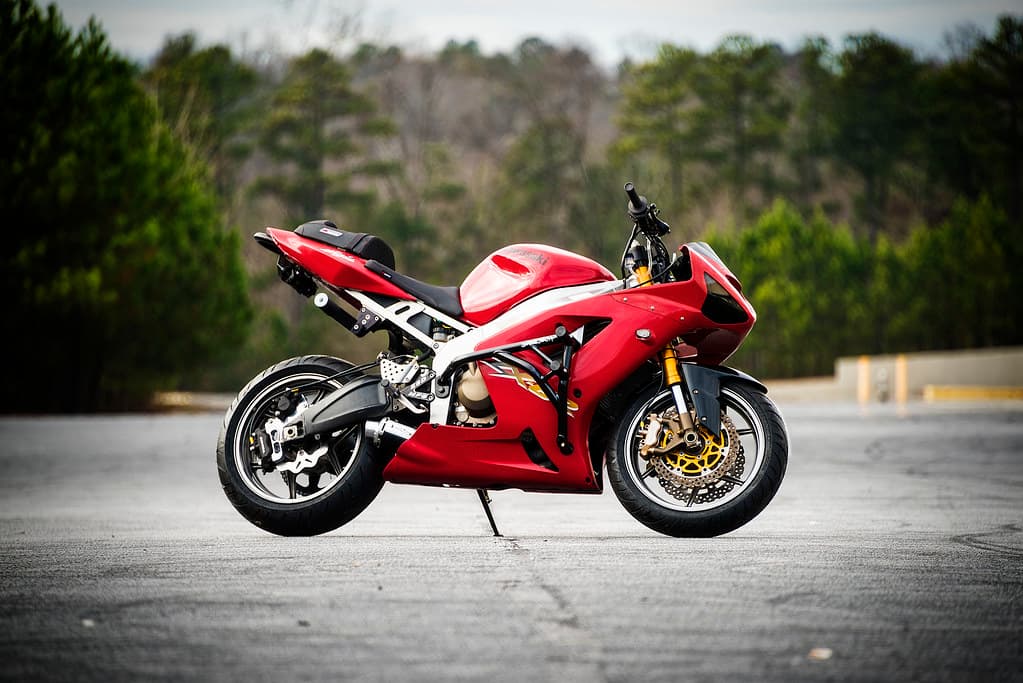
Best Motorcycles for Stunting (9 Bikes Ranked by Budget)
The 9 best motorcycles for stunting ranked by budget tier — from $1,800 Groms to $6,500 MT-07s. Every bike evaluated on weight, parts availability, aftermarket support, and real stunt potential.
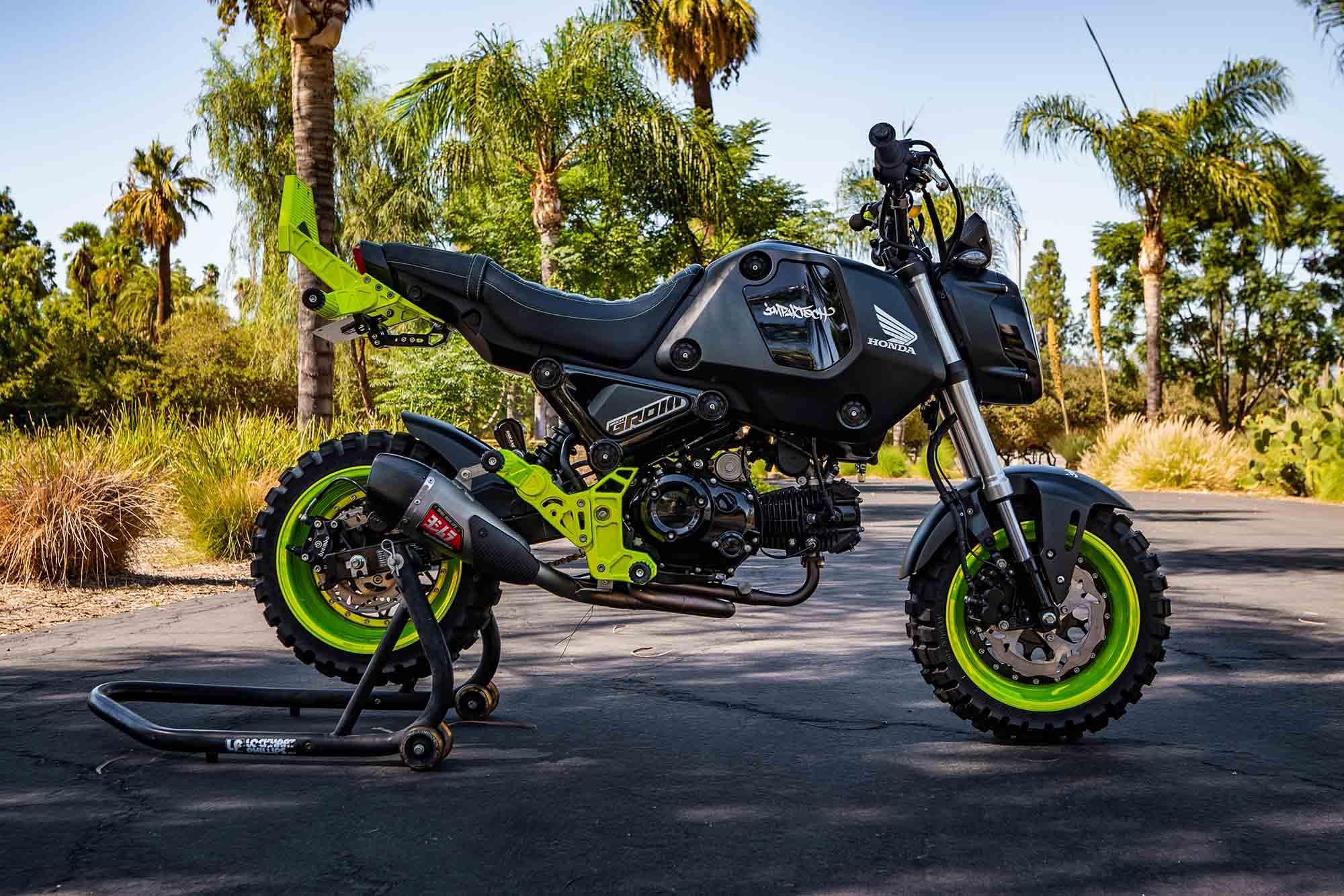
Honda Grom Stunt Build Guide: Complete Parts List and Budget Breakdown (2026)
How to build a Honda Grom for stunting from the ground up. Every part you need organized by priority, three budget tiers, which generation to buy, and what to look for used.