How to Change Motorcycle Oil: Step-by-Step Guide for Beginners (2026)
By 6FOOT4HONDA · 10 min read · Mar 4, 2026
This post may contain affiliate links. We only recommend gear we'd use ourselves. If you click a link and make a purchase, we may earn a small commission at no extra cost to you.
In This Article
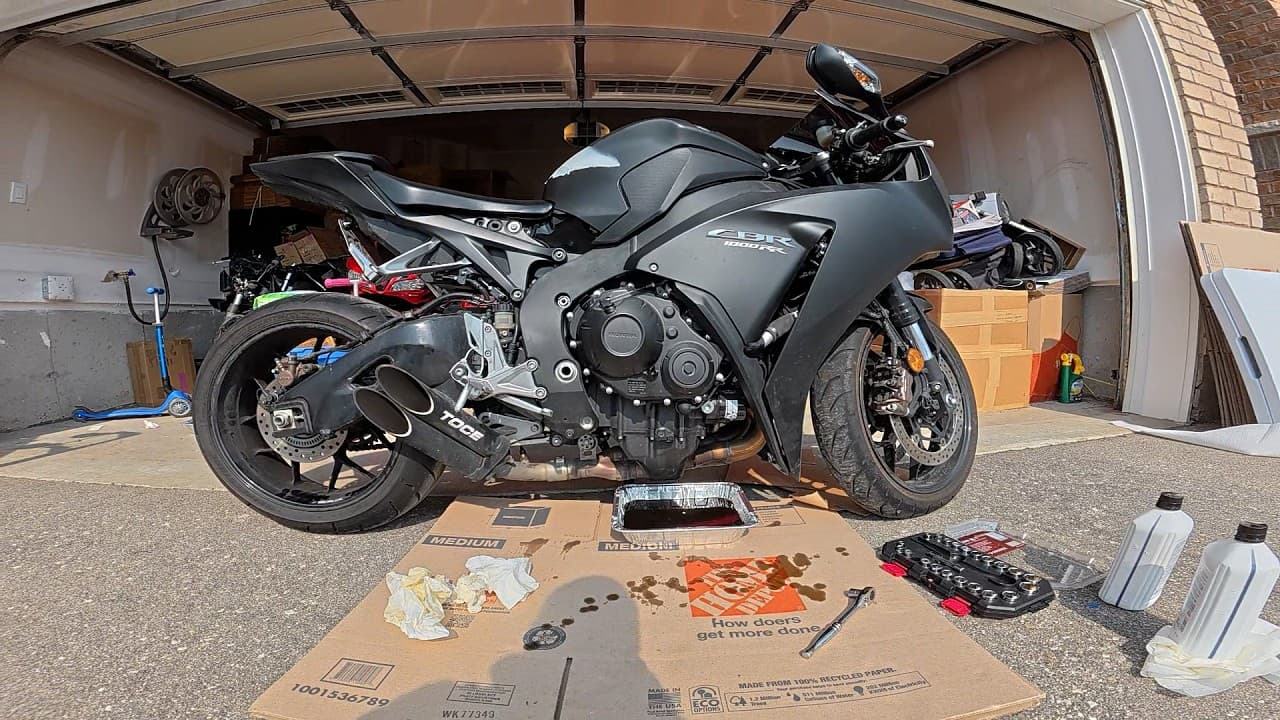
To change your motorcycle oil, warm the engine for 3-5 minutes, position the bike upright on a stand, place a drain pan underneath, remove the drain bolt and let the old oil drain completely, remove and replace the oil filter, reinstall the drain bolt with a new crush washer, and pour in the correct type and amount of fresh oil as specified in your owner's manual. The entire job takes about 30 minutes and saves you $50-100 versus a shop.
An oil change is the single most important maintenance task you will ever do on your motorcycle. Oil keeps every moving part inside your engine alive — pistons, bearings, camshafts, transmission gears. When oil breaks down, it stops protecting those parts. Metal grinds against metal. Temperatures spike. Components wear at ten times their normal rate. And engine rebuilds are not cheap.
The good news: changing your own oil is easy. If you can turn a wrench and pour liquid into a hole, you can do this. It requires no special skills, no motorcycle lift, and no prior mechanical experience. You will need about 30 minutes, $30-50 in supplies, and a willingness to get a little oil on your hands.
This guide walks you through the entire process, from choosing the right oil to checking your level after the job is done. Follow these steps and you will never pay a shop $100+ for something you can do better yourself.
What Oil Does Your Motorcycle Need?
Before you buy anything, open your owner's manual. It tells you exactly what oil weight and specification your engine requires. Do not guess. Do not ask a forum. The manual is the answer.
That said, here is a breakdown of what the oil specifications actually mean so you understand what you are buying.
Oil Weight Explained
Oil weight is expressed as a number like 10W-40 or 20W-50. The first number (10W) is the viscosity at cold temperatures — how thick the oil is when you start a cold engine. The "W" stands for winter. The second number (40) is the viscosity at operating temperature — how thick the oil stays when the engine is fully hot.
Common motorcycle oil weights:
- 10W-40 — The most common motorcycle oil weight. Works well in moderate climates and covers the vast majority of sport bikes, naked bikes, and standards.
- 10W-30 — Slightly thinner at operating temperature. Common in some newer bikes designed for better fuel efficiency.
- 20W-50 — Thicker oil used in air-cooled engines (many Harleys, older bikes) and hot climates where engines run higher temperatures.
- 5W-40 — Thinner at cold start, good for riders in cold climates who want faster oil circulation on startup.
Your manual specifies the correct weight. Use that weight.
Types of Motorcycle Oil
Conventional (mineral) oil is refined from crude petroleum. It is the cheapest option and works fine for basic protection. It breaks down faster than synthetic, so you change it more frequently. Some manufacturers recommend conventional oil for the break-in period on new engines because it allows the piston rings to seat properly.
Full synthetic oil is engineered in a lab to provide superior protection at extreme temperatures, resist breakdown longer, and flow better at cold startup. It costs more but lasts longer between changes. Most modern motorcycles are designed to run on synthetic oil, and many manufacturers recommend it.
Semi-synthetic (synthetic blend) oil is a mix of conventional and synthetic base stocks. It offers better protection than pure conventional at a lower price than full synthetic. A solid middle ground if you want improved performance without the premium price tag.
Always use oil specifically labeled for motorcycles (JASO MA or MA2 rated). Motorcycle oil is formulated differently than car oil. Your motorcycle's engine, transmission, and wet clutch all share the same oil. Car oils contain friction modifiers that make your wet clutch slip, which means you twist the throttle and the bike barely accelerates. Look for the JASO MA or MA2 certification on the bottle — it means the oil is safe for wet clutches.
Our Oil Recommendation
Motul 7100 4T 10W-40 Full Synthetic
One of the highest-rated motorcycle oils on the market. JASO MA2 certified, full ester-based synthetic that provides excellent protection at high RPMs and temperatures. Trusted by track riders and commuters alike. A 4-liter bottle covers most oil changes with some left over.
Tools and Supplies You Need
An oil change requires basic tools that you probably already own or can buy cheaply. Here is the complete list:
Tools:
- Socket set or wrench to fit your drain bolt (commonly 14mm or 17mm — check your manual)
- Oil filter wrench (sized for your specific filter)
- Torque wrench (recommended but not strictly required)
- Funnel
- Rags or paper towels
Supplies:
- Correct motorcycle oil (check your manual for type, weight, and quantity)
- New oil filter
- New drain bolt crush washer (copper or aluminum — match the original)
- Oil drain pan
If you do not already have a basic motorcycle tool kit, an oil change is a great reason to build one. Most of the tools you buy for this job carry over to every other maintenance task on your bike.
K&N Motorcycle Oil Filter
K&N makes high-quality oil filters for virtually every motorcycle make and model. Their filters use a premium filter media that captures smaller particles than most OEM filters, plus a 17mm nut welded to the end for easy removal — no special oil filter wrench needed. Just use a standard socket.
Motorcycle Oil Drain Pan
A low-profile drain pan catches old oil cleanly and has a sealed pour spout for easy disposal. Get one with at least a 3-quart capacity — most motorcycle oil changes drain 2-4 quarts. A wide, shallow pan is better than a deep narrow one because it catches the initial sideways splatter when you pull the drain bolt.
Step-by-Step: How to Change Your Motorcycle Oil
Step 1: Warm Up the Engine
Start your motorcycle and let it idle for 3-5 minutes. You want the engine warm, not hot. Warm oil is thinner and flows more freely, which means it drains faster and more completely. Cold oil is thick and clings to internal surfaces, leaving old contaminated oil behind when you drain.
You do not need to go for a ride. Just idle the bike in your driveway or garage (with the garage door open for ventilation). Three to five minutes is enough to get the oil warm and flowing.
Do not drain oil from a fully hot engine. If you just came back from a 45-minute ride, let the bike cool for 10-15 minutes first. Engine oil at operating temperature can reach 200-250 degrees Fahrenheit and will burn you badly on contact. Warm is good. Scalding hot is a trip to the emergency room.
Step 2: Position the Bike Upright
You need the bike as vertical as possible so the oil drains straight down and completely. The best option is a motorcycle stand — either a rear paddock stand or a center stand if your bike has one. This keeps the bike perfectly upright and stable.
If you do not have a stand, you can do the oil change with the bike on the side stand. Just know that the bike is tilted, which means some oil will pool on one side of the engine and not drain fully. It still works — you just won't get every last drop out.
Make sure the bike is on a flat, stable surface. Concrete garage floor is ideal. Gravel or grass is not — the stand can sink and the bike can fall.
Step 3: Place the Drain Pan
Locate your drain bolt. On most motorcycles, the drain bolt is on the bottom of the engine, either directly underneath or slightly to one side. Your owner's manual shows you exactly where it is. Some bikes have more than one drain bolt — check the manual.
Slide the drain pan under the drain bolt. Position it slightly behind the bolt, not directly underneath. When you pull the bolt, the oil will initially shoot out at an angle (following the threads) before settling into a straight-down drip. If the pan is directly below the bolt, the initial stream will overshoot and land on your garage floor.
Lay down cardboard or old newspapers around the drain pan for extra protection. Oil spills happen, especially on your first few oil changes.
Step 4: Remove the Drain Bolt
Using the correct size socket or wrench, loosen the drain bolt by turning it counterclockwise. Loosen it slowly. Once it is loose enough to turn by hand, switch to your fingers.
Here is the critical technique: as you unthread the drain bolt by hand, press the bolt inward against the engine case. This keeps the oil from flowing until you are ready. When you feel the last thread release, quickly pull the bolt straight out and away. The oil will immediately start flowing.
Have a rag in your other hand. The bolt will be oily and slippery — many riders have dropped the drain bolt into the drain pan full of old oil. It is not a disaster (just fish it out), but it is annoying and messy.
Inspect the drain bolt and crush washer while the oil drains. The crush washer is the thin metal ring between the bolt head and the engine case. It deforms to create a seal. Crush washers are designed for single use — you should replace the crush washer with a new one every oil change. They cost under a dollar and prevent oil leaks.
Step 5: Remove and Replace the Oil Filter
While the oil drains, locate and remove the oil filter. Motorcycle oil filters come in two main types:
Spin-on filters look like small metal cans attached to the engine. Unscrew them counterclockwise. An oil filter wrench makes this much easier, especially if the old filter is on tight. If your filter has a 17mm nut on the end (like K&N filters), you can use a regular socket. Oil will spill out when you remove the filter, so keep the drain pan underneath.
Internal (cartridge) filters are located inside a filter cover on the engine. Remove the cover bolts, pull the cover off, and slide the old filter element out. Replace it with the new element and reinstall the cover.
Before installing the new spin-on filter, dip your finger in fresh oil and wipe a thin film around the rubber gasket on the new filter. This helps the gasket seat properly and makes the filter easier to remove at the next oil change. Thread the new filter on by hand — turn it clockwise until the gasket contacts the engine surface, then tighten an additional 3/4 to 1 full turn by hand. Do not use the filter wrench to tighten. Hand-tight plus that extra 3/4 turn is the correct torque for most spin-on oil filters.
Step 6: Replace the Drain Bolt with a New Crush Washer
Wait until the oil has completely stopped dripping. This usually takes 10-15 minutes. A few drips per minute is fine — you do not need to wait for absolute zero.
Place the new crush washer on the drain bolt. Thread the drain bolt back into the engine by hand first — always start it by hand to avoid cross-threading. Once the bolt is hand-tight, use your wrench or torque wrench to tighten it to the torque spec in your owner's manual.
Typical drain bolt torque is 15-25 ft-lbs (20-35 Nm), but this varies by motorcycle. Check your manual. If you do not have a torque wrench, tighten the bolt snug plus about a quarter turn. You want it tight enough to seal but not so tight that you strip the threads in the engine case.
Do not over-tighten the drain bolt. The drain bolt threads into your engine case, which is aluminum on most motorcycles. Aluminum is softer than steel. If you gorilla-grip the drain bolt, you will strip the threads out of the engine case, and that is a very expensive repair — we are talking hundreds of dollars and potentially a new engine case. Snug is enough. The crush washer does the sealing work, not brute force.
Step 7: Add New Oil
Remove the oil fill cap (usually on the top or side of the engine). Insert a funnel and slowly pour in the correct amount of fresh oil. Your owner's manual tells you the exact capacity — it is typically between 2 and 4 quarts for most motorcycles, with the exact amount depending on whether you replaced the filter (filter changes require slightly more oil to account for the oil that fills the new filter).
Pour slowly and in stages. Add about 75% of the total capacity first, then check the level. It is much easier to add oil than to remove excess oil.
Step 8: Check the Oil Level
Most motorcycles have either a sight glass (a small round window on the side of the engine case) or a dipstick to check the oil level.
Sight glass: With the bike held upright (not on the side stand), look at the sight glass. The oil level should be between the two marks or at the upper mark. If you are checking alone and cannot hold the bike perfectly upright, lean it toward you slightly and note where the oil sits relative to the marks.
Dipstick: Remove the dipstick, wipe it clean, reinsert it fully (but do not thread it in — just rest it on the threads), and pull it out to read the level. The oil should be between the upper and lower marks. Some bikes want you to thread the dipstick in before reading; others want you to just rest it on top. Your manual specifies which method your bike uses.
Add oil in small amounts until you reach the correct level. Do not overfill. Too much oil creates excess pressure inside the engine, which can blow gaskets, damage seals, and cause oil to leak from places it should not.
Step 9: Run the Engine and Recheck
Replace the oil fill cap. Start the engine and let it idle for 1-2 minutes. This circulates the new oil through the engine and fills the new oil filter. The oil pressure light (if your bike has one) should turn off within a few seconds of starting.
Shut the engine off. Wait 2-3 minutes for the oil to settle back down into the sump. Then recheck your oil level using the sight glass or dipstick. The level will likely have dropped slightly because oil is now inside the filter and oil passages. Top off as needed to bring it back to the correct level.
While the engine is off, check around the drain bolt and oil filter for any leaks. A small drip usually means the drain bolt or filter needs another slight turn. A big leak means something is cross-threaded or missing a gasket — stop and fix it before riding.
Disposing of Old Oil
Do not dump old oil down a drain, into the ground, or in the trash. Used motor oil is toxic and one gallon can contaminate a million gallons of water.
Pour the old oil from your drain pan into a sealed container (the empty oil bottle you just used works perfectly). Take it to any auto parts store — AutoZone, O'Reilly, Advance Auto Parts, and most Walmart auto centers accept used oil for free. Many municipal recycling centers also take it.
The old oil filter should be drained (let it sit upside-down in the drain pan for an hour) and then recycled or disposed of per your local regulations. Most auto parts stores that accept used oil also accept used oil filters.
How Often Should You Change Your Motorcycle Oil?
Most motorcycles need an oil change every 3,000 to 6,000 miles — but the interval depends on your oil type, your engine, and your riding conditions. Your owner's manual gives the specific interval for your bike. Follow it.
General guidelines:
- Conventional oil: Every 3,000-4,000 miles
- Semi-synthetic oil: Every 4,000-5,000 miles
- Full synthetic oil: Every 5,000-7,000 miles
- Time-based: At least once a year, even if you have not hit the mileage interval. Oil degrades over time from moisture absorption and chemical breakdown, even sitting in the engine.
Change more frequently if:
- You ride in extreme heat (air-cooled engines run hotter and degrade oil faster)
- You do lots of short trips where the engine never fully reaches operating temperature
- You ride hard — track days, canyon carving, frequent high-RPM riding
- Your bike is older with higher mileage and looser tolerances
Change less frequently (within the manual's longer interval) if:
- You use high-quality full synthetic oil
- You ride mostly highway miles at steady RPMs
- Your bike is relatively new with tight tolerances
When in doubt, change it sooner. Oil is cheap. Engines are not. An extra oil change per year costs $30-50. An engine rebuild costs $2,000-5,000+.
For a complete overview of all the maintenance tasks your bike needs and when to do them, check out our Motorcycle Maintenance Complete Guide.
How Much Does a Motorcycle Oil Change Cost?
DIY cost: $25-50 — This covers oil ($15-35 for 3-4 quarts of quality synthetic), a filter ($5-15), and a crush washer ($1-2). The tools are a one-time purchase.
Shop cost: $75-150 — You are paying for 30 minutes of labor plus parts at a markup. Dealerships are typically at the higher end; independent shops are closer to $75-100.
Over the life of a motorcycle, doing your own oil changes saves hundreds of dollars. And the more important benefit: you learn your bike. When you are underneath it draining oil, you notice other things — fluid leaks, cracked hoses, loose fasteners. That awareness keeps you ahead of problems instead of behind them.
7 Common Oil Change Mistakes to Avoid
1. Using Car Oil Instead of Motorcycle Oil
Car oil contains friction modifiers that will cause your wet clutch to slip. Always use motorcycle-specific oil with a JASO MA or MA2 certification. This is the most common beginner mistake and it makes the bike nearly unrideable until you drain the car oil and replace it with the correct stuff.
2. Over-Tightening the Drain Bolt
Your drain bolt threads into an aluminum engine case. Aluminum strips easily. Use a torque wrench set to the manual's specification, or tighten snug plus a quarter turn. If you feel the bolt suddenly get easier to turn (instead of harder), stop immediately — you are stripping the threads.
3. Forgetting to Replace the Crush Washer
The crush washer is a one-time-use sealing component. Reusing an old crush washer is the number one cause of slow oil leaks after an oil change. New crush washers cost less than a dollar. Buy a 10-pack and never think about it again.
4. Not Pre-Oiling the New Filter Gasket
If you install a spin-on filter with a dry gasket, the rubber can stick, pinch, or tear during installation — all of which cause leaks. A thin film of fresh oil on the gasket takes five seconds and prevents all of these problems.
5. Overfilling the Oil
More oil is not better. Overfilling creates excess crankcase pressure that can blow seals, push oil past gaskets, and cause foaming that reduces lubrication. Add oil in stages, check the level frequently, and stop at the upper mark on the sight glass or dipstick. Not above it.
6. Draining Oil When the Engine Is Cold
Cold oil is thick and sticky. It clings to internal surfaces and does not drain completely, leaving old contaminated oil behind to mix with your fresh oil. Always warm the engine first. Three to five minutes of idling is all it takes.
7. Not Checking for Leaks After the Job
Starting the engine and riding away without checking for leaks is a gamble. Always run the engine for a minute or two, shut it off, and inspect the drain bolt and oil filter area. Catching a drip in the garage is a five-second fix. Catching it 20 miles from home is a much bigger problem.
Break-In Oil: What About New Motorcycles?
If your motorcycle is brand new, check the owner's manual before doing your first oil change. Many manufacturers specify a break-in oil change at 600-1,000 miles — much sooner than the normal interval. This first oil change removes metal particles and debris from the manufacturing and assembly process.
Some manufacturers also recommend conventional oil for the break-in period (typically the first 1,000-3,000 miles) because the slightly higher friction helps the piston rings seat properly against the cylinder walls. After the break-in period, you can switch to synthetic.
Do not skip the break-in oil change. The metal shavings suspended in that first batch of oil are actively grinding away at your bearings and cylinder walls. Getting them out early extends the life of your engine significantly.
When to Let a Shop Do It
Doing your own oil changes is one of the best ways to save money and learn your bike. But there are a few situations where a shop makes sense:
- You do not have a place to work. Apartment parking lots and HOA driveways are not always oil-change-friendly.
- Your bike has a complex oil system. Some bikes have multiple drain plugs, internal oil screens in addition to the filter, or require specific procedures. If your manual's oil change section is three pages long, a shop visit for the first one is reasonable so you can watch and learn.
- You are uncomfortable with the process. There is no shame in having a professional do it while you watch and ask questions. Most independent shops are happy to walk you through it. Then you can do the next one yourself.
- Valve adjustments or other service items are due at the same mileage. If your bike needs a valve check at 12,000 miles and an oil change at 12,000 miles, bundle them together at the shop. You are already paying for labor — no sense doing the oil yourself the week before.
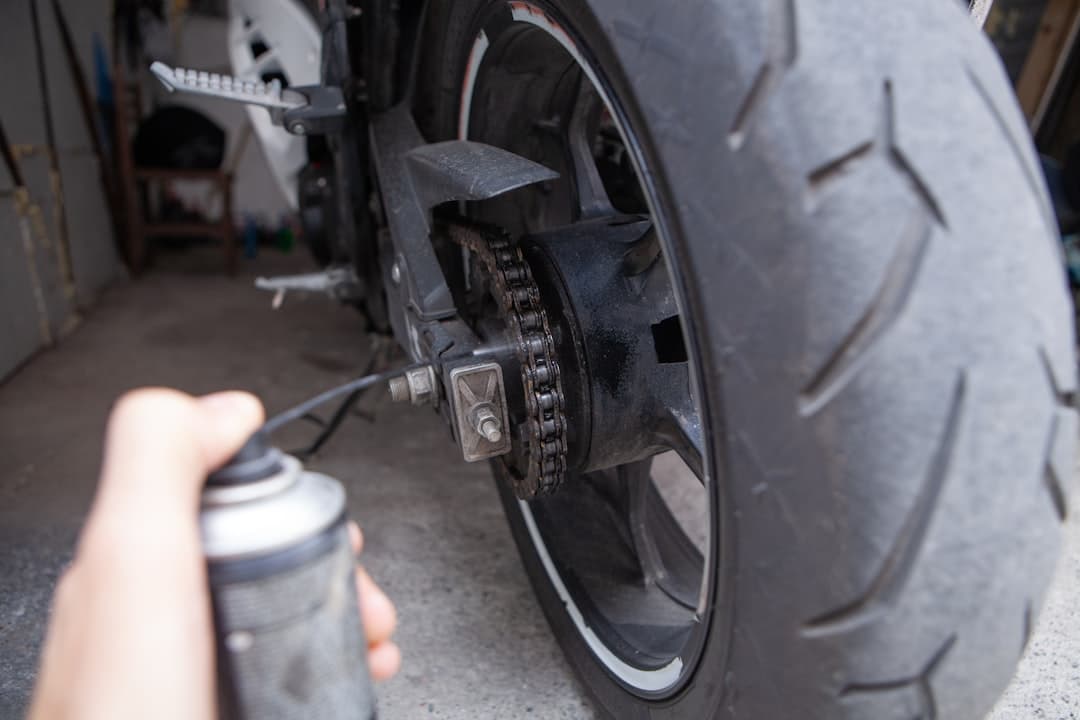
If your motorcycle is chain-driven, pair your oil change day with chain maintenance. Both tasks take about 30 minutes each, and doing them on the same day means your bike gets a complete drivetrain refresh in one hour.
Frequently Asked Questions
How long does a motorcycle oil change take?
A motorcycle oil change takes about 20 to 30 minutes once you have done it a few times. Your first oil change might take 45 minutes to an hour as you locate everything and figure out the process. The actual draining takes 10 to 15 minutes, and the rest is removing the filter, replacing components, and adding new oil.
Can I use car oil in my motorcycle?
No. Car oil contains friction modifiers that will cause your motorcycle wet clutch to slip, making the bike difficult or impossible to ride. Always use motorcycle-specific oil with a JASO MA or MA2 certification. This ensures the oil is compatible with the shared engine, transmission, and clutch system in your motorcycle.
What happens if I never change my motorcycle oil?
Old oil loses its ability to lubricate and protect engine internals. Metal-on-metal contact increases, temperatures rise, and engine components wear at dramatically accelerated rates. Eventually you are looking at seized bearings, scored cylinder walls, and a full engine rebuild costing thousands of dollars. Oil changes cost $30 to $50. Engine rebuilds cost $2,000 to $5,000 or more.
Do I really need to replace the crush washer every oil change?
Yes. Crush washers are designed to deform once to create a perfect seal between the drain bolt and the engine case. Reusing an old crush washer is the most common cause of oil leaks after an oil change. New crush washers cost less than a dollar each. Buy a 10-pack of the correct size for your bike and replace it every time.
How do I know what oil filter fits my motorcycle?
Check your owner's manual for the OEM filter part number, then cross-reference it with aftermarket brands like K&N or HiFlo. Both K&N and HiFlo have online lookup tools where you enter your motorcycle year, make, and model and it tells you the exact filter part number. You can also ask at any auto parts store.
Is synthetic oil worth the extra cost for motorcycles?
For most riders, yes. Full synthetic oil provides better protection at high temperatures, resists breakdown longer, and allows extended oil change intervals compared to conventional oil. The extra cost per oil change is typically $10 to $15, and you change it less frequently, so the annual cost difference is minimal. Most modern motorcycle manufacturers recommend or require synthetic oil.
Can I switch between conventional and synthetic oil?
Yes. You can switch between conventional, semi-synthetic, and full synthetic oil without any problems on modern motorcycles. There is no need to flush the engine or do any special procedure. Just drain the old oil, replace the filter, and fill with the new type. The only exception is during the break-in period on a new bike, where you should follow the manufacturer's specific oil recommendation.
Written by
6FOOT4HONDAMotorcycle creator with 1.2M+ subscribers on YouTube and 2M+ across all platforms. Riding and filming since 2016, with 1,000+ videos covering beginner riding tips, gear reviews, stunts, and road trips. Every product recommended on this site has been personally tested on real rides — from highway touring to track days to stunt sessions. Based in the US, riding year-round.
Related Articles
Spring Motorcycle Prep Checklist (2026)
The complete spring prep checklist with actual specs — voltage numbers, tire minimums, chain slack, and every tool you need to get riding again.
Motorcycle Chain Maintenance: The Complete Cleaning & Lubing Guide (2026)
A dirty chain kills your sprockets, eats your power, and can snap at highway speed. Here's how to clean, lube, and adjust your motorcycle chain in 15 minutes.
Motorcycle Maintenance for Beginners: The Complete Guide (2026)
Everything you need to know about maintaining your motorcycle - chain care, tires, cleaning, storage, security, and the real cost of ownership. Your complete maintenance hub.