Best Motorcycle Tool Kits for Beginners (2026)
By 6FOOT4HONDA · 11 min read · Mar 3, 2026 · Updated Mar 4, 2026
This post may contain affiliate links. We only recommend gear we'd use ourselves. If you click a link and make a purchase, we may earn a small commission at no extra cost to you.
In This Article
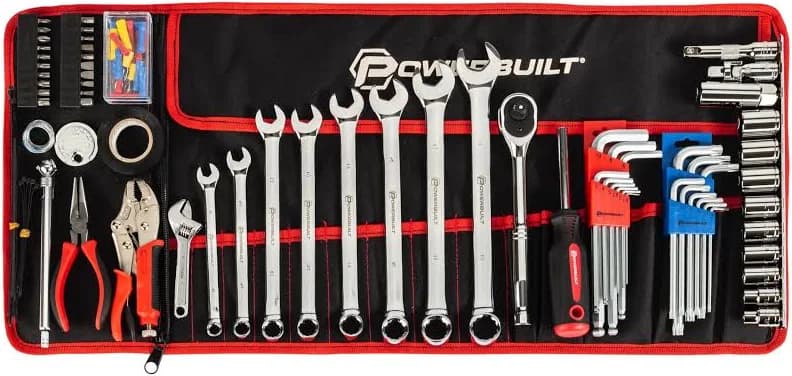
Every rider should carry metric hex keys (4mm, 5mm, 6mm, 8mm), combination wrenches (8mm, 10mm, 12mm, 14mm), a Phillips and flat screwdriver, needle-nose pliers, a tire pressure gauge, zip ties, spare fuses, and a flashlight. The CruzTools RoadTech kit is the best pre-built option because it includes bike-specific tools sized for your exact make.
You don't think about tools until you need them. And when you need them, you're usually on the side of a road 40 miles from anything useful, staring at a problem that a single wrench could fix in two minutes.
A good tool kit doesn't turn you into a mechanic. It turns a tow truck situation into a 10-minute fix. That's it. That's the entire value proposition — and it's worth every dollar and every ounce of space under your seat.
Why Carry a Tool Kit on Your Motorcycle
Motorcycles vibrate. A lot. And vibration loosens things. Mirrors work themselves free. Bar-end weights back out. Exhaust bolts rattle loose over thousands of miles. These are minor problems with simple fixes — if you have the right wrench.
Here are the most common roadside situations a basic tool kit handles:
- Flat tire — a tire plug kit gets you home on tubeless tires
- Loose mirror or lever — one wrench, 30 seconds
- Chain too loose — adjust the rear axle nut and tensioners
- Bent shift lever — tip your bike over at a gas station and the shift lever bends inward. A pair of pliers and some leverage bends it back
- Blown fuse — your bike suddenly won't start or your headlight dies. A spare fuse fixes it instantly
- Broken clutch cable — zip ties can rig a temporary fix to limp home
You're not rebuilding an engine roadside. You're solving the small, common problems that strand riders every single day. A tool kit that weighs two pounds and fits in your hand can save you a $200 tow and three hours of waiting.
Pre-Built Kit vs Custom Kit
You have two paths: buy a pre-built motorcycle tool kit or build your own from individual tools.
Pre-built kits are convenient. You get a roll-up pouch with 15-30 tools already selected and organized. The downside? Many include tools you'll never use and skip tools your specific bike actually needs. A universal kit doesn't know that your bike uses a 27mm axle nut or that your drain plug takes a 17mm wrench.
Custom kits are tailored to your exact bike. You pull out your owner's manual, check every bolt size on your motorcycle, and buy only the tools that match. The result is a smaller, lighter kit with zero wasted space. The downside? It takes research, and buying quality individual tools can cost more than a pre-built set.
The best approach is a hybrid. Start with a solid pre-built kit, then swap out the tools you don't need and add the ones you do. Ride with it for a few months. Every time you think "I wish I had a ___," write it down and add it. After a season, you'll have a perfectly dialed kit for your bike.
Check your owner's manual. Most manuals list every fastener size on the bike. Write down the 6-8 most common sizes and make sure your kit covers them. Japanese bikes are almost entirely metric. European bikes sometimes mix in Torx bolts. American bikes (Harley) use SAE and Torx.
Essential Tools Every Rider Needs
Regardless of what bike you ride, these are the tools that cover 90% of roadside situations:
Metric Hex Keys (Allen Keys)
Sizes: 4mm, 5mm, 6mm, 8mm
Allen bolts are everywhere on modern motorcycles — brake levers, clutch perches, mirror mounts, handlebar clamps, bodywork fasteners. A set of metric hex keys is the single most useful thing in your kit. Folding sets save space but individual L-keys give better leverage. Your call.
Combination Wrenches
Sizes: 8mm, 10mm, 12mm, 14mm
These four sizes cover the majority of hex bolts on Japanese motorcycles (Honda, Yamaha, Kawasaki, Suzuki). The 10mm alone handles mirrors, levers, bracket bolts, and half the stuff you'd need to tighten on the road. Combination wrenches (open-end on one side, box-end on the other) are more versatile than socket sets for roadside work because they don't need a ratchet.
Screwdrivers
Phillips #2 and flat/slotted
Hose clamps, electrical connections, idle adjustment screws, body panel fasteners. A stubby screwdriver fits tight spaces better than a full-size one. Some riders carry a multi-bit driver to save space — just make sure the Phillips #2 tip is solid quality, because a soft tip strips out fast.
Needle-Nose Pliers
One tool, a dozen uses. Pull cotter pins, bend shift levers back into shape, grip stripped bolt heads, hold small parts, pull stuck fuses. Needle-nose pliers also double as wire cutters on most models.
Tire Pressure Gauge
Low tire pressure kills handling and wears tires unevenly. A quality digital gauge the size of a pen fits anywhere and gives accurate readings within 0.5 PSI. Check pressure before every ride — cold tires, before you roll.
Tire Plug Kit (Tubeless Tires Only)
If your bike runs tubeless tires (most sport bikes, naked bikes, and touring bikes), a tire plug kit lets you fix a nail puncture roadside in about five minutes. The plug goes in from the outside, seals the hole, and you ride to a shop for a proper repair. This single item can save you from being stranded.
Note: If your bike has tube-type tires (most dual sports, ADV bikes with spoked wheels), a plug kit won't help. You'd need to remove the wheel and patch or replace the inner tube — not a roadside fix for most people.
Zip Ties and Electrical Tape
The universal fix. Broken fairing clip? Zip tie. Loose wire? Tape. Turn signal hanging by a wire? Zip tie and tape. Carry a handful of various sizes. They weigh nothing, take up zero space, and solve problems that no wrench can.
Spare Fuses
Check your bike's fuse box and carry two spare fuses of each size your bike uses. Fuses blow. When they do, an entire circuit goes dead — headlight, fuel pump, ignition. A 50-cent fuse can be the difference between riding home and calling a tow truck. Your owner's manual tells you exactly which fuse sizes you need.
Flashlight or Headlamp
Breakdowns don't schedule themselves during daylight. A small LED flashlight or headlamp lets you see what you're doing and makes you visible to passing traffic. A headlamp keeps both hands free, which is better for actual wrenching.
Don't cheap out on quality. A $5 multitool from a gas station will round off bolts and break under any real torque. Your tools don't need to be Snap-On, but they need to be made from hardened steel that won't strip fasteners. CruzTools and TEKTON are affordable and well-made. Harbor Freight is a gamble.
The 5 Best Motorcycle Tool Kits
1. CruzTools RoadTech Tool Kit
CruzTools RoadTech Tool Kit
Brand-specific kits sized for Honda, Yamaha, Kawasaki, Suzuki, and more. Includes hex keys, combination wrenches, screwdrivers, pliers, tire gauge, and a compact roll-up pouch — all in metric sizes matched to your make. Quality forged steel tools that actually fit motorcycle fasteners.
CruzTools is the gold standard for motorcycle-specific tool kits. What sets the RoadTech apart from generic kits is that each kit is designed for a specific manufacturer — the Honda version includes the exact sizes Honda uses, the Yamaha version matches Yamaha fasteners, and so on. No wasted tools, no missing sizes.
The tools themselves are well-made forged steel, not the soft pot-metal you get in cheap kits. The roll-up pouch is compact enough to fit under most seats or strap to a fender. This is the kit most experienced riders recommend, and for good reason — it just works.
Price: $60-90 depending on the bike-specific version.
2. BikeMaster Motorcycle Tool Kit
BikeMaster Motorcycle Tool Kit
Universal metric toolkit with combination wrenches, hex keys, screwdrivers, pliers, and a tire gauge — everything a beginner needs in a single affordable pouch. Not bike-specific, but covers the most common sizes across all Japanese and European bikes.
If you don't want to spend $70+ on a CruzTools kit, the BikeMaster is the best value option. It's a universal metric kit that covers the core sizes most motorcycles use. You won't get the bike-specific precision of CruzTools, but you'll have solid coverage for the most common roadside fixes.
The tools are decent quality — better than no-name Amazon kits, not quite as refined as CruzTools. The pouch is compact and organized. For a beginner who just wants a tool kit under the seat without overthinking it, this is the move.
Price: $40-60.
3. Motion Pro Trail Tool Kit
Motion Pro Trail Tool Kit
Extremely compact metric tool set designed for ADV and dual-sport riders who have minimal storage space. Includes T-handle hex keys, wrenches, and screwdriver bits in a slim roll-up that fits under virtually any seat or in a fender bag. Built tough for off-road abuse.
Motion Pro built this kit for riders who measure storage space in millimeters. The trail tool kit is slim, light, and fits in spaces where a full tool roll won't. That makes it the go-to choice for ADV and dual-sport riders with tiny under-seat compartments, but it works just as well for any rider who wants the smallest possible kit.
The tradeoff is that it doesn't include as many tools as the CruzTools or BikeMaster kits. You get the essentials — hex keys, a few wrenches, screwdriver bits — but you may need to supplement with a tire plug kit and pliers. For the size and weight, though, it's hard to beat.
Price: $30-50.
4. TEKTON Combination Wrench Set (Metric)
TEKTON Combination Wrench Set
High-quality chrome vanadium steel wrenches with 15-degree offset for tight spaces. Available in metric sets covering 8mm through 22mm. The foundation of a great custom tool kit — buy the sizes your bike uses and skip the rest.
TEKTON isn't a motorcycle-specific brand, but their wrenches are genuinely excellent for the price. Chrome vanadium steel, precise sizing, smooth finish, 15-degree handle offset for tight clearances. If you're building a custom tool kit piece by piece, TEKTON wrenches are the foundation.
Buy the individual sizes your bike needs (check your manual), pair them with a quality hex key set, and you've got a custom kit that's better than most pre-built options. TEKTON also has a no-hassle guarantee — they'll replace any tool that breaks or wears out.
Price: $25-40 for a set.
5. Dynaplug Racer Pro
Dynaplug Racer Pro
Premium tubeless tire repair tool that's smaller than a marker. Machined aluminum body, no CO2 needed — just insert a plug and ride. Carries five plugs internally. Used by professional racers and ADV riders worldwide for its speed and reliability.
The Dynaplug Racer Pro is the best tire plug tool on the market, full stop. It's a machined aluminum tube barely bigger than a pen that stores five repair plugs internally. When you pick up a nail, you pull out the Dynaplug, insert the tip into the puncture, push, pull out, done. No reaming, no messy rubber cement, no wrestling with sticky strings.
It's more expensive than a basic rope-style plug kit, but the speed and reliability are worth it. Professional racers use Dynaplugs. ADV riders crossing continents use Dynaplugs. If your bike runs tubeless tires, this is the one to carry.
Price: $60-80.
Note: Dynaplug only works on tubeless tires. If your bike has tube-type tires (spoked wheels on most dual sports and ADV bikes), you need a traditional tube patch kit instead.
Roadside Repairs You Can Actually Do
You don't need to be a mechanic to handle the most common roadside problems. With the tools above, here's what you can realistically fix on the side of the road:
- Plug a flat tire — with a Dynaplug or rope-style plug kit, a tubeless tire puncture takes about five minutes to repair. Ride to a shop afterward for a proper inspection
- Tighten a loose mirror or lever — vibration backs out bolts over time. One wrench, half a minute. Do this before the mirror falls off at highway speed
- Adjust chain tension — if your chain is slapping around, loosen the rear axle nut, turn the tension adjusters evenly on both sides, and re-torque. Your chain maintenance guide covers the full process
- Replace a blown fuse — no headlight? No fuel pump? Check the fuse box. Pull the dead fuse, push in a spare, ride on
- Bend back a shift lever — a low-speed drop can bend your shift lever inward until it hits the engine case. Pliers and leverage can bend it back enough to shift through gears and get home. Here's our guide on how to pick up a dropped motorcycle to handle the drop itself
- Zip-tie a broken fairing — crash plastic cracks and clips break. Zip ties hold bodywork in place until you can replace the broken parts
Practice at home first. Before you need to fix something on the side of the road, practice in your garage. Plug an old tire, adjust your chain, remove and replace a fuse. Roadside is not the time to learn how a tire plug kit works for the first time.
How to Pack Your Tool Kit
Having the right tools is half the battle. Packing them so they don't rattle, shift, or damage your bike is the other half.
Tool roll — the most popular option. A fabric or leather roll-up pouch with individual slots for each tool. Keeps everything organized, lays flat, and fits in awkward spaces. Most pre-built kits come in one.
Hard case — a small plastic or aluminum case protects tools better but takes up more rigid space. Good if you have saddlebags or a top case. Not ideal for under-seat storage.
Under-seat bag — some riders use a small zippered pouch specifically shaped for the under-seat compartment. Works great but varies wildly by bike — measure your space before buying.
Tips for packing:
- Wrap tools individually or use foam dividers to prevent metal-on-metal rattling
- Secure the kit so it can't shift. Velcro straps, bungee cords, or zip ties work
- Keep it on the bike always. A tool kit in your garage doesn't help you on the road. It lives on the bike, period
- Add a small bag of zip ties, fuses, and tape to the outside of your tool roll for quick access
If you're planning a motorcycle road trip, consider upgrading to a slightly larger kit that includes more wrench sizes and a multi-bit socket driver. Longer trips mean more chances for something to vibrate loose.
Comparison Table
| Kit | Pieces | Best For | Compact | Price |
|---|---|---|---|---|
| CruzTools RoadTech | 20-30+ | Bike-specific coverage | Yes | $60-90 |
| BikeMaster Tool Kit | 15-20 | Budget all-around kit | Yes | $40-60 |
| Motion Pro Trail | 10-15 | ADV / dual sport / minimal storage | Very | $30-50 |
| TEKTON Wrench Set | 10-15 | Building a custom kit | Moderate | $25-40 |
| Dynaplug Racer Pro | 1 (+ plugs) | Tubeless tire repair only | Extremely | $60-80 |
For most beginners, the CruzTools RoadTech is the right call. Pick the version matched to your motorcycle brand, toss a Dynaplug in the pouch, add some zip ties and spare fuses, and you're covered for 95% of roadside situations.
If you're looking for more ways to keep your bike in top shape, check out our motorcycle tires guide for tire maintenance and our complete beginner's guide to motorcycles for the full rundown on everything you need to know as a new rider.
Frequently Asked Questions
What tools should I carry on my motorcycle?
At minimum, carry metric hex keys (4-8mm), combination wrenches (8-14mm), a Phillips and flat screwdriver, needle-nose pliers, a tire pressure gauge, zip ties, spare fuses, and a flashlight. A tire plug kit is also critical if your bike has tubeless tires.
Do motorcycles come with a tool kit?
Some do, but the factory tool kits are usually low-quality stamped steel that bends and strips under real use. They cover the bare minimum. Most riders replace or supplement the factory kit with a proper aftermarket set within the first year.
Can I fix a flat tire on a motorcycle myself?
Yes, if your bike has tubeless tires. A tire plug kit like the Dynaplug Racer Pro lets you seal a nail puncture in about five minutes roadside. Tube-type tires (common on spoked wheels) require removing the wheel to patch the inner tube, which is much harder to do on the road.
What size tools do Japanese motorcycles use?
Japanese motorcycles (Honda, Yamaha, Kawasaki, Suzuki) use metric fasteners almost exclusively. The most common sizes are 8mm, 10mm, 12mm, and 14mm for hex bolts, and 4mm, 5mm, 6mm, and 8mm for Allen/hex bolts.
Should I carry a motorcycle tool kit on every ride?
Yes. Keep the tool kit on the bike at all times. Breakdowns don't happen on schedule, and a two-pound tool roll under your seat is the difference between a quick fix and a tow truck. If it's not on the bike, it can't help you.
Written by
6FOOT4HONDAMotorcycle creator with 1.2M+ subscribers on YouTube and 2M+ across all platforms. Riding and filming since 2016, with 1,000+ videos covering beginner riding tips, gear reviews, stunts, and road trips. Every product recommended on this site has been personally tested on real rides — from highway touring to track days to stunt sessions. Based in the US, riding year-round.
Related Articles
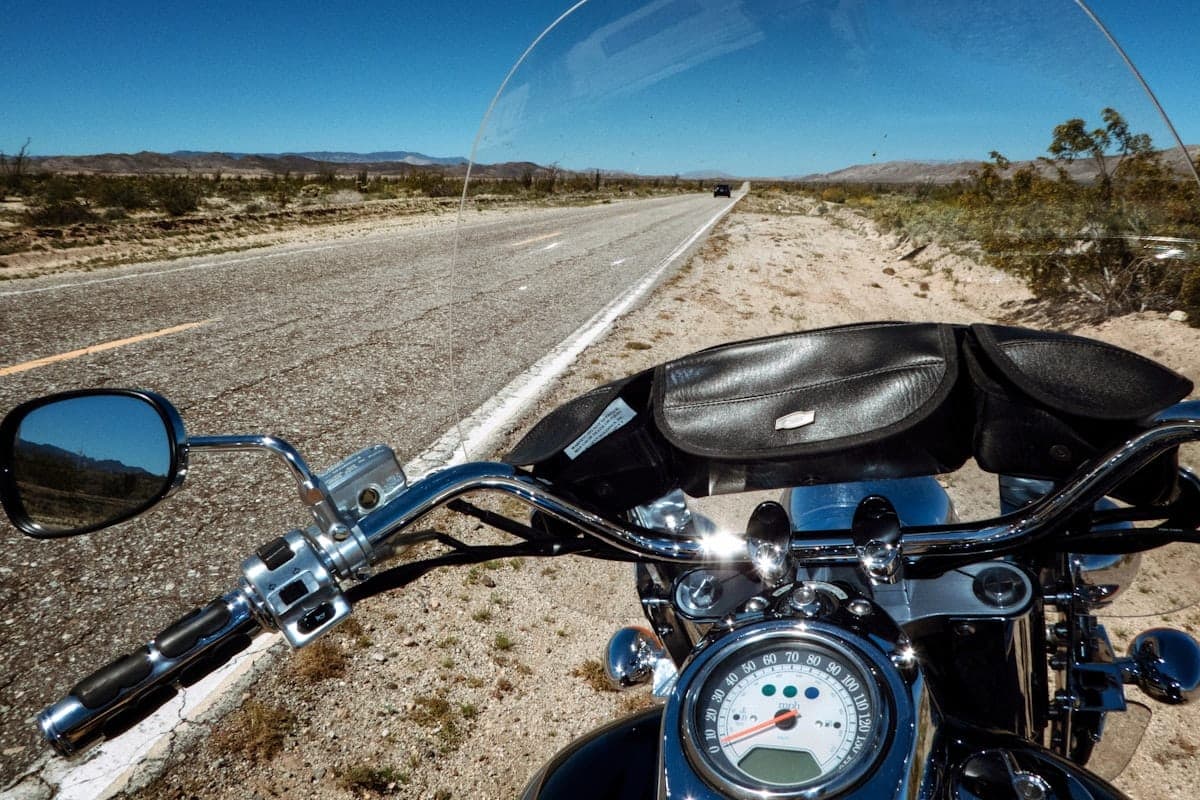
Best Motorcycle Backpacks & Riding Bags (2026)
The best motorcycle backpacks and riding bags for every type of rider. Aerodynamic hardshells, waterproof packs, tank bags, and touring luggage compared with real-world pros and cons.
Best Motorcycle Bluetooth Headsets & Intercoms (2026)
The best motorcycle Bluetooth headsets ranked — Cardo, Sena, Fodsports, and budget picks. Music, calls, rider-to-rider intercom, and GPS audio compared at every price point.
Best Motorcycle GPS Trackers (Real-Time Tracking, 2026)
The best motorcycle GPS trackers for real-time tracking and theft recovery. AirTags, Monimoto, SpyTec, and more — compared by tracking type, battery life, and subscription cost.