This post may contain affiliate links. We only recommend gear we'd use ourselves. If you click a link and make a purchase, we may earn a small commission at no extra cost to you.
In This Article
Spring motorcycle prep takes 2.5-4 hours and covers 11 systems: battery (charge to 12.7V+), tires (check pressure — you've lost 5-10 PSI over winter), oil (change it if you didn't before storage), chain (clean, lube, set slack to 25-30mm), brakes (2mm minimum pad thickness), fluids, electrical, controls, fuel system, pest check, and a wash. Skip any of these and your first ride could be your worst ride of the year.
Do not ride your motorcycle after winter storage without checking at minimum the battery voltage, tire pressure, and brakes. Under-inflated tires and seized brake calipers after months of sitting are responsible for more "first ride of spring" crashes than anything else. Budget 3 hours, a multimeter, a tire gauge, and a chain cleaning kit.
I'm not gonna lie guys, I learned this lesson the stupid way. Pulled my bike out of the garage last spring, checked absolutely nothing, got maybe three blocks from my house and almost ate it at the first stop sign. Tires were like 15 PSI low from sitting all winter, felt like I was riding on marshmallows. The front end just wanted to wash out. I came back, parked it, and spent the afternoon actually going through everything properly. Should've done that first obviously. So here's the checklist I use now — every step with actual numbers, not just "check your tires" with zero context.
What Should You Check on Your Battery First?
The battery is the first thing that dies in winter storage. Lead-acid batteries self-discharge at about 1% per day even when disconnected. If your bike sat for 3-4 months without a tender, there's a real chance the battery is toast.
Here's what the numbers actually mean:
| Multimeter Reading (Key Off) | What It Means |
|---|---|
| 12.7-13.0V | Fully charged — good to go |
| 12.4-12.6V | Partially charged — charge it before riding |
| 12.0-12.3V | Weak — charge fully and retest. May not recover |
| Below 12.0V | Dead — likely needs replacement |
How to test: Set your multimeter to DC voltage, touch red to positive terminal, black to negative. Key off, no accessories. That's it.
Load test: Start the bike and watch the voltage while cranking. It should not drop below 9.6-10.0V during the crank. If it drops below 9.6V, the battery can't handle the load even if it reads 12.7V sitting still.
Charging system check: With the engine running at idle, you should see 13.5-14.5V at the battery terminals. This confirms your stator and regulator/rectifier are pushing charge back into the battery. Below 13.5V means something in the charging system is weak.
When to replace: If the battery is 3+ years old (lead-acid), won't hold 12.4V after a full overnight charge, or is physically swollen or cracked — replace it. Don't gamble on a sketchy battery. Getting stranded 40 miles from home because your battery died is not how you want to start the season.
Never jump-start a motorcycle from a car with the car running. A car alternator puts out way more amperage than motorcycle electronics can handle. You can fry your ECU, regulator/rectifier, or entire wiring harness. Use a dedicated motorcycle battery charger or jump from the car with the car engine OFF.
The NOCO Genius1 ($30-40) is my go-to recommendation. 1-amp smart charger, works with lead-acid and lithium, has a desulfation mode that can sometimes revive a weak battery. If you want to leave it connected year-round as a tender, the Battery Tender Junior 800mA ($30-53) is the classic choice.
How Do You Check Motorcycle Tires After Winter?
Tires lose about 1-2 PSI per month just sitting still. After 3-4 months of winter, you could be 5-10 PSI low. That is a massive difference in handling. Low pressure makes the bike feel sluggish, wobbly in corners, and dramatically increases stopping distance.
Step 1 — Check pressure. Use a quality gauge like the AstroAI Digital Tire Gauge (~$10-13). Check the sticker on your swingarm or owner's manual for the correct PSI. Most sport/naked bikes run 32-36 front, 36-42 rear. Cruisers vary more. Never eyeball it.
Step 2 — Check tread depth. Safe minimum is 2/32" (1.6mm). Use the penny test — insert a penny with Lincoln's head pointing down into the tread groove. If you can see all of Lincoln's head, you're below 2/32" and need new tires.
Step 3 — Check the sidewalls. This is the one everyone skips. Look for cracking, dry rot, or weather checking — small cracks that look like dried-out leather. Tires with plenty of tread can still have dangerous sidewall degradation from age and UV exposure.
Step 4 — Read the DOT date code. This is the four-digit number on the sidewall after "DOT." The last four digits tell you the week and year of manufacture. Example: "2523" means week 25 of 2023. Replace any tire older than 5-6 years regardless of how much tread is left. Rubber compounds degrade over time and lose grip even if they look fine.
Step 5 — Check for flat spots. If the bike sat in one spot all winter on concrete, the tires may have developed flat spots where the weight pressed against the surface. Minor flat spots usually ride out within 15-20 minutes of riding. Severe flat spots (you can feel a consistent thump) mean the tire needs replacement.
For the full deep dive on tires, see our motorcycle tires guide.
Should You Change the Oil Before Your First Spring Ride?
Yes — if you didn't change it before you put the bike away for winter. Old oil sitting in an engine for months accumulates moisture from condensation and the additives break down. If you DID change the oil before storage, you're good to ride on it.
Change intervals for reference:
- Mineral oil: 3,000-5,000 miles
- Semi-synthetic: 5,000-6,000 miles
- Full synthetic: 7,000-10,000 miles
- Regardless of mileage: change at least once per year
Always change the filter when you change the oil. And here's a critical one — use a torque wrench on the drain plug. The spec is typically 20-25 Nm depending on your bike. Aluminum engine cases strip incredibly easily and an overtightened drain plug on an aluminum case is one of the most expensive beginner mistakes you can make. Don't ask me how I know.
For the full step-by-step process, check our how to change motorcycle oil guide.
How Do You Check and Adjust Your Chain for Spring?
The chain needs three things: cleaning, lubrication, and proper tension. Do all three.
Cleaning: Spray chain cleaner on the chain while rotating the rear wheel (bike on a rear stand or center stand). Use a Grunge Brush (~$8-12) — the three-sided design cleans the top, bottom, and sides simultaneously. Let it soak for a few minutes, then wipe off with a rag.
Lubrication: After cleaning and wiping, apply chain lube to the inside of the chain (the side that contacts the sprockets) while slowly rotating the wheel. Maxima Chain Wax (~$10-15) is my pick — wax-based, minimal fling, perfect for street.
Tension check: Proper chain slack by bike type:
| Bike Type | Correct Slack |
|---|---|
| Standard / Naked | 25-30mm |
| Sport | 15-25mm |
| ADV / Dual-sport | 30-40mm |
Check at multiple points along the chain — chains develop tight spots as they wear. Push the chain up and down at the midpoint between the sprockets and measure the total deflection.
Never use WD-40 on a motorcycle chain. WD-40 is a degreaser and water displacer, not a lubricant. It will strip the factory grease from inside the O-rings and X-rings, dramatically shortening chain life. Use actual motorcycle chain lube.
When to replace: If the chain is stretched past the adjuster range, if you can pull the chain off the rear sprocket and see half a tooth, or if there are visible rust, kinks, or stiff links. Always replace the chain AND both sprockets together — a new chain on worn sprockets (or vice versa) wears out in a fraction of the time.
The Maxima Chain Care Kit (~$38) comes with cleaner, MPPL, and chain wax — everything you need in one box. Great beginner value.
For the complete chain maintenance deep dive, see our motorcycle chain maintenance guide.
How Do You Inspect Your Brakes After Winter Storage?
Brakes that sit for months can develop corrosion on the rotors, glazing on the pads, and moisture contamination in the fluid. Don't skip this.
Pad thickness: New brake pads have 4-6mm of friction material. Replace at 2mm remaining. You can usually see the pad thickness through the caliper without removing anything — just look from the front or back of the caliper body. If you can't tell visually, pull the caliper.
Rotor check: Look for the minimum thickness spec stamped on the rotor itself (typically 4.0-5.0mm front, 3.5-4.5mm rear). Signs of a warped rotor include pulsating lever feel under braking, visible bluing from heat, and vibration through the handlebars when braking.
Brake fluid: Look through the sight glass on the master cylinder reservoir. The fluid should be clear or light amber. Dark brown or black fluid is overdue for a flush. Brake fluid absorbs moisture from the air over time, which lowers its boiling point and can lead to brake fade.
Brake fluid types:
| Type | Dry Boiling Point | Notes |
|---|---|---|
| DOT 3 | 205°C (401°F) | Rarely used on modern bikes |
| DOT 4 | 230°C (446°F) | Most common motorcycle spec |
| DOT 5.1 | 260°C (500°F) | Compatible upgrade to DOT 3/4 |
| DOT 5 (silicone) | 260°C (500°F) | DIFFERENT chemistry — NOT compatible with DOT 3/4. Some Harleys only |
DOT 5 and DOT 5.1 are NOT the same thing despite the similar names. DOT 5 is silicone-based and cannot be mixed with DOT 3 or DOT 4. DOT 5.1 is glycol-based (like DOT 3/4) and IS compatible. Check your owner's manual before adding fluid.
Flush interval: Every 2 years regardless of mileage. If you can't remember when you last flushed it, flush it. A bottle of Castrol DOT 4 (~$6-10) costs less than a dinner out. Brake fade in a panic stop costs infinitely more.
What Should You Check on the Electrical System and Controls?
This takes 10 minutes and could save your life. Do it before every first ride of the season.
Lights: Check headlight (high and low beam), tail light, brake light (both front and rear lever activation), turn signals (all four), and the license plate light. Replace any dead bulbs before riding. Burnt-out brake lights get you rear-ended.
Horn: Press it. If it sounds weak or doesn't work, check the connection at the horn itself — corrosion on the terminals is common after winter.
Kill switch: Flip it. Make sure the engine actually dies. Then flip it back.
Throttle free play: You should have 2-3mm of free play before the cable engages. Twist the throttle — there should be a small dead zone before anything happens. More importantly, the throttle must snap closed from any position when you release it. If it sticks even slightly, do not ride. A stuck throttle at speed is a genuine emergency.
The handlebar test: Turn the handlebars full lock left, then full lock right, while twisting the throttle. The idle speed should NOT change. If the RPM rises when you turn the bars, the throttle cable is routed wrong or binding — fix it before riding.
Clutch free play: 2-3mm at the lever tip. Too tight and the clutch slips. Too loose and it drags. Adjust at the cable adjuster on the lever perch.
If your cables feel stiff after winter, a Motion Pro Cable Luber V3 (~$7-10) and some cable lube will make them feel brand new.
What About the Fuel System After Sitting All Winter?
This depends on two things: whether you added fuel stabilizer before storage, and whether your bike is fuel-injected or carbureted.
Fuel-injected with stabilizer added: Just top off the tank with fresh gas and ride. The stabilizer kept the fuel from degrading. Easy.
Fuel-injected WITHOUT stabilizer: Top off with fresh premium gas. Ride gently for the first tank — the old fuel might cause slightly rough running until it cycles through. FI bikes handle stale gas much better than carbureted bikes.
Carbureted with stabilizer: Top off with fresh gas and ride. The stabilizer protected the carb jets.
Carbureted WITHOUT stabilizer: This is the one that gets people. Gas degrades after 30 days and starts varnishing carburetor jets after 3-6 months. If your carbed bike sat all winter without stabilizer, drain the float bowls first (there's usually a screw at the bottom of each carb bowl). If the bike still runs rough after draining and adding fresh fuel, you may need a full carb cleaning. That's either a $50-100 DIY job or $200-400 at a shop.
For next winter — put fuel stabilizer in a full tank before storage. It costs $5 and saves you potentially hundreds in carb cleaning. Even fuel-injected bikes benefit from it because modern ethanol fuel absorbs moisture and separates faster than pure gasoline.
Did Anything Move Into Your Bike Over Winter?
I know this sounds weird but check for pests. Seriously.
Exhaust pipes: Mice, wasps, and mud daubers love warm, dark tubes. A wasp nest in your exhaust = blocked flow = engine performance issues.
Airbox intake: Pop the seat and check the airbox. A mouse nest in the airbox restricts airflow, causing a lean condition that can overheat the engine or cause misfires.
Under the seat: Check for nesting material, droppings, chewed wires. Mice chew through wiring insulation and the resulting electrical gremlins will drive you absolutely insane trying to diagnose.
Tank area: Check around the fuel tank and frame rails for anything that doesn't belong.
This takes 5 minutes and saves you from pulling your hair out over mystery electrical issues three weeks into the season.
What Are the Most Common Spring Prep Mistakes?
I've made at least half of these bro. Learn from my suffering.
-
Jump-starting from a car with the engine running — The car's alternator can output 100+ amps. Motorcycle electronics fry at a fraction of that. Turn the car off, then connect.
-
Riding on under-inflated tires — "They look fine" is not an inspection. Tires lose 5-10 PSI over winter. Use a gauge. Every time.
-
Ignoring old fuel on carbed bikes — Pushing varnished fuel into jets instead of draining float bowls first. Now you need a full carb clean.
-
Over-tightening the chain — Too tight kills the countershaft bearing. That's a $500+ repair. Always check against the spec and err on the loose side.
-
Over-tightening the oil drain plug — Aluminum threads strip with terrifying ease. Use a torque wrench. 20-25 Nm. Not "gorilla tight."
-
Not testing both brakes before riding — A glazed or seized caliper won't announce itself until you need to stop. Squeeze both levers in the driveway first.
-
Skipping sidewall crack inspection — Plenty of tread, cracked sidewalls = dangerous. Age kills tires regardless of mileage.
-
Using WD-40 on the chain — It's a degreaser. It strips O-ring grease. Your chain life just got cut in half.
-
Not checking controls — A stuck throttle at 50 mph is not something you want to discover for the first time at 50 mph.
-
Overestimating your skills after months off — Your first ride back should be a 20-minute neighborhood shake-down, not a canyon run. Your muscle memory needs a few miles to warm up. You're rustier than you think.
How Much Does Spring Prep Cost (DIY vs Shop)?
Here's the real talk on cost:
| Task | Time | DIY Cost |
|---|---|---|
| Battery charge + test | 15-30 min (+ charging time) | $0 (multimeter) or $30-40 (charger) |
| Tire inspection | 10-15 min | $10-13 (gauge) |
| Oil + filter change | 30-45 min | $30-50 (oil + filter) |
| Coolant check | 5-10 min | $0-15 |
| Brake pad inspection | 10-15 min | $0 |
| Brake fluid check | 5 min | $0-10 |
| Chain clean, lube, tension | 20-30 min | $15-40 (supplies) |
| Electrical check | 5-10 min | $0 |
| Cable lubrication | 15-20 min | $7-15 (luber + lube) |
| Fuel system check | 10-30 min | $0-5 (stabilizer for next time) |
| Wash + wax | 30-60 min | $10-20 |
| TOTAL | 2.5-4 hours | $70-200 first time, $30-80 after |
Shop pricing for comparison:
- Basic spring inspection + oil change: $60-$150
- Comprehensive spring service: $200-$350
- Major service (valves, sync, flush): $400-$800+
- Typical dealer labor rate: $75-$180/hour
Everything on this list is beginner-level DIY work. You don't need special tools beyond a basic socket set, a multimeter, and a tire gauge. If you've never turned a wrench, the spring prep is actually a great first maintenance project because every task is low-risk and teaches you something about your bike. For a full tool list, check our best motorcycle tool kit guide.
If you followed our motorcycle storage winterization guide last fall, spring prep is basically the reverse checklist. And for a deeper look at ongoing maintenance beyond seasonal prep, check the motorcycle maintenance complete guide.
All right guys that's the full spring prep checklist. If you followed our winterization guide in the fall, a lot of this will feel like the reverse process. If you're new to wrenching on your own bike, start with the easy stuff — battery, tires, chain — and work your way up. Everything on this list is beginner-friendly and the confidence you build doing your own maintenance is honestly one of the best parts of owning a motorcycle. Now go ride. Let's go.
Frequently Asked Questions
How long does spring motorcycle prep take?
Can I ride my motorcycle with old gas from winter?
Do I need to change the oil if I changed it before winter storage?
How do I read the DOT date code on my motorcycle tires?
What voltage should a motorcycle battery read?
Is it safe to jump-start a motorcycle from a car?
How tight should a motorcycle chain be?
What tools do I need for spring motorcycle prep?
Written by
6FOOT4HONDAMotorcycle creator with 1.2M+ subscribers on YouTube and 2M+ across all platforms. Riding and filming since 2016, with 1,000+ videos covering beginner riding tips, gear reviews, stunts, and road trips. Every product recommended on this site has been personally tested on real rides — from highway touring to track days to stunt sessions. Based in the US, riding year-round.
Related Articles
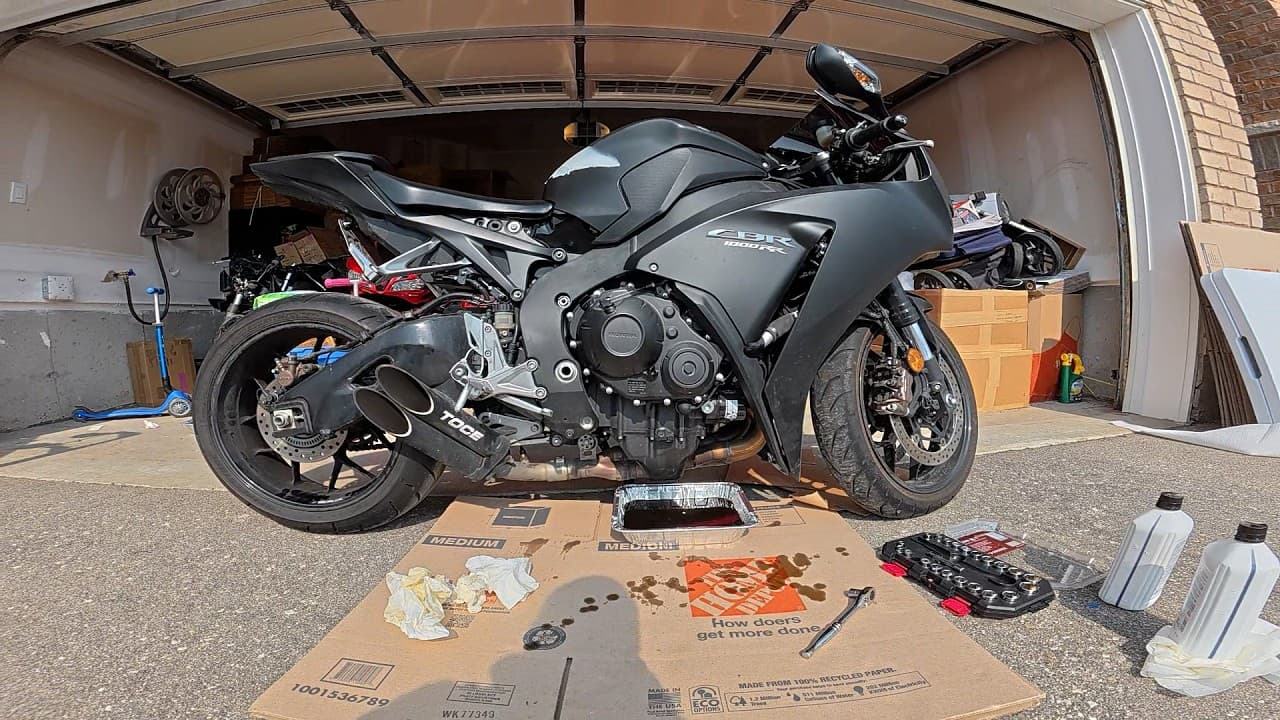
How to Change Motorcycle Oil: Step-by-Step Guide for Beginners (2026)
Change your motorcycle oil in 30 minutes with basic tools. Step-by-step instructions, what oil to use, how often to change it, and the tools you need.

How to Clean Your Motorcycle: The Complete Wash and Detail Guide
The step-by-step guide to washing, detailing, and protecting your motorcycle — without scratching the paint, frying electronics, or spending all day doing it.
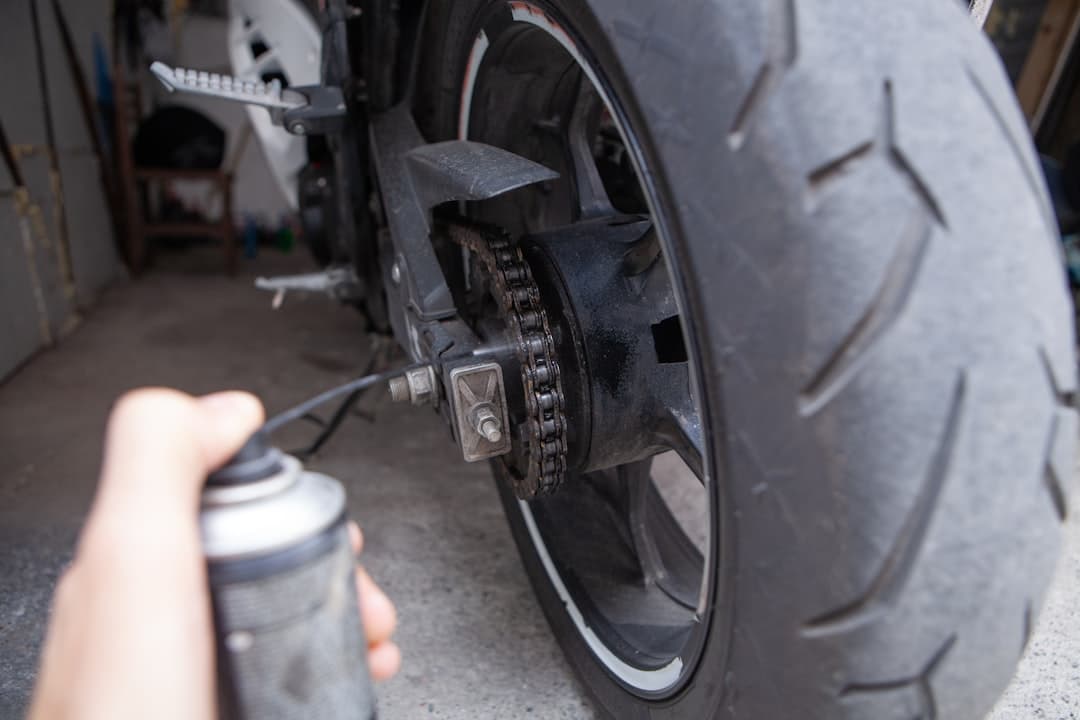
Motorcycle Chain Maintenance: The Complete Cleaning & Lubing Guide (2026)
A dirty chain kills your sprockets, eats your power, and can snap at highway speed. Here's how to clean, lube, and adjust your motorcycle chain in 15 minutes.