Motorcycle Maintenance for Beginners: The Complete Guide (2026)
By 6FOOT4HONDA · 15 min read · Mar 3, 2026 · Updated Mar 4, 2026
This post may contain affiliate links. We only recommend gear we'd use ourselves. If you click a link and make a purchase, we may earn a small commission at no extra cost to you.
In This Article
Buying a motorcycle is the exciting part. Maintaining it is the part nobody tells you about until something breaks. And when something breaks on a motorcycle, the consequences are a lot worse than when something breaks on a car. A blown tire in your Honda Civic means you pull over and call AAA. A blown tire on your motorcycle at 60 mph means you are going to the hospital.
Here is the good news: motorcycle maintenance is simpler than car maintenance. There are fewer systems, fewer parts, and most of the basic stuff can be done in your garage with basic tools. The bad news: it is not optional. Motorcycles are less forgiving of neglect than cars. Skip an oil change in your car and it will still run for a while. Skip chain maintenance on your bike and you are looking at a snapped chain on the highway.
This page is your complete maintenance home base. We have written detailed guides on every major maintenance and ownership topic, and this hub connects them all. Whether you just bought your first bike or you are a few thousand miles in and realizing you should probably learn this stuff, start here.
Why Maintenance Matters (Safety AND Money)
There are two reasons to maintain your motorcycle: safety and savings. Both are compelling on their own. Together, they make maintenance a no-brainer.
Safety: Your motorcycle has two contact patches with the ground, each about the size of a credit card. Everything - steering, braking, accelerating, cornering - happens through those two tiny patches. If your tires are worn, your chain is loose, or your brakes are glazed, those contact patches cannot do their job. And unlike a car, you do not have four wheels, airbags, crumple zones, and a steel cage to bail you out.
Savings: A $15 bottle of chain lube every few months prevents a $400 chain-and-sprocket replacement. A $5 tire pressure check prevents a $300 tire replacement and potential crash. Draining your fuel system before winter storage prevents $200+ in carburetor cleaning. Every dollar you spend on preventive maintenance saves you five to ten dollars in repairs.
The math is simple. The riders who complain about motorcycles being expensive are almost always the riders who skip basic maintenance.
Chain Maintenance
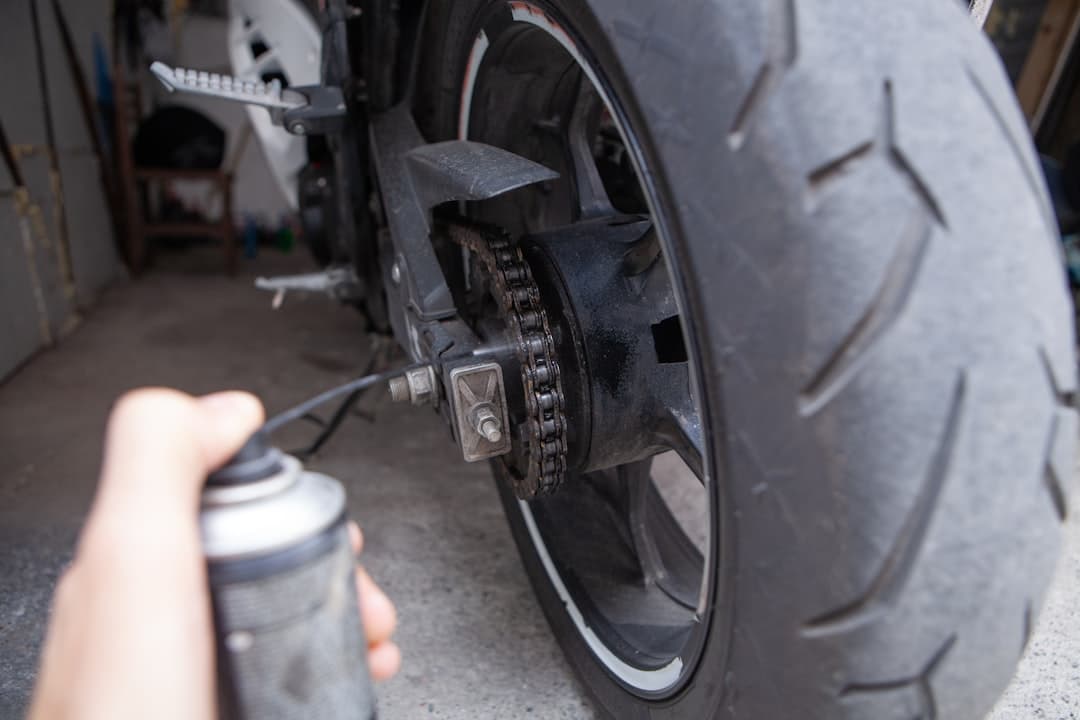
If your bike has a chain drive (and most sport bikes, naked bikes, and standard bikes do), chain maintenance is the single most frequent task on your maintenance list. A clean, properly lubed, and correctly tensioned chain lasts 15,000 to 25,000 miles. A neglected chain lasts 5,000 to 8,000 miles - and it takes the sprockets with it when it goes.
Chain maintenance takes about 15 minutes and needs to happen every 300-600 miles. That sounds like a lot, but it is roughly every two weeks for a daily commuter or once a month for a weekend rider. Make it a habit and it becomes automatic.
Our chain guide covers the exact step-by-step cleaning process, which lubes actually work (and which ones destroy your O-rings), how to check and adjust chain tension, and when to know the chain needs replacing.
Read the full guide: Motorcycle Chain Maintenance: The Complete Cleaning and Lubing Guide
Tires
Your tires are the most critical safety component on your motorcycle. They are the only thing connecting you to the road, and they do everything - steer, brake, accelerate, and hold the bike upright in corners. Riding on worn, under-inflated, or mismatched tires is one of the most dangerous things you can do on a motorcycle.
The good news is that tire maintenance is straightforward. Check your pressure before every ride (or at least weekly), inspect the tread depth regularly, and understand when it is time to replace them. The bad news is that a lot of riders skip this because it takes five minutes and a tire gauge.
Our tire guide covers how to choose the right tires for your riding style, how to read tire wear patterns, proper inflation pressures, when to replace, and the difference between sport, touring, and all-around compound tires.
Read the full guide: Motorcycle Tires Guide
Cleaning Your Motorcycle
Cleaning your motorcycle is not about making it pretty for Instagram (although that is a nice side benefit). It is about inspection. Every time you wash your bike, you are putting your hands and eyes on every part of it. You notice the oil seep on the fork seal. You spot the cracked brake line. You find the loose bolt on the exhaust bracket. Cleaning is the best diagnostic tool you have.
A proper motorcycle wash also prevents corrosion, protects your paint and metal surfaces, and keeps road grime from eating into your chain, brakes, and electrical connections. Salt, bug splatter, and brake dust are all corrosive. Letting them sit on your bike for weeks causes real damage.
Our cleaning guide covers the right products to use (and the ones that will destroy your finish), the correct wash order, how to clean around sensitive components, and a quick-wash routine for when you do not have an hour to detail the whole bike.
Read the full guide: How to Clean a Motorcycle
Storage and Winterization
If you live anywhere with a real winter, your motorcycle is going to sit for weeks or months. How you prepare it for storage determines whether it fires right up in spring or spends the first week of riding season in the shop.
The enemies of a stored motorcycle are moisture, stale fuel, dead batteries, flat-spotted tires, and critters that decide your airbox is a great place to build a nest. Every one of these is preventable with about an hour of prep before you park it for the season.
Our storage guide covers the complete winterization checklist - fuel stabilizer, battery maintenance, tire care, fluid checks, corrosion prevention, and the right way to cover your bike (hint: not with a cheap tarp that traps moisture).
Read the full guide: Motorcycle Storage and Winterization Guide
Security and Anti-Theft
Motorcycle theft is a massive problem. Over 40,000 motorcycles are stolen every year in the US alone, and the recovery rate is low. A motivated thief can pick up a 400-pound bike and toss it in a van in under 30 seconds. Your steering lock alone is not going to stop anyone.
Effective motorcycle security is about layers. No single lock or device is theft-proof, but stacking multiple deterrents makes your bike a harder target than the one parked next to it. That is the real goal - make your bike more trouble than it is worth.
Our anti-theft guide covers disc locks, chain locks, ground anchors, GPS trackers, alarms, cover strategies, and where and how to park to minimize theft risk.
Read the full guide: Motorcycle Anti-Theft and Locks Guide
Ergonomics and Bike Fit
This might seem like an odd entry in a maintenance guide, but hear me out: if your bike does not fit you properly, you will ride it less, enjoy it less, and maintain it less. Discomfort leads to shorter rides, which leads to the bike sitting in the garage, which leads to all the storage problems we just talked about.
Beyond that, improper ergonomics cause real physical problems. Wrist pain from bars that are too low. Back pain from a seat that puts you in the wrong position. Numb hands from excessive vibration. These are not just comfort issues - they are fatigue issues that affect your safety.
Our ergonomics guide covers how to assess whether your bike fits you, what adjustments you can make (handlebars, footpegs, seat, levers), aftermarket options that actually help, and how to set up your riding position for long-distance comfort.
Read the full guide: Motorcycle Ergonomics and Fit Guide
Motorcycle Stands
A good motorcycle stand makes almost every maintenance task easier. Cleaning the chain, lubing it, checking tire condition, inspecting brake pads - all of these are dramatically simpler when you can lift the rear (or front) wheel off the ground and spin it freely.
You do not need an expensive professional setup. A basic rear paddock stand costs $40-80 and pays for itself in saved frustration on your first chain cleaning session. If you plan to do any of your own maintenance (and you should), a stand is one of the first tools to buy.
Our stands guide covers rear stands, front stands, center stands, scissor jacks, and which type makes sense for your bike and your maintenance routine.
Read the full guide: Best Motorcycle Stands
Insurance
Insurance is not maintenance in the traditional sense, but it is absolutely part of owning and protecting your motorcycle. And most new riders drastically underestimate what proper motorcycle insurance costs - or worse, they buy the minimum coverage and find out the hard way that it does not actually cover anything useful.
Understanding your insurance coverage, knowing what to buy and what to skip, and shopping effectively can save you hundreds of dollars a year while making sure you are actually protected when something goes wrong.
Our insurance guide covers liability, collision, comprehensive, uninsured motorist coverage, what deductibles actually mean, how to shop for the best rates, and the coverage mistakes new riders make.
Read the full guide: Motorcycle Insurance for Beginners Guide
The Real Cost of Owning a Motorcycle
Before we wrap up, let us talk money. The purchase price of a motorcycle is just the beginning. Insurance, maintenance, gear, tires, fuel, registration, and unexpected repairs all add up. A lot of new riders budget for the bike and forget about everything else.
Understanding the true annual cost of ownership helps you plan your budget, avoid surprises, and make smarter decisions about what to do yourself versus what to pay a shop to do. (Spoiler: doing your own basic maintenance saves a LOT.)
Our cost guide breaks down every expense category with real numbers - not dealer estimates, not manufacturer marketing, but actual costs from real riders tracking their spending.
Read the full guide: The Real Cost of Owning a Motorcycle
Best Apps for Motorcycle Riders
Your smartphone is a genuinely useful maintenance and riding tool if you have the right apps. Fuel tracking apps tell you your real-world MPG and remind you when maintenance is due. Navigation apps optimize routes for riding enjoyment instead of just speed. Weather apps help you plan around rain. And community apps connect you with other riders for group events and advice.
Our apps guide covers the best motorcycle-specific apps across navigation, maintenance tracking, weather, community, and safety categories - all tested by actual riders.
Read the full guide: Best Motorcycle Apps
The Beginner Maintenance Schedule
If you are new to all of this, here is a simplified maintenance schedule to get you started:
Before every ride (2 minutes):
- Check tire pressure visually (invest in a gauge for weekly checks)
- Check chain tension and visible condition
- Test both brakes
- Check mirrors and lights
Every 300-600 miles (15 minutes):
- Clean and lube the chain
- Check tire pressure with a gauge
- Check tire tread depth and condition
Every 1,000-2,000 miles (30-60 minutes):
- Wash the motorcycle thoroughly (and inspect while washing)
- Check brake pad thickness
- Check coolant level (liquid-cooled bikes)
- Inspect chain and sprockets for wear
Annually or per your owner manual:
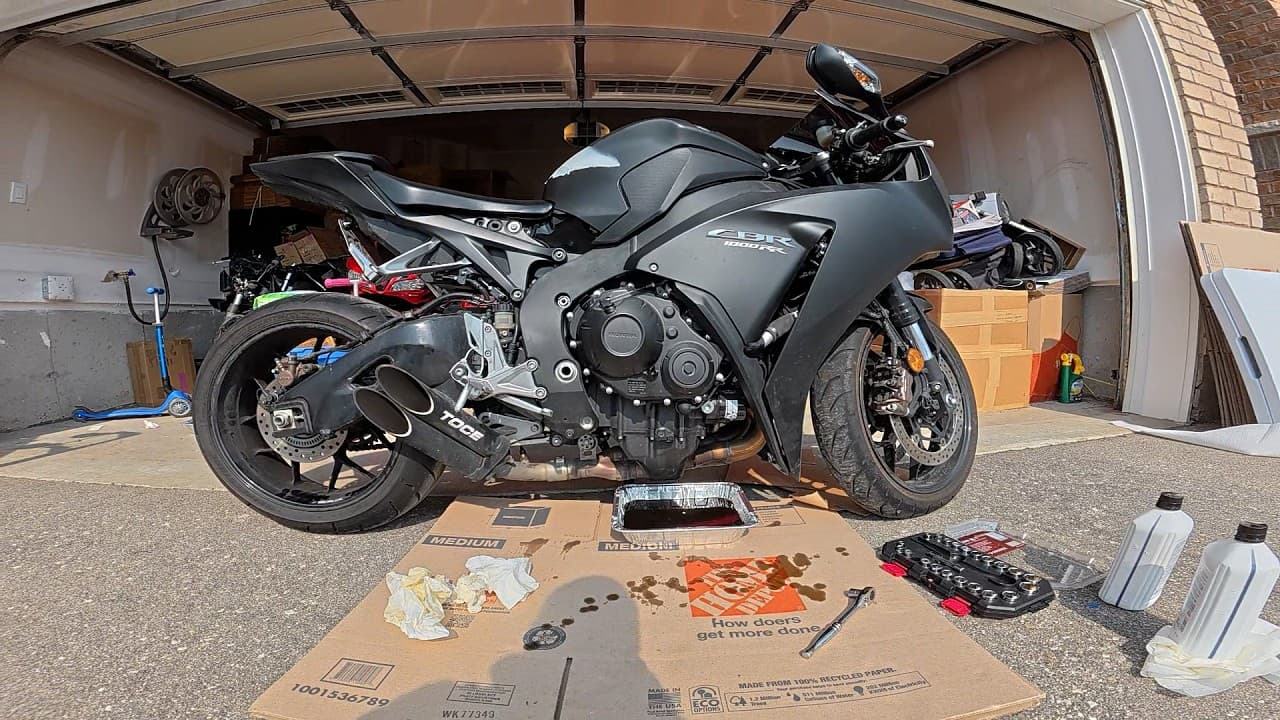
- Oil and filter change
- Air filter inspection or replacement
- Brake fluid check or replacement
- Coolant replacement (per manual interval)
- Valve clearance check (per manual interval)
Your owner manual has the exact intervals for your specific motorcycle. Follow it. The manufacturer knows the bike better than anyone.
The Bottom Line
Motorcycle maintenance is not complicated, but it is not optional. The riders who take care of their bikes ride safer, spend less money over time, and actually enjoy the ownership experience more. There is a real satisfaction in knowing your machine is dialed in because you took the time to do it right.
Start with the chain. It is the easiest, most impactful maintenance task you can do. Then work through the guides above at your own pace. Within a few months, you will be handling 90% of your own maintenance - and wondering why you ever thought about paying a shop to do it.
Frequently Asked Questions
What is the most important motorcycle maintenance task for beginners?
Chain cleaning and lubrication is the most important task because it directly affects safety and is needed most frequently. A neglected chain can snap at highway speed. Clean and lube your chain every 300 to 600 miles and it will last three to four times longer than a neglected one.
How much does basic motorcycle maintenance cost per year?
Basic annual maintenance for a typical motorcycle costs $200 to $500 if you do it yourself. This includes oil changes, chain maintenance supplies, brake pads, and consumables. If you pay a shop for everything, expect $500 to $1,200 per year depending on the bike and your riding frequency.
Can I do motorcycle maintenance myself with no experience?
Yes. Most basic maintenance tasks like chain cleaning, oil changes, tire pressure checks, and brake pad inspection require only basic tools and can be learned from guides and videos. Start with chain maintenance and work your way up to more involved tasks as your confidence grows.
How often should I change motorcycle oil?
Most modern motorcycles need an oil change every 3,000 to 6,000 miles, but this varies by make and model. Always follow your specific owner manual interval. Synthetic oil generally allows longer intervals than conventional oil. Track your mileage and do not exceed the recommended interval.
What tools do I need for basic motorcycle maintenance?
A basic motorcycle maintenance toolkit includes a socket set in metric sizes, a torque wrench, chain cleaning brush and lube, tire pressure gauge, oil filter wrench, and basic screwdrivers. Add a rear paddock stand for easier chain and wheel work. You can build this kit for under $150.
Written by
6FOOT4HONDAMotorcycle creator with 1.2M+ subscribers on YouTube and 2M+ across all platforms. Riding and filming since 2016, with 1,000+ videos covering beginner riding tips, gear reviews, stunts, and road trips. Every product recommended on this site has been personally tested on real rides — from highway touring to track days to stunt sessions. Based in the US, riding year-round.
Related Articles
Motorcycle Chain Maintenance: The Complete Cleaning & Lubing Guide (2026)
A dirty chain kills your sprockets, eats your power, and can snap at highway speed. Here's how to clean, lube, and adjust your motorcycle chain in 15 minutes.
How to Store Your Motorcycle for Winter: The Complete Winterization Checklist
Don't let your bike rot over winter. Fuel stabilizer, battery maintenance, tire care, and everything else you need to do before parking it for months.
How to Change Motorcycle Oil: Step-by-Step Guide for Beginners (2026)
Change your motorcycle oil in 30 minutes with basic tools. Step-by-step instructions, what oil to use, how often to change it, and the tools you need.