Every Type of Motorcycle Explained: The Complete Guide for Beginners (2026)
By 6FOOT4HONDA · 14 min read · Mar 4, 2026 · Updated Mar 7, 2026
This post may contain affiliate links. We only recommend gear we'd use ourselves. If you click a link and make a purchase, we may earn a small commission at no extra cost to you.
In This Article
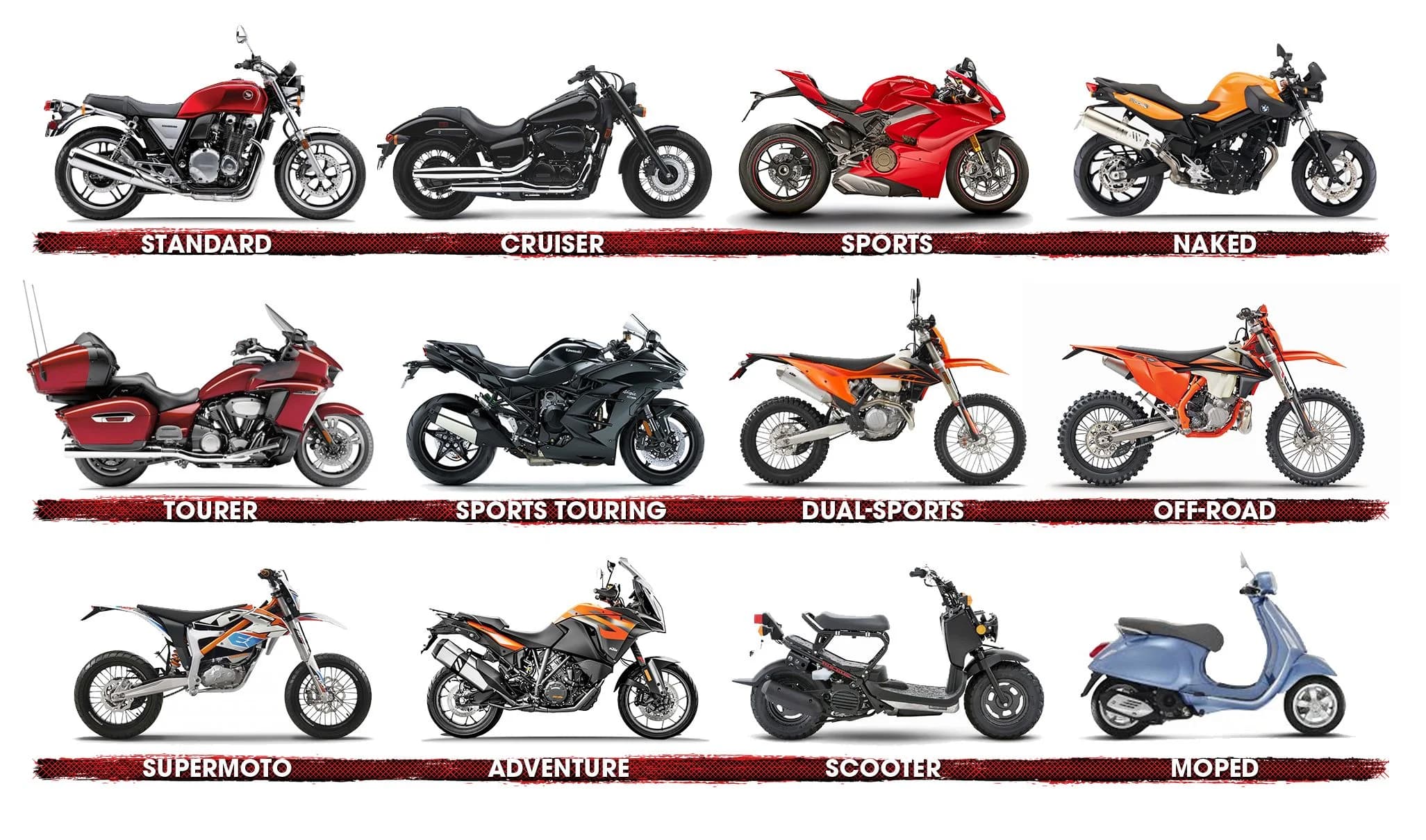
There are 11 main types of motorcycles: sport bikes, cruisers, adventure (ADV) bikes, touring motorcycles, naked/standard bikes, dual-sport, cafe racers, bobbers, choppers, scramblers, and electric motorcycles. Each type is designed around a specific riding position, engine character, and intended use -- from aggressive track-day machines to long-distance highway tourers to off-road capable dual-sports. The best type for you depends on where you ride, how far you ride, and what feels right when you sit on it.
If you are brand new to riding, start with our Complete Beginner's Guide to Motorcycles first. That covers licensing, costs, and gear. This page is specifically about understanding the different categories so you can walk into a dealership (or browse Craigslist) knowing exactly what you are looking at.
Naked/standard bikes are the best motorcycle type for most beginners -- their upright riding position, manageable power, and versatile handling make them the easiest to learn on. Cruisers, small-displacement sport bikes (300-500cc), and dual-sports are also excellent beginner-friendly choices depending on where and how you plan to ride.
Sport Bikes
Sport bikes are purpose-built for speed, cornering, and track performance. They have full aerodynamic fairings, aggressive forward-leaning riding positions with clip-on handlebars and rear-set foot pegs, and high-revving engines that make their best power at the top of the RPM range.
Riding position: Aggressive lean forward. Your weight is on your wrists, your knees are tucked high, and your back is hunched. It looks incredible. After two hours on the highway, your lower back will have a different opinion.
Engine character: High-revving, peak power oriented. Inline-four sport bikes (like the Yamaha R6 or Kawasaki ZX-6R) scream to 14,000+ RPM. Parallel twins in the beginner segment (Ninja 400/500, R3) are more forgiving but still reward riders who use the upper rev range.
Best for: Canyon carving, track days, spirited weekend rides, and riders who prioritize handling precision over all-day comfort.
Popular models: Yamaha YZF-R7, Kawasaki Ninja 650, Ducati Panigale V4, BMW S 1000 RR, Aprilia RS 660
Who should buy one: Riders who know they want performance and are willing to sacrifice comfort for it. If your commute is under 30 minutes and your weekends involve twisty roads, a sport bike makes perfect sense. Just know that insurance costs run higher than almost any other category.
Kawasaki Ninja 400
The best beginner sportbike. 399cc parallel twin, 44hp, ABS standard. Affordable, reliable, and holds value.
Cruisers
Cruisers are the laid-back, feet-forward motorcycles that dominate American highway culture. They sit low, rumble at idle, and are designed for straight-line comfort over long stretches of road. Think Harley-Davidson, Indian, and the Japanese cruiser lineups from Honda, Yamaha, and Kawasaki.
Riding position: Feet forward on floorboards or forward-set pegs, hands up on wide or pullback handlebars, back upright or slightly reclined. This is the most natural seated position of any motorcycle type -- it feels like sitting in a chair.
Engine character: Low-end torque. V-twins dominate this category (Harley's Milwaukee-Eight, Indian's Thunderstroke), and they produce a deep exhaust note and strong pull from low RPMs. You do not need to rev these engines hard to get moving.
Best for: Highway cruising, boulevard riding, casual weekend trips, and riders who want the classic American motorcycle experience.
Popular models: Harley-Davidson Sportster S, Indian Scout, Honda Rebel 500, Kawasaki Vulcan S, Yamaha Bolt
Who should buy one: Riders who value comfort over cornering speed, want a bike that sounds and looks like a traditional motorcycle, and primarily ride on highways and main roads. Cruisers are also excellent for shorter riders -- many have seat heights under 27 inches.
Honda Rebel 500
The best beginner cruiser. 471cc parallel twin, 46hp, low 27-inch seat height, ABS standard. Modern reliability with classic cruiser style. Impossible to outgrow in your first two years.
Adventure / ADV Bikes
Adventure motorcycles -- commonly called ADV bikes -- are the Swiss Army knives of the motorcycle world. They are designed to handle pavement and dirt with equal confidence, with long-travel suspension, upright riding positions, tall windscreens, and enough luggage capacity to cross continents. The ADV segment has exploded in popularity over the last decade and is now one of the fastest-growing categories.
Riding position: Tall and upright. Your spine is straight, your arms reach comfortably to wide handlebars, and your legs have a natural bend at the knee. Most ADV bikes have seat heights of 32-34 inches, which can be intimidating for shorter riders.
Engine character: Varies widely. Smaller ADVs (Yamaha Tenere 700) use responsive parallel twins. Larger ones (BMW R 1250 GS, Ducati Multistrada) pack 150+ hp engines that blur the line between adventure bike and sport-tourer.
Best for: Long-distance touring, mixed-surface riding, commuting in all weather conditions, and riders who want one bike that genuinely does everything.
Popular models: BMW R 1250 GS, Yamaha Tenere 700, KTM 1290 Super Adventure, Honda Africa Twin, Ducati Multistrada V4
Who should buy one: Riders who cannot decide between touring and off-road, want a do-everything motorcycle, or plan to ride long distances on roads that are not always paved. Also excellent daily commuters because of their upright position and weather protection.
Touring Motorcycles
Touring motorcycles are built for one thing: covering massive distances in maximum comfort. They are the biggest, heaviest, most feature-packed bikes on the road -- full fairings, heated seats, built-in stereos and GPS, cruise control, massive luggage systems, and wind protection that makes highway riding feel like sitting in a car.
Riding position: Upright and relaxed. Wide, comfortable seats (often heated), floorboards for your feet, and handlebars that come right to your hands. Passengers get their own backrest, armrests, and a seat that is often more comfortable than the rider's.
Engine character: Big, smooth, and torque-heavy. Flat-six engines (Honda Gold Wing), boxer twins (BMW R 1250 RT), or large V-twins (Harley-Davidson Road Glide) deliver effortless power at highway speeds. You can hold 80 mph all day and the engine will not break a sweat.
Best for: Cross-country road trips, two-up riding, riders who put 10,000+ miles per year on a bike and want to arrive feeling fresh.
Popular models: Honda Gold Wing, Harley-Davidson Road Glide, BMW R 1250 RT, Indian Roadmaster, Yamaha Star Venture
Who should buy one: Experienced riders who already know they love long-distance riding and want the ultimate road-trip machine. These are not beginner bikes -- they weigh 800-900+ lbs and cost $25,000-$40,000+. But for the riders they are built for, nothing else comes close.
Naked / Standard Bikes
Naked bikes -- also called standard motorcycles or streetfighters -- strip away the fairings to expose the engine and frame. The result is an aggressive, raw-looking machine with an upright riding position, wide handlebars, and the most versatile ergonomics of any sport-oriented motorcycle. This is the category most experts recommend for beginners, and for good reason.
Riding position: Upright with a slight forward lean. Your back is straight, your arms reach naturally to wide bars, and your feet sit directly below your hips. It is the most neutral riding position in motorcycling -- comfortable on commutes, capable on canyon roads, and manageable in parking lots.
Engine character: Wide powerband. Naked bikes prioritize mid-range torque over top-end screaming, which means strong pull from low RPMs through the mid-range. You do not need to rev them to redline to have fun. Triples (Yamaha MT-09, Triumph Street Triple) are especially thrilling -- they combine the low-end grunt of a twin with the top-end rush of an inline-four.
Best for: Commuting, canyon carving, weekend rides, city riding, and learning to ride. The most versatile motorcycle type.
Popular models: Yamaha MT-07, Ducati Monster, KTM 390 Duke, Triumph Street Triple, Kawasaki Z650
Who should buy one: Almost everyone, honestly. If you do not have a specific need that pushes you toward another category (off-road, long-distance touring, cruiser aesthetics), a naked bike is the default correct answer. Especially for beginners.
Yamaha MT-07
The best beginner naked bike. 689cc parallel twin with 72hp of usable torque. Lightweight at 403 lbs, fantastic fueling, and enough power to keep experienced riders entertained. Costs under $8,000 new.
Dual-Sport
Dual-sport motorcycles are street-legal dirt bikes. They are built to handle genuine off-road terrain -- single-track trails, fire roads, gravel, mud -- while still being legal and functional on pavement. They are lighter and more off-road focused than adventure bikes, with longer suspension travel, knobby tires, and minimal bodywork.
Riding position: Very tall and upright. Most dual-sports have seat heights of 35-37 inches, which is the tallest of any motorcycle category. You stand on the pegs for off-road sections and sit for pavement.
Engine character: Typically single-cylinder (thumper) engines that prioritize low-end torque and simplicity over peak horsepower. Singles are easy to maintain, reliable, and lightweight. Some larger dual-sports use parallel twins.
Best for: Off-road trail riding, fire roads, gravel roads, riders who live on unpaved roads, and anyone who wants a single bike for both dirt and street.
Popular models: Kawasaki KLR 650, Honda CRF300L, Suzuki DR-Z400S, Yamaha XT250, KTM 500 EXC-F
Who should buy one: Riders who will actually leave the pavement. If 50% or more of your riding involves dirt, gravel, or unpaved roads, a dual-sport is the correct tool. They are also the lightest and most affordable category, making them excellent first bikes for riders who want off-road capability.
Kawasaki KLR 650
The best beginner dual-sport/ADV bike. 652cc single-cylinder thumper that has been bulletproof for decades. Goes anywhere, hauls luggage, gets 50+ mpg, and costs under $7,000 new. The ultimate do-everything budget motorcycle.
Cafe Racers
Cafe racers are a style of motorcycle rooted in 1960s British culture, where riders would strip their bikes down to the essentials and race between cafes. Modern cafe racers keep that philosophy: minimalist bodywork, low clip-on handlebars, rear-set foot pegs, a single seat (or a short cowl behind the seat), and an emphasis on looking clean and fast while standing still.
Riding position: Low and forward, similar to a sport bike. Clip-on handlebars put your hands low and ahead of the triple clamp, creating the classic hunched cafe racer stance. It looks incredible in photos and feels committed on the road.
Engine character: Varies by platform. Classic cafe racers use air-cooled singles or twins (Triumph Thruxton, Royal Enfield Continental GT). Modern interpretations can be built from almost any donor bike.
Best for: Short urban rides, coffee shop runs, bike night appearances, and riders who value aesthetics and motorcycle culture as much as performance.
Popular models: Triumph Thruxton RS, Royal Enfield Continental GT 650, BMW R nineT Racer, Ducati Scrambler Cafe Racer, and thousands of custom builds on platforms from Honda CBs to Yamaha SRs.
Who should buy one: Riders who are drawn to the vintage motorcycle aesthetic and do not need all-day comfort or cargo capacity. Cafe racers are lifestyle bikes. They look stunning, have character that mass-produced bikes cannot replicate, and they connect you to a community that genuinely cares about motorcycle culture.
Bobbers
Bobbers are stripped-down cruisers. The name comes from "bobbed" fenders -- the original bobbers were stock cruisers with their fenders cut short, excess weight removed, and everything non-essential deleted. What remains is a low, aggressive, minimalist machine with a solo seat, fat rear tire, and clean lines.
Riding position: Similar to a cruiser -- feet forward or mid-position, hands on medium-height handlebars, upright posture. But bobbers typically have harder suspension and a solo seat, so the ride is firmer and more raw than a standard cruiser.
Engine character: V-twin dominant, same as cruisers. Low-end torque, deep exhaust note, relaxed power delivery. Modern factory bobbers like the Triumph Bonneville Bobber and Indian Scout Bobber use refined powertrains that balance character with reliability.
Best for: Short to medium rides, city cruising, bike nights, and riders who want the cruiser feel with a more aggressive, minimalist look.
Popular models: Indian Scout Bobber, Triumph Bonneville Bobber, Harley-Davidson Softail Street Bob, Honda Shadow Phantom
Who should buy one: Riders who love the cruiser category but want something with more edge and less chrome. Bobbers sacrifice some passenger comfort (many are solo-seat only) and luggage capacity for a meaner aesthetic. If you ride solo and value style, a bobber delivers.
Choppers
Choppers are the most extreme custom motorcycles on the road. Defined by extended front forks (raked out at severe angles), stretched frames, high handlebars (ape hangers), and radical custom fabrication, choppers are rolling art pieces that prioritize visual impact above all else.
Riding position: Varies wildly depending on the build. Classic choppers have feet-forward pegs, ape hanger handlebars that put your hands at or above shoulder height, and a laid-back posture that looks like you are reclining on a highway-speed couch.
Engine character: Almost exclusively V-twin. Harley-Davidson Shovelhead, Panhead, and Evo engines are the traditional chopper powerplants. Modern builds use S&S, RevTech, or current Harley engines.
Best for: Short rides, shows, cruising main strips, and riders who view their motorcycle as a form of self-expression above all else.
Popular models: Choppers are overwhelmingly custom-built. You do not walk into a dealership and buy one off the floor. Builders start with a rolling chassis or donor bike and fabricate from there.
Who should buy one: Experienced riders who have the mechanical knowledge (or budget) to maintain a custom motorcycle and accept the handling compromises that come with extended forks and raked-out geometry. Choppers are not practical daily riders. They are purpose-built to turn heads and express individuality.
Scramblers
Scramblers are the most versatile style bikes in the retro-modern segment. They take a standard or cafe racer platform and add off-road capability: higher suspension, wider handlebars, skid plates, knobby or semi-knobby tires, and high-mounted exhaust pipes. The result is a bike that looks rugged and adventurous while being perfectly comfortable on city streets.
Riding position: Upright and natural, similar to a naked bike. Wide handlebars give good leverage for low-speed maneuvering and light off-road use. Seat heights are moderate -- typically 31-33 inches.
Engine character: Parallel twins and singles dominate. Engines prioritize tractable mid-range power over peak horsepower, making them easy to ride in mixed conditions.
Best for: Urban riding, light gravel roads, weekend exploration, and riders who want a bike that can handle a surprise dirt road without drama.
Popular models: Ducati Scrambler, Triumph Street Scrambler, BMW R nineT Scrambler, Royal Enfield Himalayan, Husqvarna Svartpilen 401
Who should buy one: Riders who want the adventurous look without the massive size of a full ADV bike. Scramblers are lighter, more nimble in the city, and easier to manage than 500+ lb adventure bikes. They will not handle serious off-road terrain as well as a dual-sport, but they handle light trails and gravel roads far better than a sport bike or cruiser.
Electric Motorcycles
Electric motorcycles are the newest category and the one evolving fastest. No clutch, no gears, no exhaust -- just instant torque from zero RPM and near-silent operation. The technology is improving rapidly, with range, charging speed, and price all moving in the right direction every year.
Riding position: Varies by type. Electric sport bikes (Energica Ego), electric nakeds (Zero SR/F), and electric dual-sports (Zero FX) each mirror the ergonomics of their gas-powered equivalents.
Engine character: Instant torque, linear power delivery, no gears to shift. You twist the throttle and the bike accelerates immediately with no clutch engagement, no gear hunting, and no power gaps. It is the smoothest power delivery in motorcycling.
Best for: Urban commuting, short to medium rides (range is still the limiting factor), riders who want cutting-edge technology, and riders who live in areas with noise restrictions.
Popular models: Zero SR/F, Energica Ego, LiveWire Del Mar, Damon HyperSport, Cake Kalk
Who should buy one: Commuters with predictable daily mileage (so range is not a concern), tech-forward riders, and riders who value the simplicity of no clutch and no shifting. Also a surprisingly good option for new riders -- the lack of a clutch removes one of the biggest learning barriers. The main drawbacks are still range (100-150 miles for most models), charging time, and higher upfront cost compared to equivalent gas bikes.
How Do You Choose the Right Motorcycle Type?
Choosing a motorcycle type comes down to three honest questions:
1. Where will you actually ride? Highways and long distances push you toward touring or ADV. City streets favor nakeds, scramblers, or cafe racers. Off-road trails require a dual-sport. Canyons reward sport bikes and nakeds.
2. How far will you ride in a single trip? If your average ride is under an hour, comfort sacrifices (sport bike ergonomics, bobber suspension) are fine. If you regularly ride 3+ hours, invest in comfort: touring, ADV, or at minimum a naked with a windscreen.
3. What feels right when you sit on it? This sounds vague, but it matters more than specs. If a cruiser's feet-forward position feels wrong to you, no amount of logic will fix that. Go to dealerships, sit on different types, and trust your gut.
For specific model recommendations in the beginner-friendly range, read our full guide on the best beginner motorcycles for 2026. If you are buying used (which we recommend for first bikes), check out how to buy a used motorcycle without getting burned.
Do You Need the Same Gear for Every Motorcycle Type?
No matter what type of motorcycle you choose, the gear requirements are identical. Helmet, jacket, gloves, boots, pants. Every single ride. A lowside at 35 mph on a cruiser destroys the same amount of skin as a lowside at 35 mph on a sport bike.
Read our complete breakdown: Motorcycle Riding Gear: The Complete Guide
And before you buy any bike, understand the full financial picture beyond the sticker price: The Real Cost of Owning a Motorcycle
Quick Comparison: All Motorcycle Types at a Glance
| Type | Riding Position | Best For | Beginner Friendly? | Typical Price Range |
|---|---|---|---|---|
| Sport Bike | Aggressive lean | Track, canyons | Yes (300-500cc) | $5,000-$28,000 |
| Cruiser | Feet forward | Highway, boulevard | Yes | $7,000-$40,000 |
| Adventure | Tall, upright | Touring + off-road | Moderate | $10,000-$25,000 |
| Touring | Upright, relaxed | Long distance | No (too heavy) | $25,000-$42,000 |
| Naked/Standard | Upright, neutral | Everything | Yes (best for beginners) | $5,000-$16,000 |
| Dual-Sport | Tall, upright | Off-road + street | Yes | $5,000-$12,000 |
| Cafe Racer | Low, forward | Short urban rides | Moderate | $6,000-$18,000 |
| Bobber | Feet forward | City cruising | Moderate | $9,000-$20,000 |
| Chopper | Laid back | Shows, short rides | No | $15,000+ (custom) |
| Scrambler | Upright, natural | Urban + light trail | Yes | $7,000-$15,000 |
| Electric | Varies by style | Commuting | Yes (no clutch) | $10,000-$25,000 |
Frequently Asked Questions
What type of motorcycle is best for beginners?
Naked/standard motorcycles are the best type for most beginners. Their upright riding position, manageable power, and forgiving handling make them easy to learn on. The Yamaha MT-07 and Honda CB500F are two of the most recommended beginner bikes in this category.
What is the difference between a cruiser and a touring motorcycle?
Cruisers are lighter, simpler, and built for shorter rides with a feet-forward position and minimal luggage. Touring motorcycles are larger, heavier (800+ lbs), and packed with comfort features like heated seats, stereos, GPS, and massive hard luggage for multi-day cross-country trips. Think of a touring bike as a luxury car and a cruiser as a muscle car.
Are sport bikes dangerous for new riders?
Small-displacement sport bikes (300-500cc like the Ninja 400 or R3) are perfectly fine for beginners. Large sport bikes and supersports (600cc+ inline-fours like the R6 or CBR600RR) are genuinely dangerous for new riders due to extreme power, sensitive throttle response, and aggressive ergonomics that punish mistakes.
What type of motorcycle is most comfortable for long rides?
Touring motorcycles (Honda Gold Wing, Harley Road Glide) are the most comfortable for long-distance rides. Adventure bikes (BMW R 1250 GS, Yamaha Tenere 700) are the second most comfortable. Both offer upright seating, wind protection, and luggage capacity designed for all-day riding.
Can you ride an adventure bike on the highway?
Absolutely. Adventure bikes are excellent highway machines. Their upright position, large windscreens, and strong mid-range torque make highway cruising comfortable and effortless. Many ADV riders use them as their primary touring bikes. The BMW R 1250 GS is one of the best-selling motorcycles in the world precisely because it handles highways and back roads equally well.
What is the cheapest type of motorcycle to own?
Dual-sport motorcycles and small naked bikes are the cheapest to own overall. They have low purchase prices ($5,000-$8,000 new), cheap insurance, excellent fuel economy (50-70 mpg), and simple maintenance. The Honda CRF300L and Kawasaki Z400 are among the most affordable new motorcycles you can buy.
Should I buy a cruiser or a naked bike as my first motorcycle?
Both are excellent first bikes. Choose a cruiser if you prefer a laid-back, feet-forward position and plan to ride mostly on highways and main roads. Choose a naked bike if you want a more versatile, upright position that handles city streets, twisty roads, and commuting equally well. The Honda Rebel 500 (cruiser) and Yamaha MT-07 (naked) are the top picks in each category.
Written by
6FOOT4HONDAMotorcycle creator with 1.2M+ subscribers on YouTube and 2M+ across all platforms. Riding and filming since 2016, with 1,000+ videos covering beginner riding tips, gear reviews, stunts, and road trips. Every product recommended on this site has been personally tested on real rides — from highway touring to track days to stunt sessions. Based in the US, riding year-round.
Related Articles
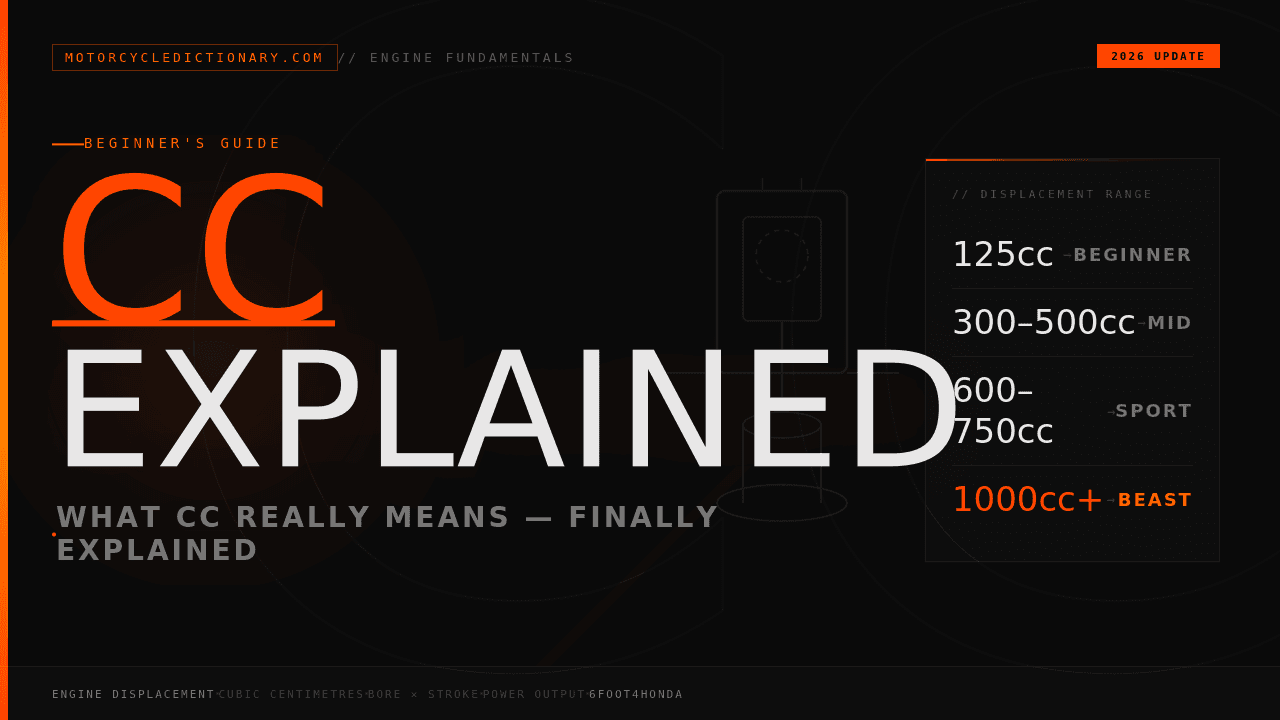
Motorcycle CC Explained (What It Means)
CC measures engine displacement, not speed. Here's what it actually means, why a 650cc cruiser feels nothing like a 650cc sportbike, and what CC to start on.
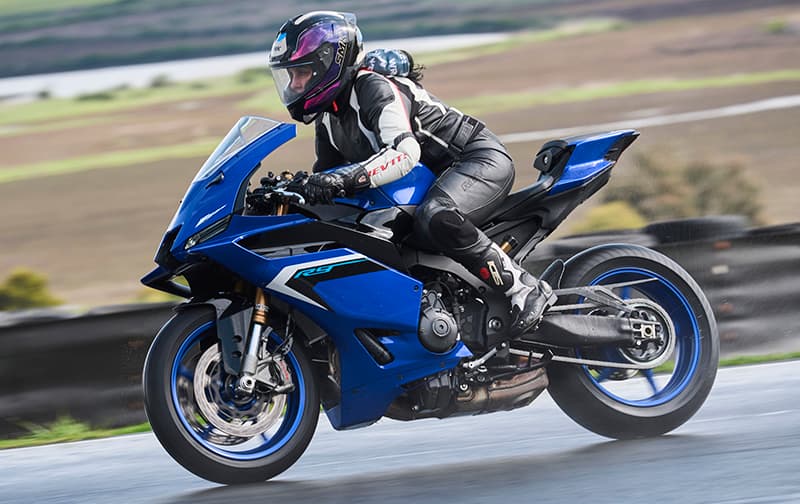
Best Motorcycles for Women 2026
14 bikes ranked by seat height, weight, and fit. Includes the inseam-to-seat chart nobody else has and the gatekeeping myths you need to ignore.
Is a Motorcycle Worth It? (Costs, Risks, Benefits)
A motorcycle is worth it if you budget $4,000-$8,000 for year one and understand the real risks. Honest breakdown from a rider with 1M+ subscribers.