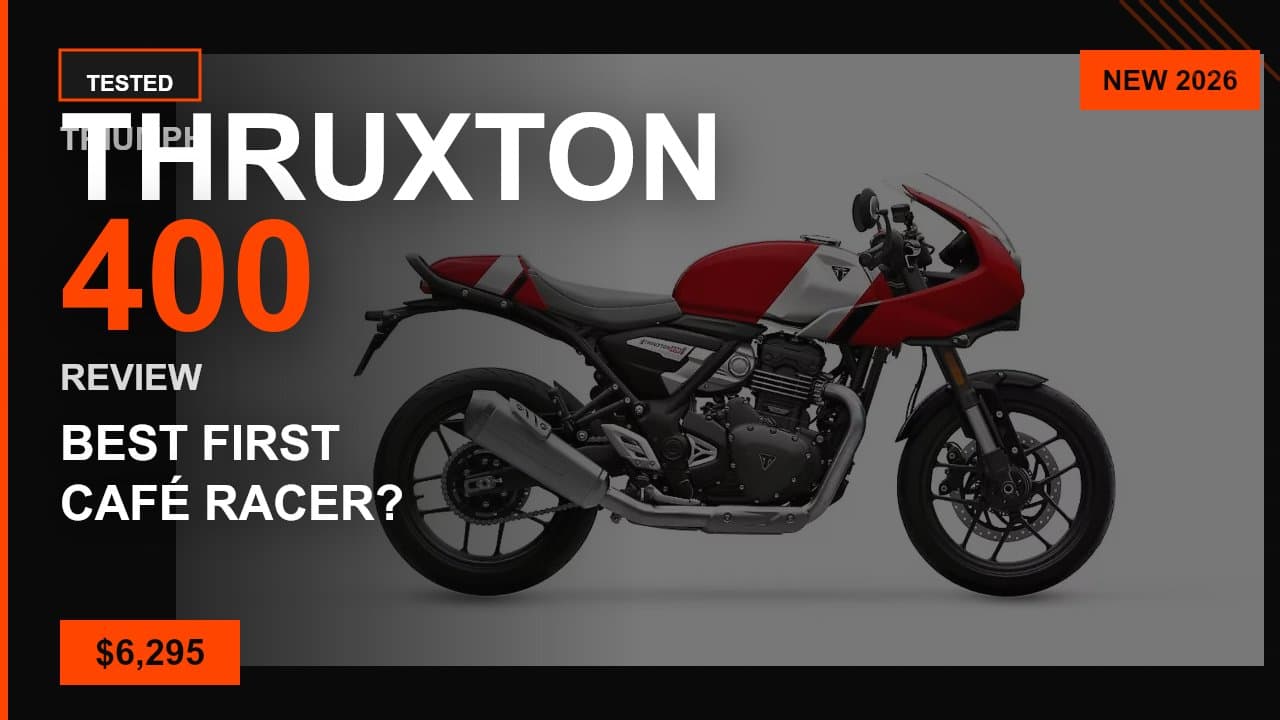
Triumph Thruxton 400 Review: Best First Café Racer? (2026)
By 6FOOT4HONDA · 20 min read · Mar 13, 2026
This post may contain affiliate links. We only recommend gear we'd use ourselves. If you click a link and make a purchase, we may earn a small commission at no extra cost to you.
In This Article
All right guys so everyone's asking me — can you actually start on a café racer bro? Like should your FIRST motorcycle have clip-on handlebars and rear-set footpegs? The new Triumph Thruxton 400 just dropped in March 2026 for $6,295 and I rode one for a week to figure this out.
Short answer: Yes, beginners CAN start on the Thruxton 400. The 398cc engine is manageable (41.4 hp), it has traction control and ABS, and the riding position isn't as aggressive as a sportbike. But guys the clip-ons are 9.7 inches lower than the Speed 400's bars and the pegs are 3.4 inches farther back — you WILL feel it in your wrists and lower back on rides longer than 30 minutes. If you've never ridden before and you want café racer style, this is doable. But if comfort matters more, the Speed 400 is a smarter first bike.
I've spent years riding everything from sport bikes to cruisers, and I've helped hundreds of new riders pick their first bike. Here's everything you need to know about the Thruxton 400 — the real riding position, how it compares to the Speed 400 and Scrambler 400, what gear you need for the café racer look, and exactly who should (and shouldn't) buy this as their first motorcycle.
Key Takeaway: The Triumph Thruxton 400 is a capable first motorcycle IF you prioritize style and you're okay with a sporty riding position. The 398cc engine delivers 41.4 hp (manageable for beginners), it weighs 388 lb (light enough to handle), and it has modern rider aids (traction control, ABS). The clip-on bars and rear-sets create a café racer stance that's more aggressive than the Speed 400 but less extreme than a sportbike. Go with the Thruxton if you want café racer aesthetics. Go with the Speed 400 if you want comfort and versatility.
Quick Specs: Triumph Thruxton 400
Before we get into the real-world riding experience, here's everything you need to know about the Thruxton 400 at a glance.
| Spec | Value |
|---|---|
| Price | $6,295 MSRP |
| Engine | 398cc single-cylinder, liquid-cooled |
| Power | 41.4 hp @ 9,000 rpm |
| Torque | 27.7 lb-ft @ 7,500 rpm |
| Weight | 388 lb (wet) |
| Seat Height | 31.3 inches |
| Wheelbase | 54.2 inches |
| Fuel Capacity | ~3.4 gallons |
| Riding Position | Clip-on bars 9.7" lower than Speed 400, pegs 3.4" back, 1.1" higher |
| Tires | Pirelli Diablo Rosso IV (17" front & rear) |
| Features | Traction control, ABS, ride-by-wire, slip-assist clutch, USB-C charging |
| Colors | Phantom Black, Pearl White/Storm Gray, Metallic Racing Yellow/Silver |
| Availability | March 2026 (U.S. dealerships) |
The specs look good on paper, but guys let me tell you how this thing actually rides in the real world.
Is the Thruxton 400 Good for Beginners?
All right so here's what nobody tells you bro — yes, the Thruxton 400 works as a first motorcycle, but there's a bunch of caveats. Let me break this down into what makes it beginner-friendly and what makes it challenging.
What Makes It Beginner-Friendly
The Thruxton 400 has a lot going for it as a starter bike. First off, 41.4 horsepower is NOT intimidating. Compare that to a 600cc sportbike pumping out 120+ hp and you'll see what I mean — the Thruxton has enough power to get you in trouble if you're stupid, but it's forgiving enough that you won't accidentally loop it pulling out of a parking lot.
Second, 388 pounds wet is light. I'm 6'4" and I can flat-foot this thing at stops no problem. If you drop it in a parking lot (and let's be real, most beginners drop their first bike at least once), you can pick it up yourself without calling three of your buddies to help.
Third, the rider aids are legit. You get switchable traction control, dual-channel ABS, and ride-by-wire throttle. The traction control actually works — I tested it on wet pavement and the system catches rear wheel slip before you even feel it. For a new rider learning throttle control, that's a safety net that could save your ass.
Fourth, the slip-assist clutch makes the lever pull way lighter than a standard clutch. If you're stuck in stop-and-go traffic for an hour, your left hand won't be completely done by the time you get home. This might not sound like a big deal until you've ridden a bike with a heavy clutch in city traffic — trust me bro, it matters.
What Makes It Challenging
Now here's where the Thruxton 400 gets tricky for beginners. Those clip-on handlebars are 9.7 inches lower than the Speed 400's upright bars. That means you're leaning forward onto your wrists the entire time you're riding. After about 45 minutes on this bike, I could feel it in my wrists and lower back. If you've never ridden before, that forward lean is gonna feel weird at first.
The rear-set footpegs are also 3.4 inches farther back than the Speed 400. This creates a more cramped, sporty riding position. If you're tall like me, your knees are gonna be bent at a sharper angle. It's not uncomfortable for short rides, but on a 90-minute highway run, I was ready to get off the bike.
The clip-ons also give you less leverage at low speeds. When you're doing parking lot U-turns or tight maneuvers at 5 mph, the narrow clip-on bars make it harder to muscle the bike around compared to wide upright bars. It's not a dealbreaker, but it's something to be aware of if you're brand new to riding.
Who Should Buy It as a First Bike
Let me be real with you guys — the Thruxton 400 is for a specific type of rider. If you prioritize aesthetics and you want to look cool pulling up to a coffee shop, this is the bike. It's one of the best-looking motorcycles under $7,000, period. The café racer styling is authentic, the proportions are perfect, and you're gonna get compliments everywhere you go.
This bike is also ideal for shorter riders between 5'7" and 5'11". The 31.3-inch seat height is accessible, and the riding position fits that height range better than it fits someone my size. If you're 5'9", the Thruxton 400 ergonomics will feel way more natural than they do for a 6'2" rider.
Urban and city riders will also love this bike. If your daily commute is 20-30 minutes and you're mostly riding in town, the aggressive riding position won't bother you. It's when you start doing hour-long highway rides that the discomfort kicks in.
Finally, if you're coming from bicycles (especially road bikes), you're already used to leaning forward with your weight on your wrists. The Thruxton's riding position will feel familiar to you. If you've never been on anything with drop bars or a forward lean, it's gonna take some adjustment.
Riding Position: How Aggressive Is It Really?
All right so everyone wants to know — is the Thruxton 400 riding position actually that aggressive, or are people exaggerating? I'm not gonna lie bro, it's definitely sportier than a standard naked bike, but it's not as extreme as a full sportbike.
Compared to the Speed 400, the Thruxton puts you in a way more aggressive position. The handlebars are 9.7 inches lower, which means you're leaning forward onto your wrists instead of sitting upright. The footpegs are 3.4 inches farther back and 1.1 inches higher, which bends your knees at a sharper angle. If you put the two bikes side by side, the difference is obvious.
But compared to something like a Yamaha R7 or Kawasaki Ninja 400, the Thruxton is way more relaxed. Sportbikes have you basically laying on top of the tank with your ass in the air. The Thruxton puts you in a leaned-forward position, but you're not folded in half like on a full supersport.
In real-world riding, I started feeling it after about 45 minutes. My wrists were getting tired from supporting my upper body weight, and my lower back was starting to tighten up. After 90 minutes on the highway, I was ready to stretch. If you're doing short city rides (20-30 minutes), you probably won't even notice. But if you're trying to do a 3-hour road trip, you're gonna want to stop every hour to stretch out.
Height considerations are huge here. I'm 6'4", so the rear-set pegs felt cramped for me — my knees were bent at probably a 90-degree angle or sharper. If you're 5'9" or 5'10", the ergonomics will fit you way better. If you're 6'2" or taller, test ride this bike before you buy it, because you might not fit comfortably.
Modification Option: If you buy the Thruxton 400 and the riding position is too aggressive, you can install bar risers or swap the clip-ons for slightly higher bars. It won't look as authentic café racer, but it'll save your wrists on longer rides. Check with Triumph dealers or aftermarket shops for options.
Engine Performance: Is 41.4 HP Enough?
Let's talk power. 41.4 horsepower from a 398cc single-cylinder engine — is that enough for real-world riding? Short answer: yes, for everything except aggressive highway passing above 80 mph.
The power delivery on the Thruxton 400 is smooth and linear. It's not peaky like a high-revving sportbike, and it's not torquey like a twin-cylinder cruiser. You get 27.7 lb-ft of torque at 7,500 rpm, which means the power comes on in the mid-range. Around town at 3,000-5,000 rpm, the bike pulls cleanly without feeling gutless.
I didn't get to test 0-60 times with a GPS, but based on similar bikes in this class, I'd estimate the Thruxton 400 does 0-60 mph in about 5.5 to 6 seconds. That's quick enough to merge onto the freeway without getting run over, but it's not gonna pin you back in the seat like a 600cc sportbike.
Highway capability is totally fine. The bike will cruise at 75-80 mph all day without feeling stressed. At 75 mph, the engine is spinning around 6,500-7,000 rpm, which is well within its comfort zone. The problem is passing power — if you're doing 75 mph and you need to pass someone, you're gonna have to downshift and wring the throttle to get around them. There's just not a ton of top-end power above 8,000 rpm.
City riding is where this bike shines. The lightweight (388 lb) and the linear power delivery make it super easy to filter through traffic, zip around at 30-40 mph, and flick through tight streets. The slip-assist clutch makes stop-and-go traffic way less annoying than it would be on a bike with a heavy clutch pull.
Let me compare this to a few competitors:
- Honda CB500F (47 hp): More power, parallel-twin engine (smoother), but heavier and less stylish
- Royal Enfield Continental GT 650 (47 hp): More power, twin-cylinder, but 53 pounds heavier and less modern tech
- Kawasaki Z400 (45 hp): Slightly more power, but naked sportbike styling (not café racer)
Honestly bro, 41.4 hp is enough for everything a beginner needs. You're not gonna win drag races, but you're also not gonna feel like you're riding a scooter. If you're merging onto the freeway, you'll get up to speed just fine. If you need to pass someone doing 75, you're gonna be wringing it out in second or third gear, but it'll get the job done.
Thruxton 400 vs Speed 400 vs Scrambler 400
All right so Triumph just dropped three 400cc bikes at the same time, and they all use the same 398cc single-cylinder engine. So what's the actual difference bro? Let me break it down for you.
All three bikes — the Thruxton 400, Speed 400, and Scrambler 400 X C — share the same motor. Same 41.4 hp, same 27.7 lb-ft of torque, same liquid-cooled single. The differences are all in the styling, ergonomics, and intended use.
| Feature | Thruxton 400 | Speed 400 | Scrambler 400 X C |
|---|---|---|---|
| Price | $6,295 | $5,699 | $6,295 |
| Style | Café racer | Standard/naked | Scrambler |
| Handlebars | Clip-ons (low) | Upright bars | Wide bars (high) |
| Seat Height | 31.3" | 31.5" | 33.1" |
| Weight | 388 lb | 373 lb | 386 lb |
| Tires | Road (Diablo Rosso IV) | Road | Dual-sport |
| Best For | Style, city riding | Versatility, comfort | Off-road, adventure |
Thruxton 400: Best for Style
The Thruxton is for riders who want café racer aesthetics above all else. You get the clip-on bars, rear-set pegs, quilted seat with a seat cowl, and classic café racer proportions. This is the bike you buy to look cool at coffee shops and ride through the city feeling like you're in a 1960s British motorcycle film.
The trade-off is comfort. You're leaning forward, your wrists are supporting your upper body weight, and rides longer than an hour start to get uncomfortable. If you ride mostly in the city and you prioritize style over practicality, the Thruxton is perfect. If you want one bike that does everything, keep reading.
Speed 400: Best All-Around First Bike
The Speed 400 is the most versatile bike in the lineup. You get upright handlebars, a neutral riding position, and a lighter weight (373 lb vs 388 lb). The seat height is basically the same (31.5" vs 31.3"), but the upright position makes it feel way more comfortable for longer rides.
Honestly bro, if you can only have ONE bike and you need it to do commuting, weekend rides, highway trips, and everything in between, get the Speed 400. It's $600 cheaper than the Thruxton, it's more comfortable, and it's just as quick in a straight line. The only thing you give up is the café racer aesthetic.
Scrambler 400 X C: Best for Adventure
The Scrambler 400 X C is for riders who want to hit fire roads, gravel paths, and light off-road trails. You get wide handlebars (better leverage for standing up), a taller seat height (33.1"), dual-sport tires, and more suspension travel. The proportions look like a miniature adventure bike.
If you want to explore unpaved roads and you're not just sticking to pavement, the Scrambler makes sense. But if you're only riding on the street, the taller seat and knobby tires aren't doing you any favors. Get the Scrambler if you actually plan to ride dirt. Otherwise, stick with the Thruxton or Speed.
The Verdict
If you can only have ONE bike for everything, get the Speed 400. It's the most versatile, most comfortable, and cheapest option.
If you want a café racer specifically, get the Thruxton 400. Just know you're trading comfort for style.
If you want adventure and off-road capability, get the Scrambler 400 X C.
Café Racer Gear: What You Need for the Look
All right guys so if you're spending $6,300 on a café racer, you gotta look the part bro. You can't show up in a high-viz rain suit and Crocs — you need the right gear to match the bike. Here's exactly what you need.
Helmet: Retro Full-Face
Don't cheap out on the helmet. Café racers have zero wind protection, so you need a quality full-face helmet that's gonna keep your head safe and look good doing it. The best options for café racer style are retro full-face helmets with a classic round shell.
- Bell Bullitt — The gold standard for café racer helmets. Fiberglass shell, retro styling, DOT and ECE certified. Check RevZilla for the latest colorways.
- AGV X3000 — Italian-made, premium retro helmet with modern safety. Slightly more expensive but worth it.
- Biltwell Gringo S — Budget-friendly option that still looks the part. Search Biltwell Gringo S on Amazon.
If you want more helmet recommendations for beginners, check out our best motorcycle helmets guide.
Jacket: Leather Café Racer Jacket
You need a brown or black leather jacket with a classic cut. Look for jackets with CE-rated armor in the shoulders, elbows, and back. Don't buy a fashion jacket from a regular clothing store — it won't protect you in a crash.
Search for "café racer jacket" on RevZilla to see moto-specific options with real armor. If you want a more classic look, the Schott Perfecto 618 is the iconic café racer jacket — search Schott Perfecto on Amazon.
Gloves: Brown Leather Riding Gloves
Brown leather gloves complete the café racer aesthetic. Look for gloves with knuckle protection and palm sliders. Search brown leather motorcycle gloves on Amazon to see options.
Boots: Classic Motorcycle Boots
You need boots that look good with jeans but still offer ankle protection. The TCX X-Blend WP boots (available on RevZilla) are a solid moto boot with a casual look. If you want something more rugged, Red Wing Iron Ranger boots aren't technically moto boots, but they have the classic aesthetic — search Red Wing Iron Ranger on Amazon.
Camera: Insta360 for Café Racer Content
Guys if you're buying a café racer, you NEED to film it bro. The Insta360 X4 with code 6Foot4 is the best action camera for motorcycles right now. It mounts clean on café racers, the 360 footage looks insane, and you can reframe your shots in post to get cinematic angles. I use the X4 on every ride and it's worth every penny.
Communicator: Cardo for Group Rides
If you're riding with friends, you need a Bluetooth communicator. The Cardo Packtalk Edge with code 6FOOT4 is the best system for group rides. Crystal-clear audio, 15-rider mesh network, and it mounts low-profile on café racer helmets.
Don't Cheap Out on the Helmet: Café racers have zero wind protection, so you need a quality full-face helmet. A cheap brain bucket isn't gonna cut it at 75 mph on the highway.
Handling & Ride Quality
Let's talk about how the Thruxton 400 actually handles in the real world. Spoiler alert: it's way better than I expected for a $6,300 bike.
The Pirelli Diablo Rosso IV tires are legit. These are sticky sport tires that inspire confidence in corners. First time I took the Thruxton through a canyon bro, I was surprised — the Diablo Rosso IVs grip like crazy even when you're leaned over. For a beginner, having confidence in your tires makes a huge difference when you're learning to corner.
The 17-inch wheels (front and rear) make the bike feel nimble and flickable. You can change direction quickly, flick it into corners, and carve through twisty roads without feeling like you're wrestling a heavy bike. The 388-pound weight helps here — light bikes are always easier to maneuver than heavy bikes.
Suspension feel is on the firmer side. It's not harsh, but it's not plush either. The suspension is tuned for sporty riding, so you feel the road surface more than you would on a touring bike. On smooth pavement, it's perfect. On rough pavement with potholes, you're gonna feel every bump.
Low-speed maneuverability is solid once you get used to the clip-ons. Tight U-turns in parking lots require a bit more effort than they would with wide upright bars, but it's not a dealbreaker. After a few practice sessions, you'll be flipping the bike around in tight spaces no problem.
Highway stability at 70+ mph is good. The bike tracks straight, doesn't get pushed around by wind too much, and feels planted. The only issue is wind blast — with zero fairings or windscreen, you're taking all the wind directly in the chest. At 75 mph, the wind buffeting gets tiring after an hour. If you ride a lot of highway miles, invest in good motorcycle ear plugs because the wind noise is loud.
Features & Tech
For a $6,300 bike, the Thruxton 400 comes with a solid amount of tech. Let me break down what you're actually getting.
Ride-by-wire throttle: The throttle is electronic, not cable-actuated. This makes the throttle response smooth and consistent. You're not gonna get jerky on/off throttle transitions like you do with older cable-throttle bikes.
Switchable traction control: You can turn traction control on or off via a button on the left handlebar. For beginners, leave it on. For experienced riders who want to slide the rear wheel around, you can turn it off. The system works well — I tested it on wet pavement and it catches rear wheel slip before you even feel it.
ABS (non-switchable): Dual-channel ABS is always on. You can't turn it off. For beginners, this is a safety feature that could save your life if you panic brake. For experienced riders who want to stoppie or do rear brake slides, it's limiting. Personally, I'd rather have ABS that I can't turn off than no ABS at all.
Slip-assist clutch: The clutch lever pull is noticeably lighter than a standard clutch. This makes stop-and-go traffic way less tiring on your left hand. The clutch engagement is smooth and progressive, which makes it easier for beginners to find the friction zone.
Instrumentation: You get an analog speedometer and a small LCD screen for the tachometer, gear indicator, fuel gauge, and trip computer. It's not a full-color TFT display, but it's clean and easy to read. The retro analog speedo fits the café racer aesthetic perfectly.
USB-C charging port: There's a USB-C port mounted behind the headlight cowl for charging your phone or GPS. Bring a right-angle USB cable so the cable doesn't stick straight out and ruin the clean lines of the bike.
USB Cable Tip: The USB-C port is behind the headlight cowl. Use a right-angle USB-C cable so it routes cleanly and doesn't stick out awkwardly.
Comfort & Ergonomics
Let me be real with you guys — comfort is the Thruxton 400's weak point. This is not a long-distance touring bike. It's a style-focused city bike that prioritizes aesthetics over all-day comfort.
The seat is firm. After about 60 minutes, my ass was getting numb. The seat is also narrow, which fits the café racer aesthetic but doesn't give you a lot of padding to sit on. If you're doing 90-minute rides, plan to stop and stretch.
Vibration at highway speeds is noticeable. It's a single-cylinder engine, so there's inherent vibration compared to a smooth twin-cylinder or inline-four. At 75 mph (around 6,500-7,000 rpm), you'll feel buzzing through the handlebars, footpegs, and seat. It's not awful, but it's definitely there.
Wind protection is zero. This is a café racer with no windscreen, no fairings, and nothing between you and the wind. At 75 mph, the wind blast is hitting you square in the chest. After an hour on the highway, your neck and shoulders are gonna be tired from holding your head up against the wind. If you ride a lot of highway miles, seriously consider ear plugs — the wind noise is brutal.
Peg position for different heights is where things get tricky. If you're 5'7" to 5'11", the rear-set pegs will fit you well. Your knees will be bent at a comfortable angle, and the sporty riding position will feel natural. If you're 6'2" or taller like me, the pegs feel cramped. My knees were bent at a sharp angle, and after an hour I wanted to stretch my legs.
Tank shape is classic café racer — narrow at the seat, wider at the front. It allows you to tuck in a bit if you're trying to get aerodynamic on the highway, but honestly bro, with zero wind protection, tucking doesn't do much. The tank doesn't dig into your knees, which is nice.
Honest take: After 90 minutes, my ass was numb and my wrists were done. This is a 30-45 minute ride bike unless you're built different. If you're commuting 20 minutes to work and back, perfect. If you're planning a 3-hour road trip, you're gonna need to stop every hour to stretch.
Should You Buy Used or New?
Here's the thing bro — the Thruxton 400 just launched in March 2026, so there are basically zero used examples available right now. If you want one, you're buying new at $6,295 MSRP.
Buying new gets you:
- Full 2-year unlimited mileage warranty from Triumph
- Latest updates and build quality
- Ability to choose your color (Phantom Black, Pearl White/Storm Gray, or Racing Yellow/Silver)
In a year or two, used Thruxton 400s will start hitting the market, and you'll probably be able to find them for $4,500-$5,500 with low miles. If you're patient and you don't need the bike right now, waiting for the used market to develop could save you $1,500-$2,000.
If you can't swing $6,300 right now, I get it. Here are some alternative used café racers you can find on eBay right now:
- Royal Enfield Continental GT 650 — Used $4,500-$5,500, 650cc twin, more power but less tech
- Kawasaki Z650RS — Used $6,000-$7,000, retro styling, 649cc twin (67 hp), more expensive but more powerful
- Yamaha XSR700 — Used $6,500-$7,500, 689cc CP2 engine (73 hp), premium retro styling
Search for café racer motorcycles on eBay to see what's available in your area. When buying used, always get a pre-purchase inspection from a mechanic, check the VIN history, and make sure the title is clean.
Triumph Thruxton 400 vs Royal Enfield Continental GT 650
The Royal Enfield Continental GT 650 is the closest competitor to the Thruxton 400 in terms of price, style, and beginner-friendliness. Let me break down how they compare.
| Feature | Thruxton 400 | Continental GT 650 |
|---|---|---|
| Price | $6,295 | $6,749 |
| Engine | 398cc single-cylinder | 648cc parallel-twin |
| Power | 41.4 hp | 47 hp |
| Weight | 388 lb | 441 lb |
| Seat Height | 31.3" | 31.1" |
| Tech | Traction control, ABS, ride-by-wire | Dual-channel ABS only |
| Build Quality | Modern Triumph (excellent) | Improving but mixed QC reports |
The Thruxton 400 wins on tech and modern features. You get traction control, ride-by-wire throttle, a slip-assist clutch, and USB-C charging. The Continental GT 650 only has dual-channel ABS — no traction control, no ride-by-wire, and a heavier clutch pull.
The Continental GT 650 wins on power and engine character. The 648cc parallel-twin makes 47 hp and has way more torque than the Thruxton's single-cylinder. The twin-cylinder engine is also smoother — less vibration at highway speeds. If you want more power and a smoother motor, the RE wins.
Weight-wise, the Thruxton is 53 pounds lighter (388 lb vs 441 lb). For beginners, lighter is easier to handle at stops and in parking lots. The Continental GT's extra weight isn't a dealbreaker, but you'll notice it when you're trying to muscle the bike around at low speeds.
Build quality and reliability is where Triumph pulls ahead. Royal Enfield has improved a ton in recent years, but they still have some quality control issues — oil leaks, electrical gremlins, and inconsistent assembly. Triumph has a better reputation for reliability and dealer support in the U.S.
Verdict: The Thruxton 400 wins on tech, weight, and reliability. The Continental GT 650 wins on power and twin-cylinder smoothness. If you want modern features and peace of mind, get the Thruxton. If you want more power and don't care about rider aids, get the RE.
What Triumph Gets Wrong
All right guys, no bike is perfect, and if I sat here and pretended the Thruxton 400 has zero flaws, you'd know I'm full of it bro. Here's what Triumph got wrong.
No crash bars or frame sliders available yet. At launch, the accessory lineup is pretty thin. You can't get crash bars, frame sliders, or engine guards yet. For a beginner bike that's likely to get dropped in a parking lot at some point, this is a miss. Hopefully aftermarket companies fill the gap soon.
Clip-ons can't be adjusted. The clip-on handlebars are fixed in position. You can't raise them, angle them, or adjust them in any way. If the riding position doesn't fit you, you're stuck with it unless you swap the clip-ons for aftermarket bars (which ruins the aesthetic).
Single-cylinder vibration above 6,000 rpm. It's a 398cc single, so there's gonna be vibration. Above 6,000 rpm (around 70+ mph on the highway), the buzzing through the bars and pegs gets noticeable. It's not awful, but it's definitely there. A parallel-twin would be smoother.
Limited color options. You only get three color choices at launch: Phantom Black, Pearl White/Storm Gray, and Racing Yellow/Silver. I would've liked to see a classic British Racing Green or a red/white livery.
No quick-shifter. For a sportier bike with rear-sets and clip-ons, a quick-shifter would've been a nice touch. You're stuck with clutching through every upshift and downshift. Not a dealbreaker, but it would've elevated the bike.
These aren't deal-breakers, but they're things to be aware of before you buy.
Maintenance & Ownership Costs
Let's talk about what it actually costs to own and maintain a Thruxton 400 over the first year.
First service interval: Triumph recommends the first service at 500-600 miles. This is a basic oil change and inspection. Expect to pay $150-$250 at a Triumph dealer.
Oil change schedule: Every 6,000 miles or 12 months. A basic oil change at a dealer will run you $100-$150. If you do it yourself, you're looking at $40-$60 for oil and a filter.
Valve check intervals: Single-cylinder engines typically need valve checks every 6,000-12,000 miles. Check your owner's manual for the exact interval. Valve checks run $200-$400 at a dealer depending on if adjustments are needed.
Tire replacement cost: The Pirelli Diablo Rosso IV tires will last 5,000-8,000 miles depending on how you ride. A new set (front and rear) costs around $300-$350 installed. Budget for new tires once a year if you ride 6,000-8,000 miles annually.
Insurance estimates: For a beginner rider (21-25 years old) on a 400cc bike, expect to pay $800-$1,500 per year for full coverage depending on your state, driving record, and coverage limits. Older riders (30+) with clean records will pay less, closer to $400-$800 per year.
Warranty: Triumph offers a 2-year unlimited mileage warranty. If anything breaks in the first two years, you're covered (as long as you didn't crash it or neglect maintenance).
Budget $500-$700 per year for maintenance, tires, and oil changes. Single-cylinder bikes are cheap to maintain compared to multi-cylinder sportbikes.
Who Should (and Shouldn't) Buy the Thruxton 400
All right so after riding the Thruxton 400 for a week, here's exactly who should buy this bike and who should look at something else.
✅ Buy the Thruxton 400 if:
- You want café racer aesthetics specifically. This is one of the best-looking bikes under $7,000. If you want the café racer look and you're willing to accept the trade-offs, this is the bike.
- You ride mostly in the city. Short trips (20-45 minutes) are perfect for the Thruxton. The aggressive riding position won't bother you, and the bike is nimble in traffic.
- You're 5'7" to 5'11". The ergonomics fit this height range perfectly. Shorter or taller riders will struggle with the fit.
- You prioritize style over comfort. If looking cool matters more than all-day comfort, the Thruxton is perfect. Just know what you're signing up for.
- You want modern tech. Traction control, ABS, ride-by-wire, and a slip-assist clutch make this a beginner-friendly café racer.
❌ Don't buy the Thruxton 400 if:
- You want an all-day touring bike. After 90 minutes, your wrists and ass will be done. This is not a long-distance bike.
- You're over 6'2". The rear-set pegs will feel cramped. Tall riders should test ride before buying.
- You need passenger comfort. The seat cowl is cosmetic. The pillion seat underneath is tiny and uncomfortable. Don't buy this if you're carrying a passenger regularly.
- You want off-road capability. This is a road bike with street tires. If you want to ride gravel or dirt, get the Scrambler 400 X C.
- Comfort matters more than looks. If you prioritize comfort and versatility, get the Speed 400. It's $600 cheaper and way more comfortable.
Honestly bro, if you're buying this bike to impress people at coffee shops and ride 20 minutes to work, it's perfect. If you're trying to tour across the country, absolutely not.
Alternatives to Consider
If you're considering the Thruxton 400, here are the main alternatives you should also test ride before making a decision.
1. Triumph Speed 400 ($5,699)
Same 398cc engine, same power (41.4 hp), but with upright handlebars and a neutral riding position. The Speed 400 is $600 cheaper, 15 pounds lighter, and way more comfortable for longer rides. It's the best all-around first bike in the Triumph 400 lineup.
If you want versatility and comfort, the Speed 400 is the smarter choice. If you want café racer aesthetics, the Thruxton is worth the extra $600 and the comfort trade-off.
2. Royal Enfield Continental GT 650 ($6,749)
More power (47 hp), twin-cylinder engine (smoother), and authentic café racer styling. The Continental GT is $450 more expensive than the Thruxton, and it weighs 53 pounds more (441 lb). The big advantage is the smooth parallel-twin engine — way less vibration than the Thruxton's single.
The downside is less tech (no traction control, no ride-by-wire), and Royal Enfield's quality control is hit-or-miss. If you want more power and don't care about rider aids, consider the RE.
3. Kawasaki Z650RS ($8,699)
Retro styling, 649cc parallel-twin (67 hp), and premium build quality. The Z650RS is $2,400 more expensive than the Thruxton, but you get significantly more power and a smoother engine. The riding position is also more upright.
The downside is the extra power makes it less beginner-friendly. 67 hp is manageable for new riders, but it's getting into the territory where you can get yourself in trouble if you're reckless.
4. Yamaha XSR700 ($9,199)
689cc CP2 engine (73 hp), premium retro styling, and one of the best-sounding parallel-twins on the market. The XSR700 is $2,900 more than the Thruxton, and the power makes it less ideal for true beginners.
If you're an experienced rider who wants a retro bike with serious performance, the XSR700 is incredible. If you're a beginner, it's probably too much bike.
5. Honda CB500F ($7,099)
471cc parallel-twin (47 hp), upright standard position, and Honda reliability. The CB500F is more practical and versatile than the Thruxton, but it's way less stylish. If you prioritize function over form, the Honda is a solid choice.
For accessories and parts for any of these bikes, search motorcycle accessories on Amazon or check out café racer parts on Amazon.
The Bottom Line
All right guys so here's the bottom line — the Triumph Thruxton 400 is a capable first motorcycle IF you prioritize style over comfort. The 398cc engine is manageable for beginners, the weight is light enough to handle, and the modern rider aids (traction control, ABS) give you a safety net while you're learning.
The aggressive riding position is the main trade-off. The clip-on bars and rear-set pegs create a café racer stance that looks incredible but gets uncomfortable after 45-60 minutes. If you ride mostly in the city and your trips are short, you'll love this bike. If you're planning long highway rides or all-day tours, you're gonna struggle.
Who it's for: Style-conscious urban riders who want café racer aesthetics and are willing to deal with a sporty riding position.
Who it's NOT for: Tall riders (over 6'2"), long-distance tourers, or anyone who prioritizes comfort over style.
Final recommendation: If you love café racers and you're willing to deal with the riding position, buy it. The Thruxton 400 is one of the best-looking bikes under $7,000, and it's beginner-friendly enough that you won't kill yourself learning to ride. If you're unsure about the aggressive riding position, test ride the Speed 400 first — it's the same engine with way more comfort, and it's $600 cheaper.
Check your local Triumph dealer for test rides. The Thruxton 400 is in showrooms now, and most dealers will let you throw a leg over it to see how it fits before you buy.
Frequently Asked Questions
Is the Triumph Thruxton 400 good for beginners?
Yes, the Triumph Thruxton 400 is good for beginners if you prioritize café racer aesthetics and you're okay with a sporty riding position. The 398cc engine produces a manageable 41.4 horsepower, which is enough power to keep up with traffic without being intimidating for new riders. The bike weighs 388 pounds wet, making it light enough for beginners to handle at stops and in parking lots. Modern rider aids like switchable traction control, dual-channel ABS, and ride-by-wire throttle provide a safety net while you're learning. The slip-assist clutch also makes the lever pull lighter, reducing hand fatigue in stop-and-go traffic. The main challenge for beginners is the aggressive riding position — the clip-on handlebars are 9.7 inches lower than the Speed 400's upright bars, and the rear-set footpegs are 3.4 inches farther back. This creates a forward lean that puts pressure on your wrists and can cause discomfort after 45-60 minutes of riding. If you're a shorter rider (5'7" to 5'11") and your rides are mostly in the city, the Thruxton 400 works well as a first bike. Taller riders or those planning long highway trips should consider the more comfortable Speed 400 instead.
How fast is the Triumph Thruxton 400?
The Triumph Thruxton 400 has an estimated top speed of 105-110 mph and can accelerate from 0-60 mph in approximately 5.5-6 seconds, based on comparisons with similar bikes in the 400cc class. The 398cc single-cylinder engine produces 41.4 horsepower at 9,000 rpm and 27.7 lb-ft of torque at 7,500 rpm, delivering smooth and linear power that's ideal for beginner riders. The bike cruises comfortably at highway speeds of 75-80 mph without feeling stressed, though passing power above 80 mph requires downshifting and wringing out the throttle. In real-world city riding, the lightweight (388 pounds) and responsive throttle make it quick and nimble through traffic. The Pirelli Diablo Rosso IV sport tires provide excellent grip for spirited riding through corners. While the Thruxton 400 won't win drag races against 600cc sportbikes, it has more than enough speed for merging onto highways, keeping up with traffic, and having fun on twisty back roads. The power delivery is forgiving and predictable, making it beginner-friendly while still being engaging enough to keep experienced riders entertained on shorter rides.
What's the difference between Thruxton 400 and Speed 400?
The Triumph Thruxton 400 and Speed 400 share the same 398cc single-cylinder engine producing 41.4 horsepower and 27.7 lb-ft of torque, but they differ significantly in styling, ergonomics, and riding position. The Thruxton 400 features café racer styling with clip-on handlebars positioned 9.7 inches lower than the Speed 400's upright bars, rear-set footpegs positioned 3.4 inches farther back and 1.1 inches higher, and a quilted seat with a cosmetic seat cowl. This creates an aggressive, leaned-forward riding position that looks authentic to café racer heritage but can cause wrist and lower back fatigue after 45-60 minutes. The Speed 400 has upright handlebars, standard footpeg placement, and a neutral riding position that's comfortable for all-day riding. The Speed 400 is also $600 cheaper ($5,699 vs $6,295) and weighs 15 pounds less (373 lb vs 388 lb). Both bikes have the same modern rider aids including traction control, ABS, ride-by-wire throttle, slip-assist clutch, and USB-C charging. The Thruxton is best for riders who prioritize café racer aesthetics and ride mostly in the city on shorter trips. The Speed 400 is best for riders who want versatility, comfort, and the most practical all-around first bike in the Triumph 400 lineup.
Is the Thruxton 400 comfortable for long rides?
No, the Triumph Thruxton 400 is not comfortable for long rides beyond 60-90 minutes due to its aggressive café racer riding position. The clip-on handlebars are positioned 9.7 inches lower than the Speed 400's upright bars, forcing you to lean forward and put significant weight on your wrists. After about 45 minutes of riding, most riders will start to feel wrist fatigue and lower back tightness from supporting their upper body weight. The rear-set footpegs are positioned 3.4 inches farther back and 1.1 inches higher than the Speed 400, creating a more cramped leg position that's especially noticeable for riders over six feet tall. The seat is also firm and narrow, leading to numbness after 60-90 minutes. Additionally, the bike has zero wind protection — no windscreen or fairings — so at highway speeds of 75-80 mph, wind blast hits you directly in the chest, causing neck and shoulder fatigue. The single-cylinder engine also produces noticeable vibration above 6,000 rpm (around 70+ mph), which adds to overall fatigue on longer rides. The Thruxton 400 is designed for short city rides of 20-45 minutes where the aggressive riding position won't bother you. If you're planning long-distance rides, touring, or multi-hour highway trips, the Speed 400's upright riding position is significantly more comfortable.
Can you ride the Thruxton 400 on the highway?
Yes, the Triumph Thruxton 400 can comfortably cruise on the highway at speeds of 75-80 mph without the engine feeling stressed or overworked. At 75 mph, the 398cc single-cylinder engine spins at approximately 6,500-7,000 rpm, which is well within its comfort zone. The bike has enough power (41.4 horsepower) to merge onto freeways confidently and maintain highway speeds in traffic. However, there are three important caveats for highway riding. First, passing power above 75-80 mph is limited — if you need to pass a vehicle doing 75 mph, you'll have to downshift to third or fourth gear and wring out the throttle to get around them. Second, the bike has zero wind protection because it's a café racer with no windscreen or fairings, so wind blast at highway speeds is significant and causes neck and shoulder fatigue after extended periods. Third, the aggressive riding position with clip-on handlebars puts pressure on your wrists during highway rides, leading to discomfort after 45-60 minutes. Investing in quality motorcycle ear plugs is highly recommended for highway riding because wind noise is loud and tiring. While the Thruxton 400 is capable of highway riding, it's better suited for shorter highway stints (30-45 minutes) rather than multi-hour interstate cruising.
How tall should you be to ride the Thruxton 400?
The ideal height range for the Triumph Thruxton 400 is 5'7" to 5'11", where the café racer ergonomics fit most naturally and comfortably. The bike has a 31.3-inch seat height, which is accessible for most riders, allowing flat-footing or at least one foot flat and one on toes at stops. For riders in the 5'7" to 5'11" range, the rear-set footpegs create a sporty but manageable knee angle, and the forward lean to the clip-on handlebars feels proportional without being too extreme. Riders under 5'7" may find the 388-pound weight challenging to manage at stops, though the low seat height helps with ground reach. Riders between 6'0" and 6'2" can ride the Thruxton 400, but the rear-set pegs will feel increasingly cramped as height increases, with knees bent at sharper angles that become uncomfortable on rides longer than 30-45 minutes. Riders over 6'2" (like the author at 6'4") will find the riding position significantly cramped — knees bent at 90 degrees or sharper, and the forward lean to the clip-ons creates an even more aggressive position that causes wrist and back fatigue quickly. Taller riders should strongly consider test riding both the Thruxton 400 and the Speed 400 to compare comfort, as the Speed 400's upright bars and standard footpeg position fit taller riders much better.
Is the Triumph Thruxton 400 worth it?
The Triumph Thruxton 400 is worth it if you specifically want a café racer and you're willing to accept the aggressive riding position trade-offs. For $6,295, you get authentic café racer styling with clip-on bars and rear-sets, a manageable 398cc engine producing 41.4 horsepower, modern rider aids including traction control and ABS, excellent build quality from a reputable manufacturer, and one of the best-looking motorcycles under $7,000. The bike excels as a city commuter for short rides (20-45 minutes), delivering nimble handling, quick acceleration in traffic, and the aesthetic appeal that turns heads everywhere you ride. However, the value equation changes if comfort and versatility matter to you. The Speed 400 costs $600 less ($5,699), weighs 15 pounds less, has the same engine and tech, and offers significantly more comfort with its upright riding position — making it better value for riders who want one bike to do everything. The Thruxton 400 is worth the premium if café racer style is your priority and you understand you're paying extra for aesthetics rather than performance or practicality. If you're unsure, test ride both the Thruxton 400 and Speed 400 back-to-back at a Triumph dealer to see which riding position fits you better before committing to the purchase.
Written by
6FOOT4HONDAMotorcycle creator with 1.2M+ subscribers on YouTube and 2M+ across all platforms. Riding and filming since 2016, with 1,000+ videos covering beginner riding tips, gear reviews, stunts, and road trips. Every product recommended on this site has been personally tested on real rides — from highway touring to track days to stunt sessions. Based in the US, riding year-round.
Related Articles
Best Motorcycle Riding Shoes 2026 (Not Boots)
The TCX Street 3 WP is the best motorcycle riding shoe at $95-$110 on closeout. D3O ankle armor, waterproof, looks like a normal sneaker.
Full Face vs Modular vs Half Helmet 2026
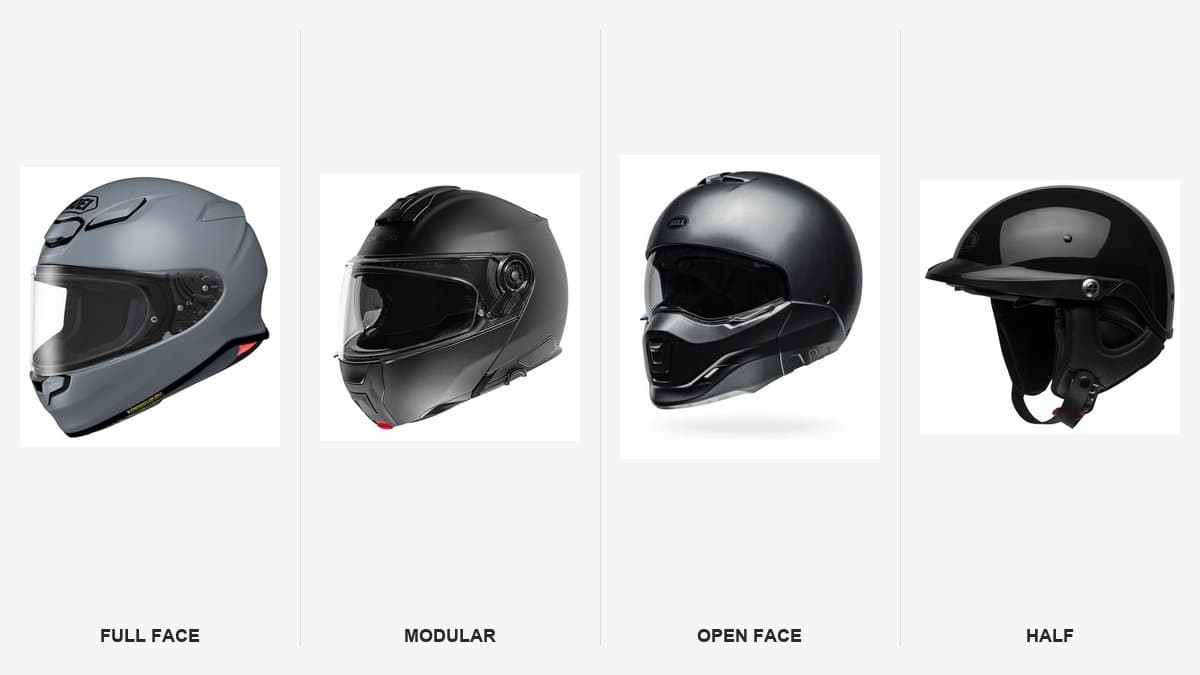
I've worn all 4 helmet types. Full face wins for beginners — here's noise data, safety stats, and top picks.
Best Armored Motorcycle Riding Jeans (2026)
I tested 9 armored riding jeans from $100-$457. The $140 Cortech AA Dyneema is the clear winner for most riders.