Best Motorcycle Battery Tender for Winter Storage
By 6FOOT4HONDA · 21 min read · Nov 2, 2026
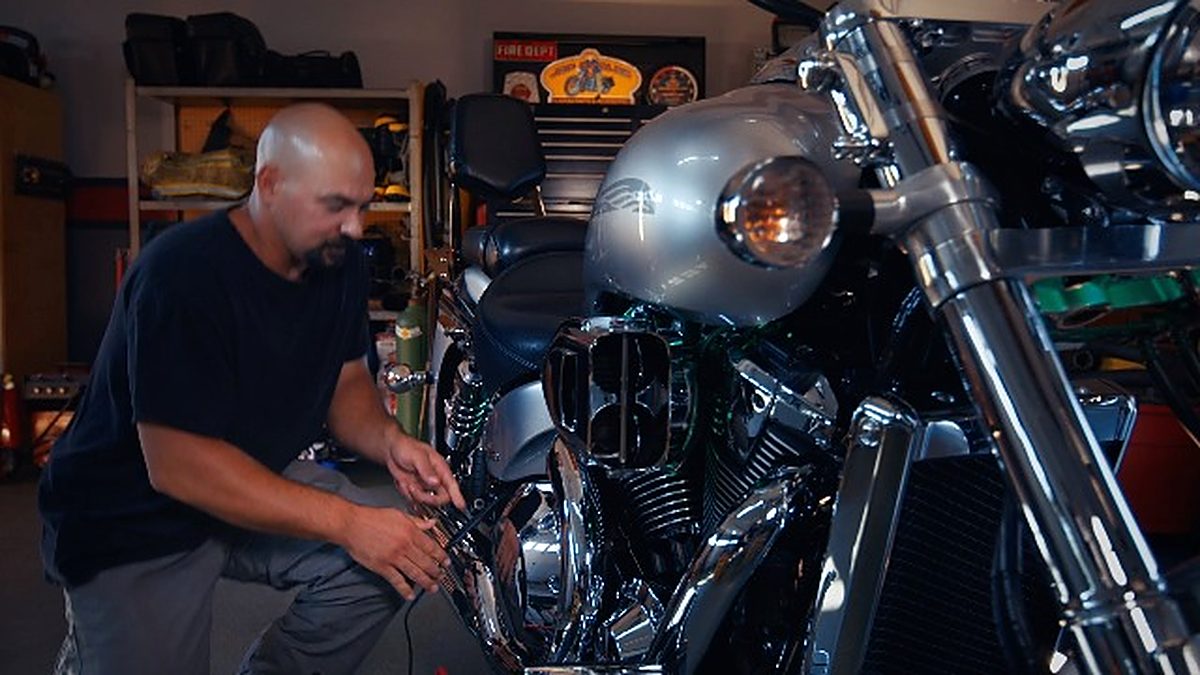
This post may contain affiliate links. We only recommend gear we'd use ourselves. If you click a link and make a purchase, we may earn a small commission at no extra cost to you.
In This Article
The best motorcycle battery tender for most riders is the Battery Tender Junior (~$38): plug it into the wall, click it onto the pigtail on your battery, and it keeps a regular lead-acid or AGM battery topped up all winter without cooking it. Running a lithium battery? Grab the NOCO GENIUS1 (~$30), which has a lithium mode and costs less than a tank of premium, or the OptiMate Lithium 4s (~$77) if you want a charger built only for lithium. Want one charger for the bike, the car and the snowblower? The CTEK MXS 5.0 (~$95) is the overbuilt pick.
All right guys, so here's the thing. Every single spring in Ontario it's the same story. First warm Saturday hits, the whole GTA wakes up at once, everybody runs to the garage, pulls the cover off, turns the key and... click. Click click click. Nothing. Dead battery. And now instead of riding you're on Amazon at 9 AM buying a new battery and waiting three days for it to show up while your buddies post riding stories without you. Bro. Pain.
I'm not gonna lie, I've been through hell with batteries. There was a video we recorded where my bike fully died and we had to wait for someone to come help for like an hour. And Tina's 600? Guys, that battery has been dead ever since I can remember. It's basically a running joke in this house at this point. So trust me when I say a $30-40 battery tender is the cheapest insurance you'll ever buy for your bike.
I'm gonna give you seven picks plus the one cheap cable everyone should have, explain what actually kills batteries over winter, and talk about the lithium thing because a lot of you are running lithium batteries now and nobody explains it properly. Let's go.
A motorcycle battery left sitting all winter with nothing on it slowly drains from self-discharge and the bike's own small draws, and a lead-acid battery that sits half-flat gets permanently damaged by sulfation. A smart battery tender like the Battery Tender Junior (~$38) or NOCO GENIUS1 (~$30) charges the battery, then switches to a float or maintenance mode so you can leave it plugged in all winter. Lithium batteries need a charger with a lithium mode, and should never be charged below freezing.
Quick Picks:
| Pick | Product | Why | Price |
|---|---|---|---|
| Best Overall | Battery Tender Junior 12V 750mA | The classic, plug it in and forget it | ~$38 |
| Best Budget + Lithium | NOCO GENIUS1 | Cheap, smart, has a lithium mode | ~$30 |
| Best for Lithium | OptiMate Lithium 4s 0.8A | Built only for LiFePO4 bike batteries | ~$77 |
| Best All-Rounder | CTEK MXS 5.0 | Bike, car, cold mode, recondition | ~$95 |
| Must-Have Add-On | Battery Tender Ring Terminal Harness | Permanent SAE pigtail for your battery | ~$10 |
Why Do Motorcycle Batteries Die Over Winter?
So a lot of people think the cold kills the battery. And the cold does make things worse, but bro, the real killer is just sitting there doing nothing for five months.
Here's what's actually happening. Every battery slowly loses charge on its own even when it's not connected to anything, that's called self-discharge. On top of that, your bike is sneaky. Even with the key off, stuff like the clock, the ECU memory and an alarm or a GPS tracker if you have one pulls a tiny bit of power 24/7. Tiny, but it adds up over November, December, January, February, March. That's like six years in Canadian winter time.
And here's the part that actually ruins the battery. When a regular lead-acid or AGM battery sits partly discharged, sulfate crystals build up on the plates. A little bit is normal and gets reversed when you charge it. But leave it sitting low for months and those crystals harden, and now the battery literally can't hold a charge like it used to. Battery University explains sulfation really well if you want the nerdy version, and the short story is: a lead-acid battery that sits under-charged for a long time gets permanently weaker. That's why your battery "worked fine last fall" and is garbage in April.
Does the Cold Make It Worse?
Yeah, two ways. Cold slows down the chemistry, so a battery that's at 70% feels way weaker when you hit the starter on a cold morning. And a flat battery can actually freeze. A fully charged lead-acid battery can handle way colder than anything Ontario throws at it, but a dead one has more water in the electrolyte and can freeze not that far below zero. Frozen battery can crack the case. Then it's done, bro. No tender saves that.
So the move is simple: keep it full, keep it full, keep it full. That's literally the whole job of a battery tender.
Battery Tender vs Trickle Charger: What's the Difference?
Okay this one confuses everybody, so real quick.
An old-school trickle charger just pushes a small current into the battery forever. It doesn't really care if the battery is full. Leave a dumb trickle charger on all winter and it can overcharge the battery, boil off the electrolyte, and cook it. That's the stuff your uncle had in the garage from 1994.
A battery tender or smart maintainer charges the battery up, then watches the voltage and drops down to a float or maintenance mode once it's full. When the voltage dips, it tops it back up. On, off, on, off, all winter, without overcharging. That's what you want. Every single pick on this list is a smart maintainer.
"Battery Tender" is actually a brand name that kind of became the word for all of these, like how everybody says Kleenex. So when you hear guys at Timmy's say "just throw a tender on it," they mean any smart maintainer, not necessarily the Battery Tender brand.
Don't leave a cheap, non-smart trickle charger on your bike all winter. If the box doesn't say it has an automatic float, maintenance or storage mode, it can overcharge and damage the battery. Every charger on this list switches to maintenance mode on its own.
What Are the Best Motorcycle Battery Tenders in 2026?
All right, here's the list. Seven chargers, from the $30 budget pick up to the overbuilt CTEK, plus the $10 cable that makes all of them easier.
1. Battery Tender Junior 12V 750mA — Best Overall

Battery Tender Junior 12V 750mA (021-0123)
The battery maintainer most riders end up with. Plugs straight into the wall, charges a 12V lead-acid or AGM motorcycle battery, then drops into float mode and keeps it topped off all winter without overcharging. Comes with alligator clips plus a ring-terminal pigtail you can leave on the battery, so plugging in takes two seconds. Not for lithium batteries.
Price: ~$38 | Output: 750mA, 12V | Batteries: Lead-acid, AGM, gel (no lithium) | Connection: SAE quick-disconnect, clips + ring-terminal pigtail included
Guys, there's a reason this little black box is in literally every motorcycle garage in North America. It's simple. Plug it into the wall, plug the SAE connector into the pigtail on your battery, light goes green when it's full, and you walk away until spring. That's it. No buttons, no modes, no reading a manual.
The pigtail is the best part, bro. You bolt the ring terminals onto your battery once, tuck the connector somewhere you can reach it, under the seat or poking out by the side panel, and from then on plugging in takes like two seconds. No pulling the seat off, no fighting alligator clips in a dark garage with your phone flashlight in your mouth.
Is 750mA enough? For a motorcycle battery sitting in storage, yeah, 100%. A tender's job is to maintain, not to fast-charge a dead battery. If your battery is already flat it's gonna take a while to bring it back, like a day or more depending on the size, but for keeping a healthy battery full all winter, 750mA is the sweet spot. It's also gentle, which small bike batteries actually like.
The catch: it's lead-acid only. If you put a lithium battery in your bike, skip this one and look at the NOCO or the OptiMate Lithium below. Battery Tender does sell a Junior 800mA version with a lithium switch for a few bucks more if you want the same simple setup for lithium.
2. NOCO GENIUS1 — Best Budget Pick (With a Lithium Mode)

NOCO GENIUS1 1A 6V/12V Smart Battery Charger
A tiny 1-amp smart charger and maintainer that works on 6V and 12V lead-acid, AGM and gel batteries plus 12V lithium, so it covers basically any bike in the garage. It has a temperature sensor that adjusts charging for hot or cold garages and a force mode for batteries that are so flat other chargers won't even recognize them. Comes with clamps and eyelet terminals.
Price: ~$30 | Output: 1A | Batteries: 6V + 12V lead-acid, AGM, gel, 12V lithium | Extras: Temperature compensation, force mode for flat batteries
Bro, NOCO is selling these like crazy, and when you see the price you get it. Thirty bucks for a smart charger that does lead-acid AND lithium? That's hella reasonable. It's cheaper than the Junior and it does more.
The thing I like most about it is the temperature sensor. It adjusts how it charges depending on how hot or cold it is, which matters when your bike is sitting in an unheated Ontario garage where it's -15 one week and +5 the next. The other thing is force mode. If your battery is so dead that a normal smart charger doesn't even detect it (yeah, that happens), NOCO lets you force it to start charging. That has saved a lot of batteries that people thought were done.
The catch: NOCO's buttons and modes are a little more "read the manual" than the Battery Tender. You pick the mode yourself, and you need to pick the right one, especially lithium. Also, I've seen guys on forums complain about the quality of NOCO's clamps and eyelet connectors over time, so treat the included leads as okay, not amazing. Also, NOCO uses its own X-Connect plug instead of SAE, so if you already have Battery Tender pigtails on your bikes, grab NOCO's SAE adapter so everything plugs together.
3. NOCO GENIUS2 — Best for Bigger Batteries and Multiple Vehicles

NOCO GENIUS2 2A 6V/12V Smart Battery Charger
The bigger brother of the GENIUS1 with double the output at 2 amps, so it recovers a low battery faster and handles bigger batteries on cruisers, baggers and touring bikes, plus your car or snowblower. Same 6V/12V support, lead-acid, AGM and 12V lithium modes, temperature compensation and force mode. Still small enough to hang on a hook in the garage.
Price: ~$50 | Output: 2A | Batteries: 6V + 12V lead-acid, AGM, gel, 12V lithium | Best for: Big-twin batteries, car + bike households
If you've got a big cruiser or a bagger with a chunky battery, or if you want one charger that also keeps your car alive when it sits, the GENIUS2 is the one. Same brains as the GENIUS1, just twice the juice. A low battery comes back faster, and on a bigger battery that's the difference between "ready tomorrow" and "ready the day after tomorrow."
For a sportbike or a little 300 sitting in storage all winter? Honestly the GENIUS1 is enough. Don't overthink it, bro. Buy the 2 if you have bigger batteries, multiple vehicles, or you just like having the extra speed when something goes flat in the middle of riding season.
4. Battery Tender Plus 12V 1.25A — Faster Recovery, Same Simple Setup

Battery Tender Plus 12V 1.25A (021-0128)
The bigger Battery Tender with 1.25 amps instead of the Junior's 750mA, so it brings a low battery back faster and suits bigger cruiser and touring batteries. Same plug-in-and-forget design: charges, then floats the battery and holds it there for months without overcharging. Uses the same SAE quick-disconnect as the Junior, so any Battery Tender pigtail works. Lead-acid and AGM only.
Price: ~$59 | Output: 1.25A, 12V | Batteries: Lead-acid, AGM (no lithium) | Connection: SAE quick-disconnect, clips + ring-terminal pigtail included
This is the green box a lot of you probably remember seeing in your dad's garage. The Plus is basically the Junior with more amps, so if your battery gets low during the season or you ride a bigger bike, it recovers faster. That reviewer above has had his for ten years. Ten years bro. That's a long time for a $59 box.
Junior or Plus? For pure winter storage on a sportbike or standard bike, the Junior is enough and costs less. Go Plus if you've got a big-twin battery, you want faster top-ups during the season, or you're the guy in the group who everybody calls when their battery is flat. Both use the same SAE connector, so your pigtails work with either one.
The catch: still lead-acid only. And honestly, at ~$59 it's right in NOCO GENIUS2 territory, and the NOCO does lithium too. The Plus wins on dead-simple "no buttons" use. The NOCO wins on features.
5. CTEK MXS 5.0 — Best All-Rounder for Bike, Car and Cold Garages

CTEK MXS 5.0 12V Battery Charger and Maintainer (40-206)
An overbuilt 12V smart charger from the Swedish brand a lot of car guys swear by. Charges at up to 4.3 amps for cars or a gentler small-battery setting for motorcycles, has a reconditioning mode for tired lead-acid batteries, a cold-weather mode, and a maintenance mode you can leave on all winter. Weatherproof housing. Lead-acid and AGM only, no lithium.
Price: ~$95 | Output: Up to 4.3A (small-battery mode for bikes) | Batteries: 12V lead-acid, AGM, gel (no lithium) | Extras: Recondition mode, cold-weather mode, weatherproof
If you want one charger that handles the bike, the car, the truck, and the snowblower, and you're cool paying for it, the CTEK MXS 5.0 is the one. It's built like a tank, it's weatherproof, and the modes are actually useful. There's a cold-weather setting that bumps the charging voltage a bit when it's freezing, which in a Canadian garage in January is exactly when you need it. And the recondition mode can sometimes bring back a lead-acid battery that's gotten weak from sitting.
The catch: a few of them, I'm not gonna lie. First, it's ~$95, which is three NOCO GENIUS1s. Second, no lithium support at all. Third, CTEK uses its own Comfort Connect plug, not the SAE plug that Battery Tender and NOCO pigtails use. So if you already have SAE pigtails on all your bikes, you'll need CTEK's leads or an adapter. Not a dealbreaker, just annoying. This is a "car guy who also rides" pick.
One pigtail per bike, one charger for the garage. Put a cheap SAE pigtail on every battery you own (bike, Tina's bike, the lawn tractor) and you can move one charger between them in two seconds. Battery Tender and OptiMate use SAE-style leads. NOCO uses its own X-Connect plug (NOCO sells an SAE adapter), and CTEK uses its own Comfort Connect plug, so for those two, stick with their leads or grab the adapter.
6. OptiMate Lithium 4s 0.8A — Best for Lithium Batteries

OptiMate Lithium 4s 0.8A (TM-471)
A charger built only for 12.8V/13.2V LiFePO4 lithium motorcycle batteries, the kind Shorai, Antigravity and other lithium brands sell. Charges at a gentle 0.8 amps, can wake up a lithium battery whose built-in protection has shut it off, then switches to a lithium-safe maintenance program for long-term storage. Comes with SAE leads, clips and a weatherproof permanent lead. Lithium only, not for lead-acid.
Price: ~$77 | Output: 0.8A | Batteries: 12.8V/13.2V LiFePO4 lithium only | Extras: Wakes up BMS-protected batteries, lithium-safe storage program
If you spent $150-250 on a lithium battery to save a few pounds, do not cheap out on the charger, bro. Lithium batteries hate being charged like lead-acid batteries. A lot of regular chargers have a desulfation or recondition mode that sends voltage pulses into the battery, and that's great for lead-acid and bad news for lithium.
The OptiMate Lithium 4s is made only for LiFePO4 bike batteries, and that's the whole point. It charges gently, it knows how to wake up a lithium battery whose internal protection board has shut it off after going too low, and then it runs a storage program that's safe to leave on. OptiMate is a big name in the powersports world, and a lot of dealers use their chargers in the shop.
The catch: it's lithium only. If you have a lead-acid bike and a lithium bike, the NOCO GENIUS1 or GENIUS2 covers both with one box for less money. The OptiMate is for the guy who wants the most lithium-specific charger out there.
7. OptiMate 4 Quad Program — Best Premium Pick for Lead-Acid and Lithium

OptiMate 4 Quad Program (TM631)
OptiMate's premium motorcycle charger that handles both 12V lead-acid/AGM and 12.8V lithium batteries with a 9-step program. It tests the battery, recovers deeply discharged batteries, charges, and then runs a maintenance cycle that checks the battery on its own over the winter. OptiMate pitches it for BMW and other CAN-bus bikes, and it uses OptiMate's SAE-style leads.
Price: ~$100 | Output: 1.25A | Batteries: 12V lead-acid, AGM, gel + 12.8V lithium | Extras: Battery testing, recovery, 9-step program, CAN-bus bikes
This is the one for the guy with a BMW in the garage or the guy who just wants the nicest maintainer available. It does lead-acid AND lithium, it tests the battery and tells you what's going on with the LEDs, and it can recover batteries that have gone really low. The OptiMate 4 has been a favourite with BMW riders for years because BMW's CAN-bus electrical system doesn't always play nice with random chargers, and OptiMate builds for that.
The catch: ~$100 for a maintainer is a lot. For a normal sportbike or cruiser, the NOCO GENIUS1 does lead-acid and lithium for a third of the price. But if you've got an expensive bike with a picky electrical system, this is the one I'd cop.
Must-Have Add-On: Battery Tender Ring Terminal Harness

Battery Tender Ring Terminal Harness with SAE Quick Disconnect (081-0069-6)
An 18-inch pigtail with ring terminals on one end and the SAE quick-disconnect on the other. Bolt it to your battery once, route the plug somewhere easy to reach, and you can connect a tender in two seconds without pulling the seat. Works with Battery Tender and other SAE-style chargers (NOCO with its SAE adapter), and it's cheap enough to put one on every bike.
Price: ~$10 | Length: 18 inches | Connection: Ring terminals to SAE quick-disconnect
Guys, buy a couple of these. Seriously. Ten bucks. Put one on every bike you own. Most chargers come with one pigtail, but the second you have two bikes (or a wife with a 600 whose battery is always dead, just saying) you want a pigtail on each so one charger can move between them. A lot of heated gear and USB chargers also plug into SAE, so the same pigtail does double duty in the spring.
Battery Tender Jr vs NOCO vs OptiMate vs CTEK: Which One Wins?
Okay here's the whole list side by side.
| Charger | Price | Output | Lithium? | Plug type | Best for |
|---|---|---|---|---|---|
| Battery Tender Junior | ~$38 | 750mA | No | SAE | Plug-and-forget winter storage |
| NOCO GENIUS1 | ~$30 | 1A | Yes | NOCO X-Connect (SAE adapter sold) | Budget pick, mixed garage |
| NOCO GENIUS2 | ~$50 | 2A | Yes | NOCO X-Connect (SAE adapter sold) | Big batteries, car + bike |
| Battery Tender Plus | ~$59 | 1.25A | No | SAE | Faster recovery, cruisers |
| CTEK MXS 5.0 | ~$95 | Up to 4.3A | No | CTEK Comfort Connect | Bike + car, cold garages |
| OptiMate Lithium 4s | ~$77 | 0.8A | Lithium only | SAE-style | Dedicated lithium charger |
| OptiMate 4 Quad Program | ~$100 | 1.25A | Yes | SAE-style | BMW/CAN-bus, premium |
Battery Tender Junior vs NOCO GENIUS1: this is the big one everybody argues about on the forums. The Junior is simpler, it literally has no buttons, and the pigtail setup is perfect. The NOCO is cheaper, does lithium, has the temperature sensor and force mode, but you have to pick the mode. If you have a regular lead-acid or AGM battery and you just want it to work, Junior. If you have lithium, or you like the extra features, NOCO.
NOCO vs OptiMate for lithium: NOCO is the budget way to charge lithium safely. OptiMate is the specialist. Both work. If your lithium battery cost $250, the extra money for the OptiMate isn't crazy.
CTEK: amazing charger, but it's more of a car-and-bike all-rounder. For a bike-only garage, it's overkill and the plug doesn't match everybody else's.
What About Lithium Motorcycle Batteries?
All right, this is the part nobody explains properly, so listen up.
Lithium bike batteries (usually LiFePO4, lithium iron phosphate) are lighter, they crank hard, and they lose charge way slower when they sit than lead-acid does. So a lot of guys say you don't even need a tender on lithium. And honestly? For some batteries that's kind of true. A healthy lithium battery that's disconnected from the bike can sit for a long time and still be okay.
But here's what can mess you up:
- Wrong charger mode. Desulfation, recondition, or "repair" modes are made for lead-acid. Don't use them on lithium. Use a charger with a proper lithium mode (NOCO GENIUS1/2, OptiMate Lithium, OptiMate 4 Quad Program) or one built only for lithium.
- Charging below freezing. This is the big one for us Canadians. Lithium batteries shouldn't be charged below 0°C (32°F), because charging cold can damage the cells permanently. Battery University's page on charging at low temperatures covers why. Some lithium batteries have a built-in protection system that blocks cold charging, but don't bet your $250 battery on it.
- Parasitic drain. Your bike's alarm, clock or GPS tracker doesn't care what kind of battery you have. It'll drain lithium too, and if a lithium battery gets drained too low, its protection board can shut it off completely. Then you need a charger that can wake it up.
So what do I tell my lithium guys? If your garage stays above freezing, a lithium-safe maintainer on all winter is fine. If your garage drops below zero (most Ontario garages, bro), either pull the battery and keep it inside somewhere above freezing, or disconnect it, charge it to full in a warm spot, and check the voltage once a month. Then charge it inside, not in the freezing garage.
Cold garage + lithium battery = be careful. Don't charge a lithium motorcycle battery below 0°C (32°F). If your garage freezes, bring the battery inside to charge it, or keep it inside for the winter. Lead-acid and AGM batteries are fine to maintain in a cold garage as long as they stay charged.
How Do You Hook Up a Battery Tender on a Motorcycle?
Easy. Like ten minutes the first time, two seconds every time after that.
- Key off. Find your battery, usually under the seat. On a lot of sportbikes you need to pull the rider seat, on some bikes it's behind a side panel. Your owner's manual will show you.
- Disconnect negative first, then positive. Black (-) off first, red (+) off second. This stops you from shorting anything with your wrench.
- Add the pigtail ring terminals. Put the red ring terminal on the positive post and the black ring terminal on the negative post, on top of the bike's own cables.
- Reconnect positive first, then negative. Red (+) back on and tight, then black (-) back on and tight. Don't overtighten and strip the little bolts. A basic motorcycle tool kit has everything you need.
- Route the plug. Run the SAE connector somewhere you can reach without pulling the seat, and keep it away from hot exhaust parts and anything that moves. Zip tie it. Keep the dust cap on when you ride.
- Plug in the tender. Connect the charger to the pigtail first, then plug the charger into the wall. Watch the lights. Once it goes to the green or full light, you're Gucci. Walk away until spring.
Check the polarity on the SAE plug before you connect a second brand of charger. Battery Tender and most SAE leads line up, but some older or no-name SAE accessories are wired backwards. Most smart chargers have reverse-polarity protection, but it takes ten seconds to check.
If you can't get power to the bike at all (outdoor storage, storage unit, apartment parking), pull the battery out, bring it inside, and put the tender on it on a workbench. Way better than leaving it in the bike with nothing on it. My complete winterization checklist covers the rest: fuel stabilizer, oil change, tires and the cover.
Oh and by the way guys, while you're in there with the seat off, this is the perfect time to do an oil change before storage too. Old oil sitting in the engine all winter isn't great. I've got a step-by-step oil change guide if you've never done it yourself. And a breathable motorcycle cover is the other $50 that saves you headaches in the spring. But anyways, back to batteries.
Which Battery Tender Is Right for You?
Here's the cheat sheet, bro:
- Normal bike, normal lead-acid or AGM battery, you want zero thinking: Battery Tender Junior. Done.
- Cheapest smart option, or you have a lithium battery: NOCO GENIUS1.
- Big cruiser/bagger battery, or you also want to charge the car: NOCO GENIUS2 or Battery Tender Plus.
- One charger for the whole garage, cold winters, car guy: CTEK MXS 5.0.
- Expensive lithium battery, want the specialist: OptiMate Lithium 4s.
- BMW or premium bike with a picky electrical system: OptiMate 4 Quad Program.
- Everybody: a couple of ring terminal pigtails. Ten bucks.
Real talk, these Amazon links are affiliate links, so if you cop one through here I get a small cut at no extra cost to you, and that's what keeps this site running. I'd tell you the same picks either way. And if you want the full picture on keeping your bike healthy all year, my motorcycle maintenance guide has the whole schedule, plus a pre-ride inspection routine for the first ride of spring.
Frequently Asked Questions
Can I leave a battery tender on my motorcycle all winter?
Yes, as long as it's a smart battery tender, and that's exactly what they're made for. A smart maintainer like the Battery Tender Junior, NOCO GENIUS1 or OptiMate charges the battery to full, then drops into a float or maintenance mode where it only adds power when the voltage starts to dip. That means it won't overcharge or cook the battery even if it stays plugged in from November to April. What you should not leave on all winter is an old dumb trickle charger that pushes current forever with no automatic shut-off, because that can overcharge and boil the battery. Check the box or manual for words like float mode, maintenance mode or storage mode. It's also smart to peek at the charger once in a while to make sure the light still shows full and nothing got unplugged. Lithium batteries are the exception in a freezing garage, so read the lithium section above first.
Will a battery tender work on a lithium motorcycle battery?
Only if the charger has a lithium mode or is built for lithium. Lithium iron phosphate (LiFePO4) motorcycle batteries charge differently from lead-acid, and the desulfation or recondition pulses that help a lead-acid battery are bad news for lithium. The original Battery Tender Junior and Battery Tender Plus are lead-acid only, so don't use those on lithium. Good lithium options are the NOCO GENIUS1 and GENIUS2 in lithium mode, the OptiMate Lithium 4s, which is made only for lithium, and the OptiMate 4 Quad Program, which handles both. Battery Tender also sells a Junior 800mA version with a lithium switch. The other big rule is temperature, because lithium batteries should not be charged below 0°C (32°F). If your garage freezes, charge the battery inside. Lithium also self-discharges slowly, so a disconnected, fully charged lithium battery checked monthly is a fine plan too.
Should I take the battery out of my motorcycle for winter?
You only need to take it out if you can't run a tender on the bike. If your bike is in a garage with an outlet and the battery is lead-acid or AGM, the easiest move is to leave it in, put a pigtail on it and plug in a smart tender for the whole winter. Pull the battery if you store outside, in a storage unit with no power, or in a parking garage, or if you have a lithium battery in a garage that drops below freezing. When you pull it, take the negative cable off first, then the positive, and keep the battery somewhere dry and above freezing, like a basement shelf. Then either keep a tender on it or charge it once a month. When you put it back in spring, connect positive first, then negative. Either way, the goal is the same: never let the battery sit half-flat for months, because that's what kills it.
How many amps should a motorcycle battery tender be?
For keeping a healthy motorcycle battery topped up over winter, anywhere from about 0.75 to 2 amps is perfect. Most bike batteries are small, so a gentle maintainer like the 750mA Battery Tender Junior or the 1-amp NOCO GENIUS1 is plenty for storage. A tender's job is to maintain a battery that's already charged, not to fast-charge a dead one. More amps mostly helps when the battery is already low and you want it back sooner, or when you have a bigger battery like on a big cruiser or touring bike. That's where the 1.25-amp Battery Tender Plus or the 2-amp NOCO GENIUS2 make sense. Really high outputs meant for cars can be too aggressive for a small powersports battery unless the charger has a small-battery or motorcycle mode, like the CTEK MXS 5.0 does. When in doubt, check your battery's capacity and pick a charger the manufacturer rates for that size.
Can a battery tender bring back a dead motorcycle battery?
Sometimes, but don't expect miracles. If the battery just went flat recently, a smart charger can usually bring it back, and it'll take a while on a low-amp tender, sometimes a full day or more. If the battery is so low that a normal charger won't even recognize it, chargers like the NOCO GENIUS1 and GENIUS2 have a force mode, and the OptiMate chargers have a recovery step for deeply discharged batteries. The CTEK MXS 5.0 has a recondition mode for tired lead-acid batteries. But if a lead-acid battery sat dead for months, sulfation may have done permanent damage, and it might charge up and then die again fast or fail to crank the bike. A battery that froze or has a cracked or swollen case is done, so recycle it and don't charge it. After charging, a healthy 12V lead-acid battery should rest around 12.6 to 12.8 volts. If it drops way lower than that within a day or two, it's time for a new battery.
Is a car battery charger OK for a motorcycle?
It can be, but be careful. A lot of car chargers put out 6, 10 or even 25 amps, which is way too much for a small motorcycle battery and can overheat it or shorten its life. If you want to use one charger for both, pick one that has a motorcycle, small-battery or low-amp setting, and a smart maintenance mode. The CTEK MXS 5.0 and the NOCO GENIUS2 are good examples, because both handle cars and bikes properly. Old manual car chargers with no automatic shut-off should never be left on a motorcycle battery overnight, never mind all winter. Also, don't use a car's running engine to jump-start a motorcycle if you can avoid it, because a running car's charging system can push more current than the bike's electrical system likes. If you do need a jump-start, connect to the car with its engine off. Honestly, a dedicated $30-40 bike tender is cheaper than replacing a cooked battery.
Do I need a battery tender if I ride every week?
Probably not during riding season, as long as your rides are long enough to recharge the battery. Your bike's charging system tops the battery up while you ride, so a 20-minute ride or longer every week usually keeps a healthy battery happy. Where people get caught is short rides, like five minutes to the gas station and back, because starting the bike uses a big chunk of charge and a short ride doesn't put it back. Bikes with lots of accessories, like heated grips, heated gear, USB chargers, extra lights, alarms or GPS trackers, also drain batteries faster. A tender is worth it if you ride less than once a week, if your bike sits for two weeks or more, or if the battery is a few years old and getting weak. And for winter storage, yes, everyone needs one. In Canada, that's five months of sitting, and that's exactly when batteries die. A $30-40 tender is cheaper than a new battery every spring.
All right guys, that's the battery talk. Put a tender on it, put a pigtail on every bike, and when that first warm day hits in April you're gonna turn the key and hear that thing fire up while everybody else is on Amazon ordering a battery. That's the best feeling, bro. If this helped you out, go check the winterization checklist next, and I'll catch you guys in the next one. Let's go.
Written by
6FOOT4HONDAMotorcycle creator with 1.2M+ subscribers on YouTube and 2M+ across all platforms. Riding and filming since 2016, with 1,000+ videos covering beginner riding tips, gear reviews, stunts, and road trips. Every product recommended on this site has been personally tested on real rides — from highway touring to track days to stunt sessions. Based in the US, riding year-round.
Related Articles
How to Store Your Motorcycle for Winter: The Complete Winterization Checklist
Don't let your bike rot over winter. Fuel stabilizer, battery maintenance, tire care, and everything else you need to do before parking it for months.
Spring Motorcycle Prep Checklist (2026)
The complete spring prep checklist with actual specs — voltage numbers, tire minimums, chain slack, and every tool you need to get riding again.
Motorcycle Maintenance for Beginners: The Complete Guide (2026)
Everything you need to know about maintaining your motorcycle - chain care, tires, cleaning, storage, security, and the real cost of ownership. Your complete maintenance hub.