Motorcycle Road Hazards: 15 Dangers Every New Rider Must Know
By 6FOOT4HONDA · 14 min read · Mar 5, 2026
This post may contain affiliate links. We only recommend gear we'd use ourselves. If you click a link and make a purchase, we may earn a small commission at no extra cost to you.
In This Article
The most dangerous road hazards for motorcyclists are left-turning vehicles, intersections, blind spots, gravel, wet roads, potholes, railroad tracks, tar snakes, edge breaks, road debris, sand, crosswinds, wildlife, parked cars (dooring), and construction zones. In 2023, 6,335 motorcyclists were killed on U.S. roads according to NHTSA -- a fatality rate 28 times higher than passenger car occupants per mile traveled. The vast majority of these deaths were preventable with proper hazard awareness and the right response techniques.
That number is not meant to scare you off riding. It's meant to make you pay attention. Every one of those 15 hazards has a specific technique for handling it, and once you know what to look for, you'll start seeing threats before they become emergencies. That's the difference between a rider who crashes in year one and a rider who's still on two wheels decades later.
This guide covers every major road hazard you'll face as a new motorcyclist -- what it is, why it's specifically dangerous on two wheels, and exactly what to do when you encounter it.
Why New Riders Are Most At Risk
Your first year on a motorcycle is statistically your most dangerous. NHTSA data shows that riders with less than one year of experience are dramatically overrepresented in crash statistics, and the reason isn't speed or recklessness -- it's hazard recognition.
An experienced rider approaching an intersection is already scanning for left-turning cars, checking mirrors for tailgaters, noting the road surface, and planning an escape route. A new rider is thinking about which gear they're in. It's not a skill gap -- it's an awareness gap.
The good news: hazard awareness is the fastest safety gain you can make. You don't need years of seat time to learn what to watch for. You just need someone to tell you. That's what this article is for.
Once you know these 15 hazards exist, you'll start seeing them everywhere. And seeing them is 90% of surviving them.
1. Left-Turning Vehicles
This is the number one killer of motorcyclists. According to NHTSA, 42% of fatal multi-vehicle motorcycle crashes involve another vehicle turning left in front of the rider. The scenario is always the same: a car is waiting to turn left at an intersection, the driver looks right at you, and pulls out anyway.
Riders call this SMIDSY -- "Sorry Mate, I Didn't See You." It's the most infuriating phrase in motorcycling because it's almost always true. Car drivers look for car-shaped objects. A motorcycle's narrow profile doesn't register in their visual scan, especially against a busy background.
How to handle it:
- Cover your brakes at every single intersection. Two fingers on the front brake lever, foot hovering over the rear brake. This shaves a full second off your reaction time.
- Watch the car's front wheels, not the car itself. The wheels tell you what the car is about to do before the body moves.
- Assume they don't see you. Always. Even if you make eye contact.
- Slow down when approaching intersections with oncoming vehicles waiting to turn.
- Position yourself behind the car in front of you -- using another vehicle as a blocker.
Never assume a driver sees you just because you made eye contact. Drivers look through motorcycles constantly -- their brain registers "no car" and proceeds to turn. Ride like you're invisible, because to most drivers, you are.
2. Intersections
Nearly 50% of all motorcycle accidents happen at intersections. That includes left-turners, red-light runners, distracted drivers pulling out from stop signs, and rear-end collisions at traffic lights.
A green light doesn't mean it's safe to proceed. It means the light is green. That's it. Someone running the red from the cross street doesn't care what color your light is.
How to handle it:
- Use the SEE strategy from the MSF course: Search the intersection for threats, Evaluate the risk level, Execute your plan (slow down, change lanes, cover brakes).
- When a light turns green, pause for 1-2 seconds and scan left-right before proceeding. This catches red-light runners.
- When stopped at a red light, watch your mirrors. Flash your brake light by tapping the lever to make yourself more visible to approaching traffic. Keep the bike in gear with an escape route planned in case someone behind you isn't stopping.
- Don't be the first one into the intersection when the light changes. Let a car go first -- use them as a shield.
3. Blind Spots
NHTSA reports that in 41% of multi-vehicle motorcycle crashes, the other driver stated they did not see the motorcycle. A huge portion of these are lane-change collisions where the rider was sitting in the car's blind spot.
Every car has blind spots -- the areas not visible in side mirrors or the rearview mirror. On most cars, these are at the rear quarters, roughly where your face would be if you're riding alongside a car one lane over. You're in the worst possible position: invisible to the driver and directly in the path of a lane change.
How to handle it:
- Never linger next to a car. Either pass through quickly or drop back where you're visible in their mirrors.
- Ride in the portion of your lane where you're visible in the most mirrors. Usually this means the left third of your lane when in the right lane, and the right third when in the left lane.
- Watch for signs a car is about to change lanes: turn signal (if you're lucky), head checks, drifting within their lane, or speed changes.
- If you can see the driver's eyes in their mirror, they can see you. If you can't, assume you're invisible.
4. Gravel and Loose Surfaces
Riders call gravel "motorcycle marbles" because that's exactly what it feels like under your tires. A car with four wide contact patches barely notices a patch of loose gravel. A motorcycle with two narrow tire contact patches the size of credit cards loses traction instantly.
You'll find gravel at the corners of intersections (where cars drag it from shoulders), at the apexes of rural curves, in construction zones, near freshly graded driveways, and on any road that borders a dirt or gravel lot.
How to handle it:
- If you see gravel in a turn, do NOT grab the brakes. Braking on a loose surface while leaned over is how you lowside.
- Ride through it as upright as possible. Reduce lean angle, keep a light grip on the bars, and maintain steady throttle.
- If you're in a straight line and hit gravel, brake gently with the rear brake. The front brake on a loose surface can wash out the front wheel.
- Scan 12 seconds ahead and you'll spot most gravel patches before you're in them.
If you're not sure how to handle your bike on different surfaces, our complete guide to riding a motorcycle covers the fundamentals of traction management.
5. Wet Roads and Oil Slicks
The first 15-30 minutes of a rainstorm are the most dangerous riding conditions you'll face outside of ice. When rain first hits dry pavement, it lifts oil, coolant, rubber particles, and road grime to the surface, creating a greasy film before enough water accumulates to wash it away. According to the Federal Highway Administration, 75% of weather-related crashes occur on wet pavement.
Rainbow-colored patches on the road surface are oil. You'll see them most often at intersections where cars idle and drip fluids, at gas stations, and in drive-through lanes. Painted road markings -- crosswalks, lane lines, arrows -- become nearly as slick as ice when wet.
How to handle it:
- Reduce speed by at least 30% in wet conditions.
- Avoid painted lines, manhole covers, and metal plates like they're coated in butter.
- Increase following distance to 4+ seconds.
- Use smooth inputs on throttle, brakes, and steering. Aggressive inputs break traction on wet surfaces.
- If you can, wait out the first 20 minutes of a rainstorm. The roads are significantly less slippery once the initial oil film washes away.
For more on building confidence in all conditions, read our complete guide to riding a motorcycle.
The most dangerous spot on a wet road is the center of the lane where cars drip oil, coolant, and transmission fluid. Ride in the tire tracks (left or right third of the lane) where car tires have wiped the pavement cleaner.
6. Potholes and Uneven Pavement
A pothole that a car straddles or barely notices can swallow a motorcycle's front wheel, bend a rim, blow a tire, or throw you over the handlebars. The smaller your wheel, the worse the impact -- which is why sport bikes with 17-inch wheels are more vulnerable than adventure bikes with 21-inch front wheels.
Potholes are worst in spring after freeze-thaw cycles break up pavement. Uneven surfaces -- where one lane is higher than the adjacent lane due to repaving -- create edge traps (covered below) that can grab your front wheel.
How to handle it:
- Scan 12 seconds ahead. At 30 mph that's about 500 feet. At 60 mph it's roughly 1,000 feet. This gives you time to see potholes and plan around them.
- If you can't avoid a pothole: stand slightly on the pegs to absorb the impact with your legs, loosen your grip on the bars, and hit the pothole straight on (perpendicular), not at an angle.
- Never swerve abruptly to avoid a pothole. A controlled hit is safer than a panic swerve into traffic.
7. Railroad Tracks and Metal Grates
Railroad tracks, bridge grating, steel construction plates, and manhole covers all share the same problem: metal is slippery, especially when wet. Wet steel has a friction coefficient close to ice. Cross it wrong and your tires will slide out from under you.
The additional danger with railroad tracks is the angle. If you cross tracks that run parallel or at a shallow angle to your direction of travel, your front tire can drop into the groove between the rail and the pavement and get trapped.
How to handle it:
- Cross railroad tracks and metal grates as close to perpendicular (90 degrees) as possible. If the tracks cross the road at an angle, adjust your line so you cross them straight on, even if that means briefly riding at an angle to traffic.
- Stand on the pegs slightly to absorb the bump.
- Maintain steady throttle across the surface. Don't brake on metal.
- On wet metal, keep the bike as upright as possible. Reduce lean angle to near zero.
8. Tar Snakes
Tar snakes are the black, rubbery lines road crews use to seal cracks in the pavement. They're everywhere, and most riders underestimate them. In dry, cool weather they're mildly annoying. In heat, they soften and get slippery. When wet, they might as well be banana peels.
You can't always avoid them -- on some roads, tar snakes cover so much surface area that dodging them would require weaving constantly. The real danger is hitting them mid-corner while leaned over.
How to handle it:
- Reduce lean angle when riding over tar snakes in a corner. The less lean, the more grip margin you have.
- Don't brake or accelerate aggressively on tar snakes. Smooth, steady inputs only.
- In hot weather, be extra cautious -- soft tar snakes deform under your tires, reducing grip even more.
- On heavily tar-snaked roads, ride in the tire track where cars have compressed them flat.
9. Edge Breaks and Pavement Drop-Offs
An edge break is where the road surface drops off 1-2 inches at the edge -- usually where pavement meets a gravel shoulder, or where a road has been repaved and the new surface is higher than the adjacent lane. If your front tire drops off this ledge, the natural reaction is to yank the handlebars to get back on the road. That's exactly the wrong thing to do.
Yanking the bars causes the front wheel to hit the edge of the pavement at a sharp angle, which deflects the wheel and can throw you. Riders crash on edge breaks not because of the drop -- but because of their own reaction to it.
How to handle it:
- If your front tire drops off the edge, do NOT yank the handlebars back up.
- Gradually reduce speed with gentle braking.
- When you're going slow enough, angle back onto the pavement at a shallow angle (about 30-45 degrees). You want the tire to climb the edge, not hit it head-on.
- Alternatively, find a driveway or other gradual transition to get back on the pavement.
Edge breaks catch more riders than you'd expect because they're invisible until you're on top of them. When riding on unfamiliar roads, stay away from the edge of the pavement -- especially on roads where repaving has created height differences between lanes.
10. Road Debris
Tire treads (known as "road gators"), cargo that fell off trucks, dead animals, lumber, ladders, mattresses -- highways and urban roads are littered with things that don't belong there. A car can run over a 2x4 and barely notice. On a motorcycle, that same board can flip your front wheel sideways.
How to handle it:
- Scan constantly. Most debris is visible from a distance if you're looking for it.
- Sometimes riding over debris is safer than swerving. A controlled straight-line pass over a small object at speed is often less dangerous than a panic swerve into traffic. This applies to flat objects like a piece of cardboard or a thin tire tread.
- For large debris, brake hard in a straight line first, THEN swerve once you've scrubbed speed. Braking and swerving simultaneously at full lean is how you go down.
- Maintain a generous following distance so you can see debris before the car in front of you reveals it at the last second.
11. Sand
Sand behaves like gravel but worse -- it's finer, harder to see, and can accumulate in thin layers that look like normal pavement until your tire breaks loose. You'll find it at the corners of intersections (from winter road treatment), at road edges, on roads near beaches or desert areas, and after storms that wash sand onto pavement.
How to handle it:
- Keep the bike upright through sandy patches. Any lean angle on sand is asking for a lowside.
- Maintain steady throttle. Don't accelerate or brake aggressively.
- If you enter a sandy corner, gently straighten the bike as much as possible, ride through the sand, then re-establish your lean once you're on clean pavement.
- After winter, sand and salt residue can persist on roads well into April and May, especially on secondary roads that get less traffic.
12. Wind
Crosswinds on open bridges, highway overpasses, gaps between buildings, and flat agricultural land can hit you with zero warning. But the real surprise for new riders is semi-truck wind blast. When a big rig passes you -- or you pass it -- you get pushed away by its bow wave, then sucked toward it by the vacuum it creates. The push-pull happens in about one second.
How to handle it:
- Lean slightly into a crosswind to maintain your lane. This feels wrong but works.
- Grip the tank with your knees and keep your arms relaxed. Your lower body anchors you to the bike while your loose arms absorb the buffeting.
- When passing or being passed by a semi, anticipate the push-pull. Move to the far side of your lane (away from the truck) and maintain firm knee grip.
- If wind is gusting hard enough to move you laterally within your lane, slow down. Wind force increases exponentially with speed.
Consistent knee grip and relaxed arms will get you through almost any wind situation safely.
13. Wildlife and Animals
Deer are responsible for over 50,000 motorcycle-involved incidents annually in the U.S. Dawn and dusk are the highest-risk times, and fall (October-November) is deer mating season, which means they're moving unpredictably and in groups. If you see one deer, expect more.
How to handle it:
- At dawn, dusk, and nighttime on rural roads, reduce speed to give yourself stopping distance within your headlight range.
- For large animals (deer, elk, dogs): brake hard in a straight line. Do everything you can to stop or minimize impact speed. A collision with a deer at 60 mph is potentially fatal. At 30 mph, it's survivable.
- For small animals (squirrels, rabbits, birds): as terrible as it sounds, ride straight through. Swerving to avoid a squirrel can put you into oncoming traffic or off the road, which is vastly more dangerous than the impact with a small animal.
- Use high beams at night when no oncoming traffic is present. Animal eyeshine (reflected light from their eyes) is often the first warning you get.
The instinct to swerve for animals is strong, but on a motorcycle, a panic swerve at highway speeds is more likely to kill you than the animal itself. For large animals, brake hard and straight. For small animals, hold your line and maintain control of the bike.
14. Parked Cars (Dooring)
If you ride in any urban environment, dooring is a real threat. A car door opening into your lane of travel is essentially a steel wall appearing two feet in front of you with zero warning. The driver doesn't check mirrors. They don't look. They just open the door.
How to handle it:
- Maintain a minimum of 3-4 feet between your bike and parked cars. More if speed allows.
- Scan parked cars for occupants. Look for heads in windows, movement inside, brake lights or reverse lights illuminating, and wheels turning.
- In heavy urban traffic with parked cars on your right, ride in the left third of your lane.
- If you see a car that just parked, assume the door will open. It's a near-certainty within the first 30 seconds after the engine shuts off.
15. Construction Zones
Construction zones combine almost every hazard on this list into one stretch of road: loose gravel, uneven pavement, steel plates, narrow lanes, sudden lane shifts, distracted workers, and confused drivers all in the same quarter-mile. The speed limit is reduced for a reason, and on a motorcycle, you should be going even slower than the posted construction zone limit.
How to handle it:
- Slow way down. Seriously. Construction zone hazards are random and unpredictable.
- Cover your brakes the entire way through.
- Watch for steel plates -- they're often raised, uneven, and slippery. Cross them straight and upright.
- Increase following distance. Cars in front of you may brake suddenly for construction workers, equipment, or sudden lane changes.
- Be extra visible. Construction workers and flaggers are focused on their work, not on spotting motorcycles.
Hazards You Create Yourself
Not every hazard comes from the road. Some of the most dangerous ones come from inside your own helmet.
Target Fixation
You go where you look. This isn't motivational poster advice -- it's motorcycle physics. When you fixate on an obstacle, your hands subconsciously steer toward it. The fix is deliberate practice: force your eyes to look at the escape route, not the danger. Every experienced rider has trained themselves to do this. Our complete riding guide covers this in depth.
Panic Braking
When something scares you, your instinct is to grab the front brake lever as hard as possible. On a motorcycle, grabbing the brake locks the front wheel, and a locked front wheel means you're going down. The correct technique is a progressive squeeze -- firm, increasing pressure, not a death grip. ABS helps enormously, but the skill still matters.
Riding Beyond Your Skill
Group rides are the biggest culprit. You're riding with faster friends, ego kicks in, and suddenly you're entering corners 15 mph hotter than you're comfortable with. This is how experienced riders with years of seat time still crash. Ride your own ride. Let them wait at the next gas stop.
Following Too Close
Two seconds of following distance is the absolute minimum in dry, daylight conditions. In rain, at night, or on unfamiliar roads, increase to four seconds. A car can out-brake you because it has four big contact patches and ABS as standard. You need more space, not less.
Seasonal Hazard Calendar
Hazards change with the seasons. Here's what to watch for throughout the year:
Spring: Potholes from winter freeze-thaw cycles, sand and salt residue still on roads, road crews and construction beginning, cold morning surfaces that reduce tire grip, and animals emerging from winter.
Summer: Tar snakes softening in heat, heat exhaustion reducing your reaction time, tourist traffic on scenic routes, afternoon thunderstorms creating sudden wet conditions, and increased road construction.
Fall: Wet leaves on the road (as slippery as ice -- this is not an exaggeration), earlier darkness catching riders off guard, deer mating season (October-November), and rapidly dropping afternoon temperatures reducing tire grip.
Winter: Black ice on shaded roads and bridges, reduced visibility from low sun angle, cold tires that take miles to reach operating temperature, and salt/brine on treated roads reducing traction.
Pre-Ride Check: T-CLOCS
The MSF (Motorcycle Safety Foundation) teaches the T-CLOCS method for pre-ride inspection. A blown tire or failed brake is a hazard you can 100% prevent before you leave the driveway.
- T -- Tires and wheels: check pressure, tread depth, and look for nails, cuts, or bulges
- C -- Controls: brake lever and pedal feel firm, clutch engages properly, throttle snaps closed
- L -- Lights: headlight, tail light, brake light, and turn signals all working
- O -- Oil and fluids: oil level, coolant level, no visible leaks
- C -- Chassis: chain tension and lubrication, suspension feels right, no loose bolts
- S -- Stands: side stand retracts fully and doesn't drag
Takes three minutes. Catches problems that could end your ride -- or end you.
Gear That Saves You When Hazards Win
Hazard awareness keeps you out of most trouble. But not all of it. When the worst happens, your gear is the last line of defense.
Helmet: NHTSA data shows helmets are 37% effective at preventing motorcycle fatalities and 67% effective at preventing brain injuries. A DOT/ECE certified helmet is the single most important piece of gear you own. If you're still shopping, check our best motorcycle helmets for beginners guide.
Boots: Ankle injuries are the most common motorcycle injury in non-fatal crashes. A proper riding boot with ankle armor and a stiff sole protects against crush injuries in tip-overs and impacts. We break down the best options in our beginner motorcycle boots guide.
Gloves: Your hands hit the pavement first in almost every crash. Gloves protect your palms from road rash and your fingers from breaks, but they also improve control -- better grip on wet controls, reduced hand fatigue, and insulation from vibration. See our motorcycle gloves guide.
Hi-Viz and Reflective Gear: Visibility is prevention. A hi-viz vest over your jacket makes you visible to car drivers from significantly farther away. It's not stylish. It works.
HiVis Reflective Motorcycle Vest
The cheapest safety upgrade you'll ever buy. Fits over any jacket, makes you visible from hundreds of feet farther away. Every commuter rider should own one.
ECE/DOT Certified Full-Face Helmet
A full-face helmet is 37% effective at preventing death and 67% effective at preventing brain injury. It's the single most important piece of safety gear you'll ever buy.
For a complete gear breakdown from head to toe, see our complete motorcycle gear guide.
You don't need to buy the most expensive gear to be well-protected. A $150 ECE-certified helmet protects your head just as well as a $700 one in a crash -- the difference is comfort, ventilation, and weight. Spend your budget on coverage (helmet, jacket, gloves, boots, pants) before upgrading individual pieces.
The Bottom Line
Every hazard on this list has one thing in common: awareness is the biggest factor in surviving it. You can't control whether a driver turns left in front of you. You can't stop gravel from appearing mid-corner. You can't prevent a deer from crossing the highway at dusk. But you can be scanning for all of them, every second you're on the bike.
The riders who crash in year one are almost never the riders who lack skill. They're the riders who didn't see the hazard coming. Now you know what to look for. Now you know how to handle each one. The rest is seat time and practice.
Ride like everyone is trying to kill you -- because even though they're not, they're certainly not trying to keep you alive.
Frequently Asked Questions
What is the most common cause of motorcycle accidents?
Left-turning vehicles cause 42% of fatal multi-vehicle motorcycle crashes. Drivers either don't see the motorcycle or misjudge its speed. Always cover your brakes at intersections and assume the car will turn.
How dangerous is riding a motorcycle as a beginner?
Your first year is statistically your most dangerous. New riders lack hazard recognition skills that experienced riders develop over time. However, taking an MSF course, wearing proper gear, and learning to identify the 15 major road hazards dramatically reduces your risk. Awareness is the single biggest safety gain a new rider can make.
What should you do if you hit gravel in a turn?
Do not brake or make sudden inputs. Reduce your lean angle as much as possible, keep a light grip on the handlebars, maintain steady throttle, and ride through the gravel as upright as you can. Braking on loose surfaces while leaned over is the fastest way to lowside.
Is it safe to ride a motorcycle in the rain?
Yes, with adjustments. Reduce speed by at least 30%, avoid painted lines and manhole covers, increase following distance to 4+ seconds, use smooth throttle and brake inputs, and ride in the tire tracks where car tires have cleaned the road surface. The first 15-30 minutes of rain are the most dangerous due to oil rising to the surface.
What is target fixation?
Target fixation is when a rider stares at an obstacle or hazard and unconsciously steers toward it. Motorcycles go where you look, so fixating on a guardrail, pothole, or car means you'll steer into it. The fix is to force your eyes to look at the escape route or where you want the bike to go, not at the danger.
How can motorcyclists be more visible to cars?
Wear hi-viz or reflective gear, use your headlight at all times (even during the day), position yourself in the portion of the lane where you appear in the most mirrors, avoid lingering in blind spots, and tap your brake light when stopped to attract attention from drivers behind you. Lane positioning is the most underrated visibility tool.
What percentage of motorcycle accidents are the rider's fault?
Studies show roughly 34-37% of multi-vehicle motorcycle crashes are primarily the rider's fault, meaning the majority involve another vehicle violating the motorcyclist's right of way. However, single-vehicle crashes (running wide in a corner, losing control on a hazard) are by definition the rider's responsibility. The takeaway: you can't control other drivers, but you can control your hazard awareness, speed, and skill level.
Written by
6FOOT4HONDAMotorcycle creator with 1.2M+ subscribers on YouTube and 2M+ across all platforms. Riding and filming since 2016, with 1,000+ videos covering beginner riding tips, gear reviews, stunts, and road trips. Every product recommended on this site has been personally tested on real rides — from highway touring to track days to stunt sessions. Based in the US, riding year-round.
Related Articles
How to Ride a Motorcycle: Complete Step-by-Step Beginner's Guide (2026)
Learn how to ride a motorcycle from scratch — clutch control, shifting, braking, cornering, and highway riding. The complete beginner's guide with step-by-step instructions.
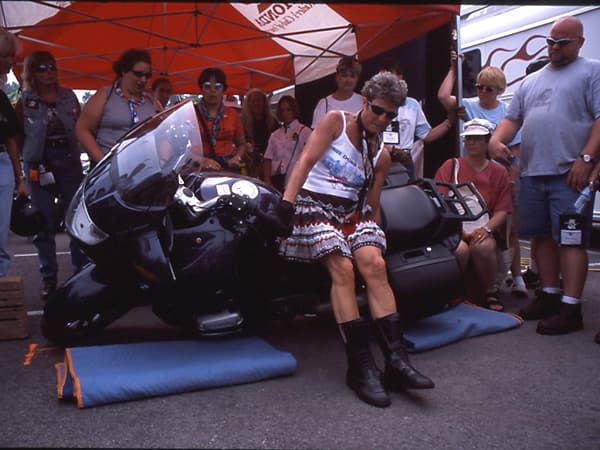
How to Pick Up a Dropped Motorcycle (Without Hurting Yourself)
Every rider drops their bike. It's not if, it's when. The proper technique to lift a 400+ lb motorcycle safely, plus what to inspect before riding it again.
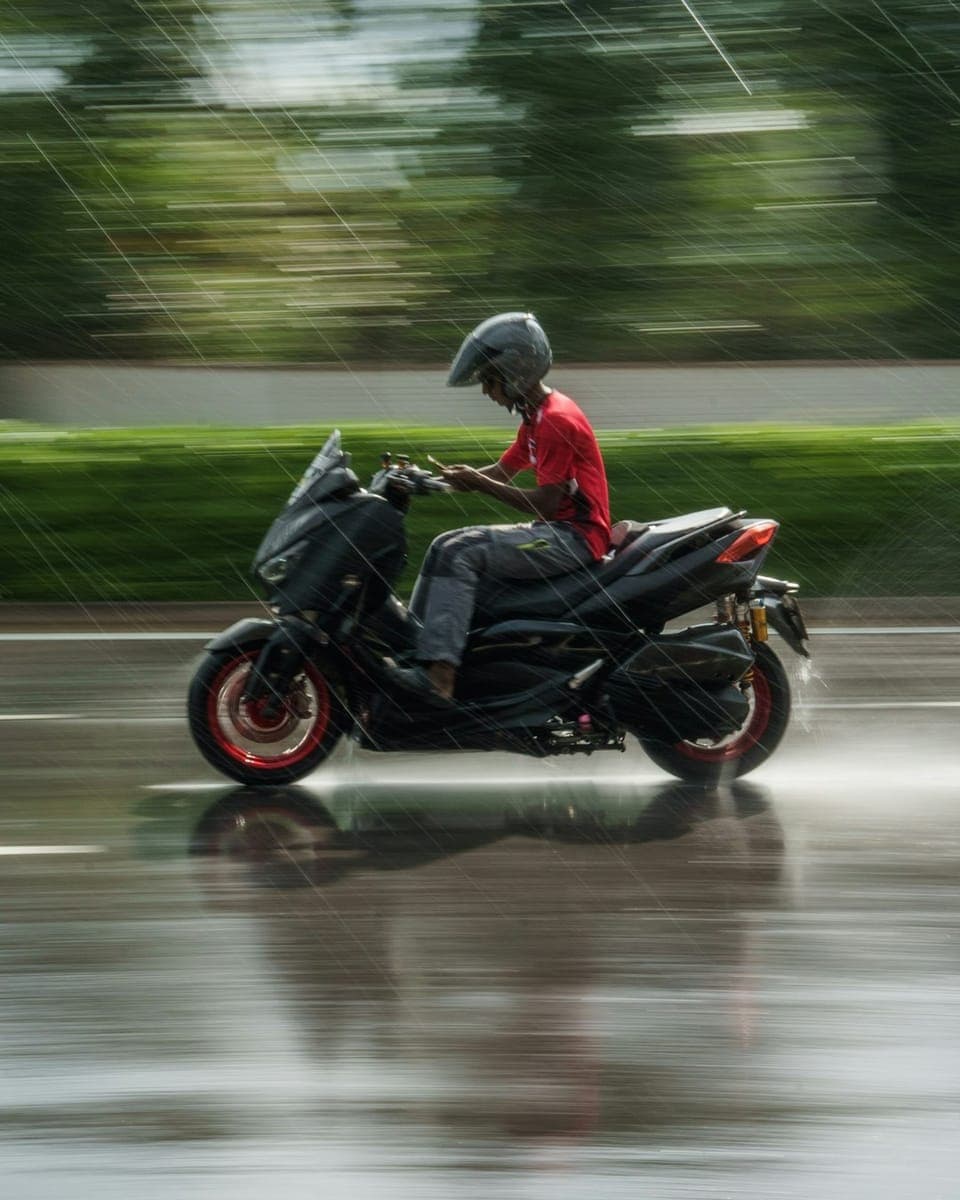
How to Ride a Motorcycle in Rain: The Complete Wet Weather Guide (2026)
Rain doesn't have to end your ride. Technique adjustments, the right gear, and knowing what surfaces to avoid — everything you need to ride confidently in wet conditions.